
Last updated September 20, 2026
Level 1 sweep and inspection to the NFPA 211 annual standard - flue, crown, cap, and flashing checked and photographed
Chimney sweep logs do not sweep chimneys. They loosen some creosote - which then falls where a brush and vacuum still have to collect it.
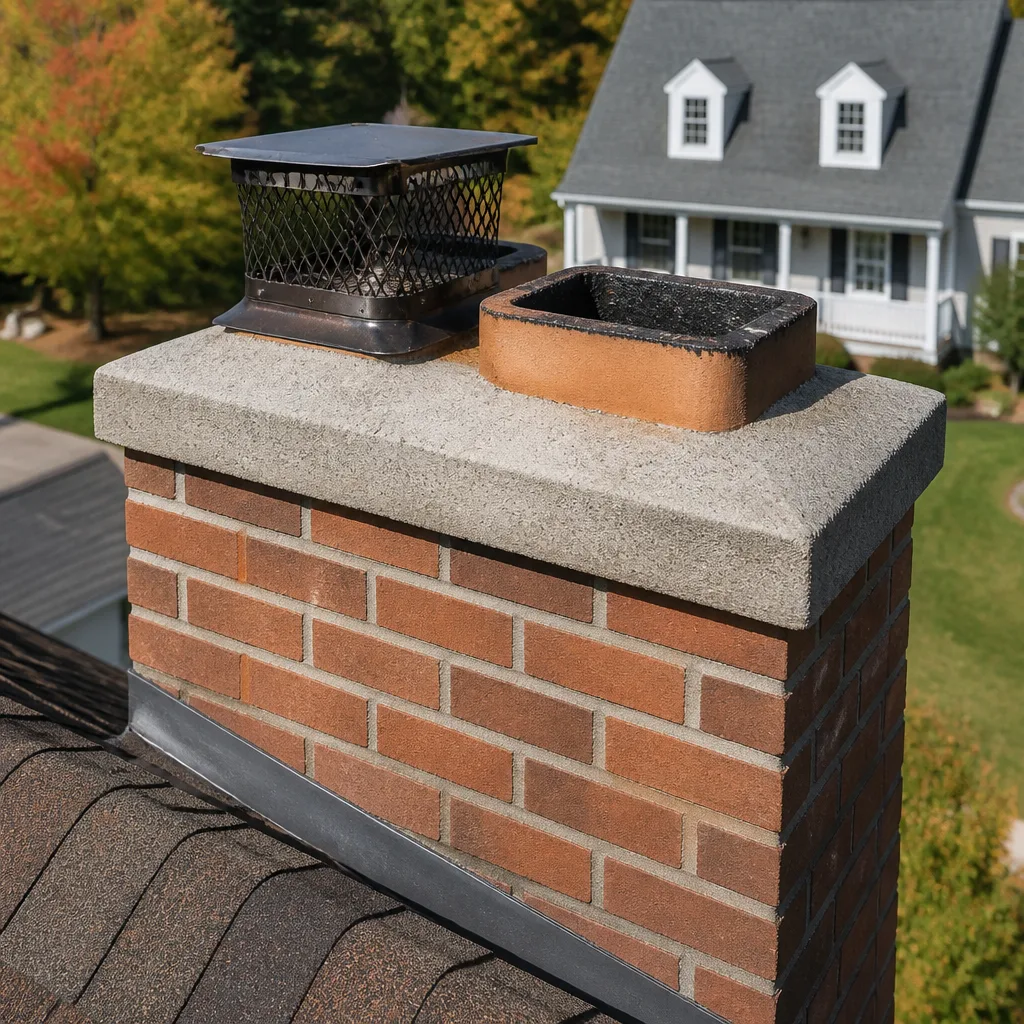
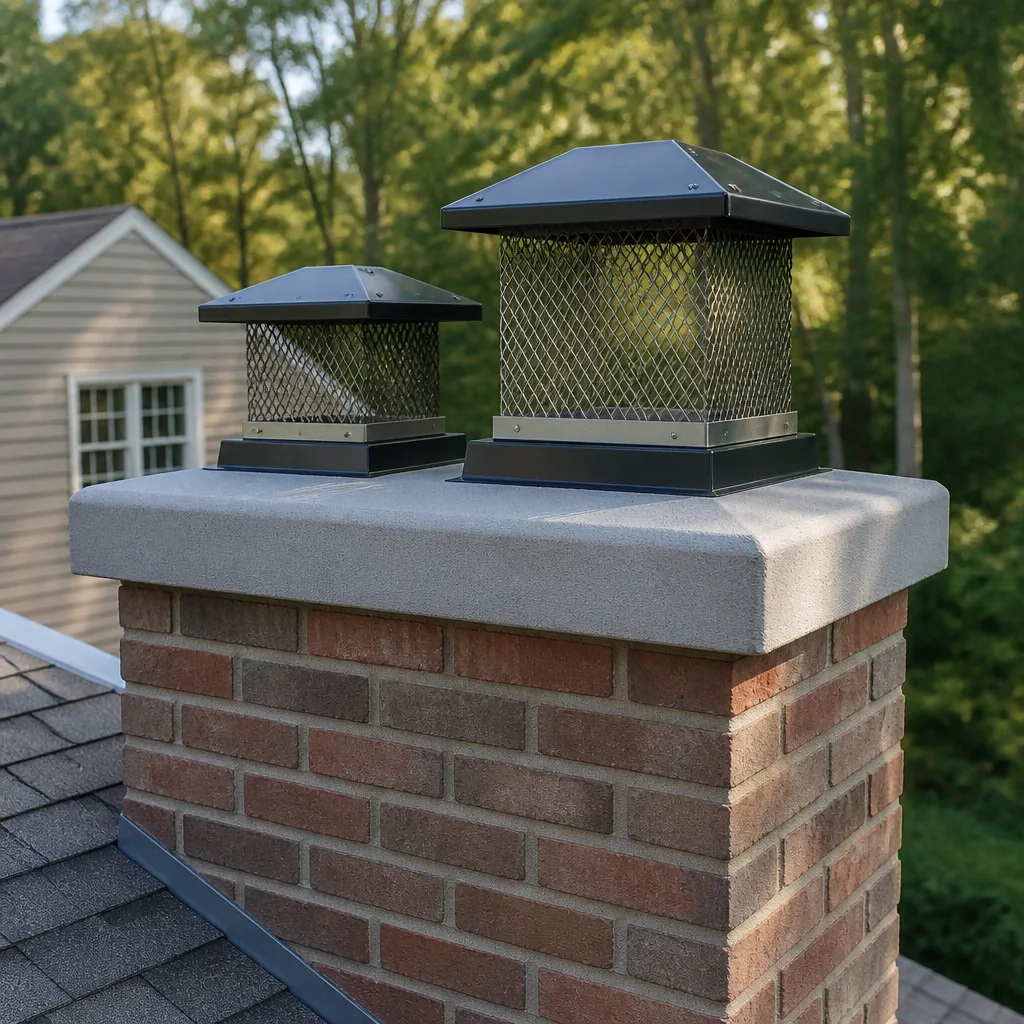
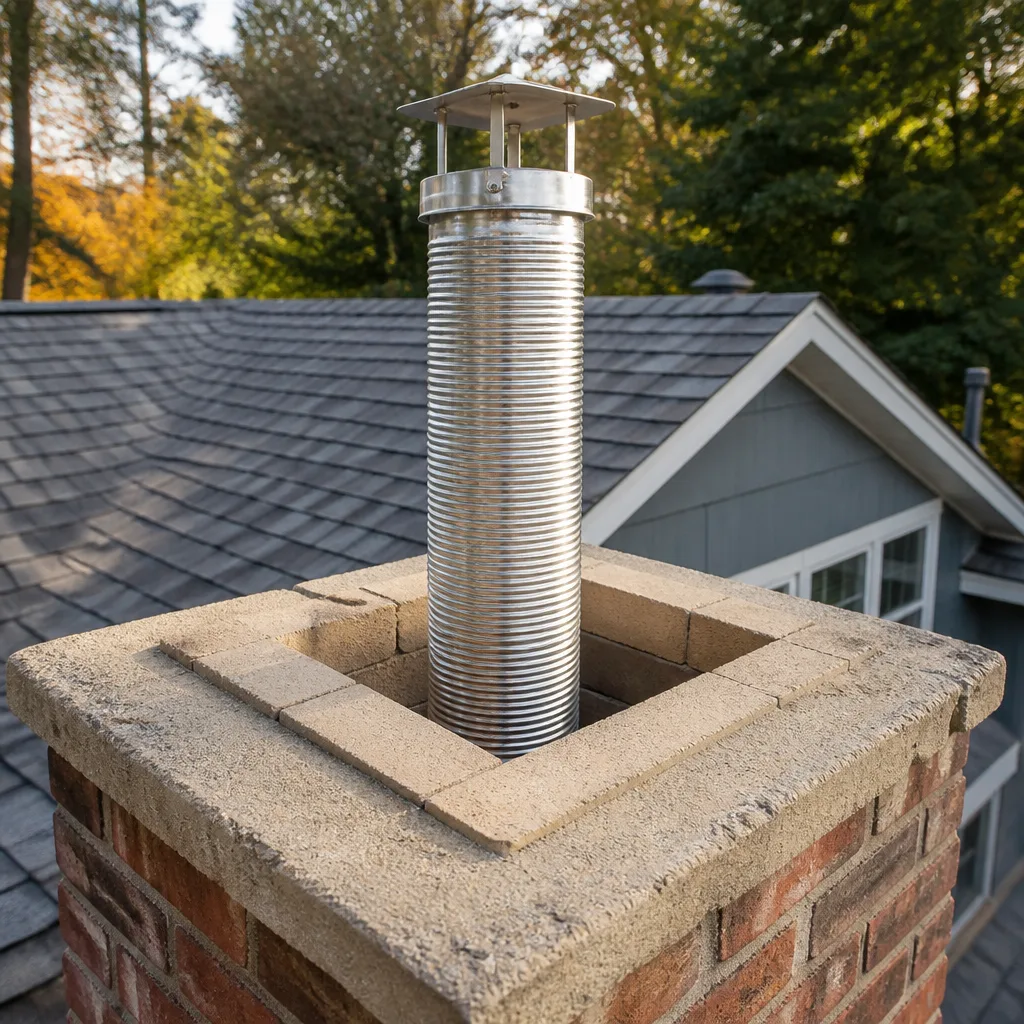
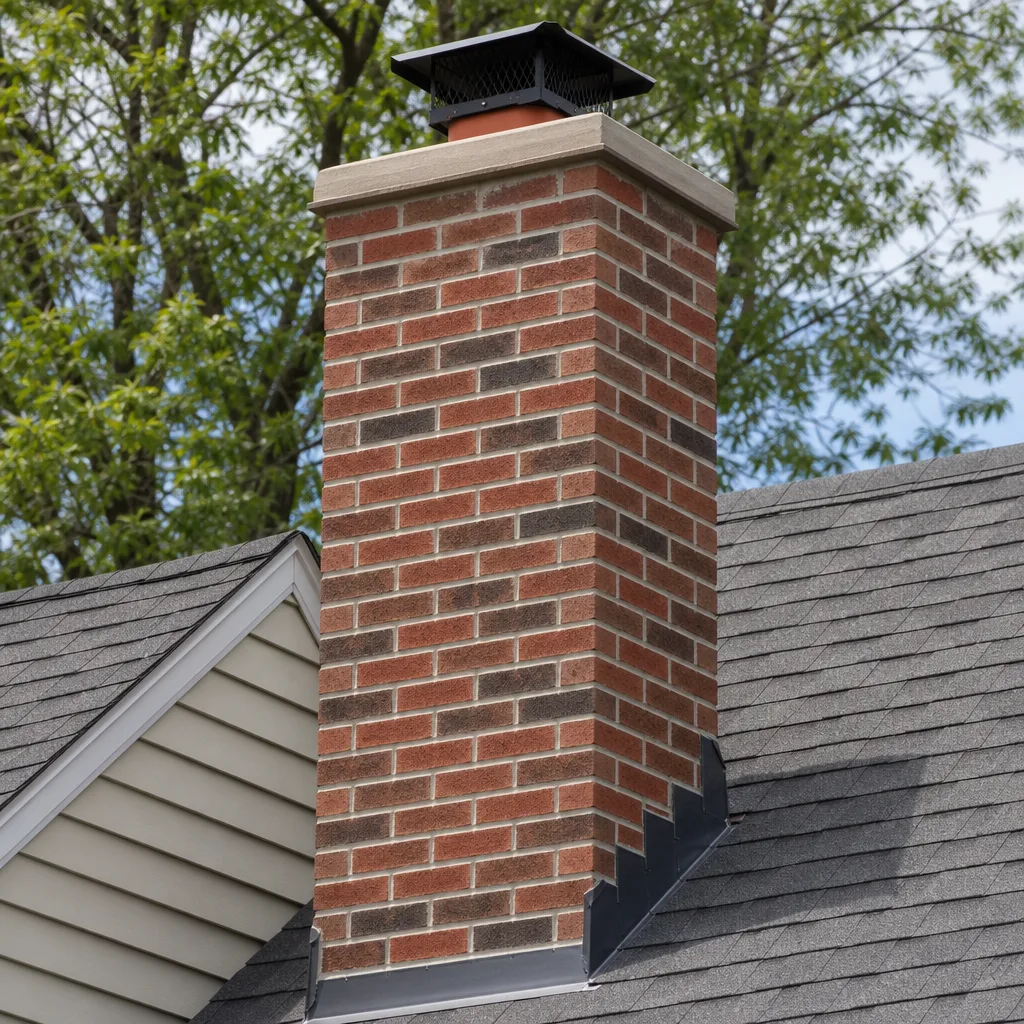
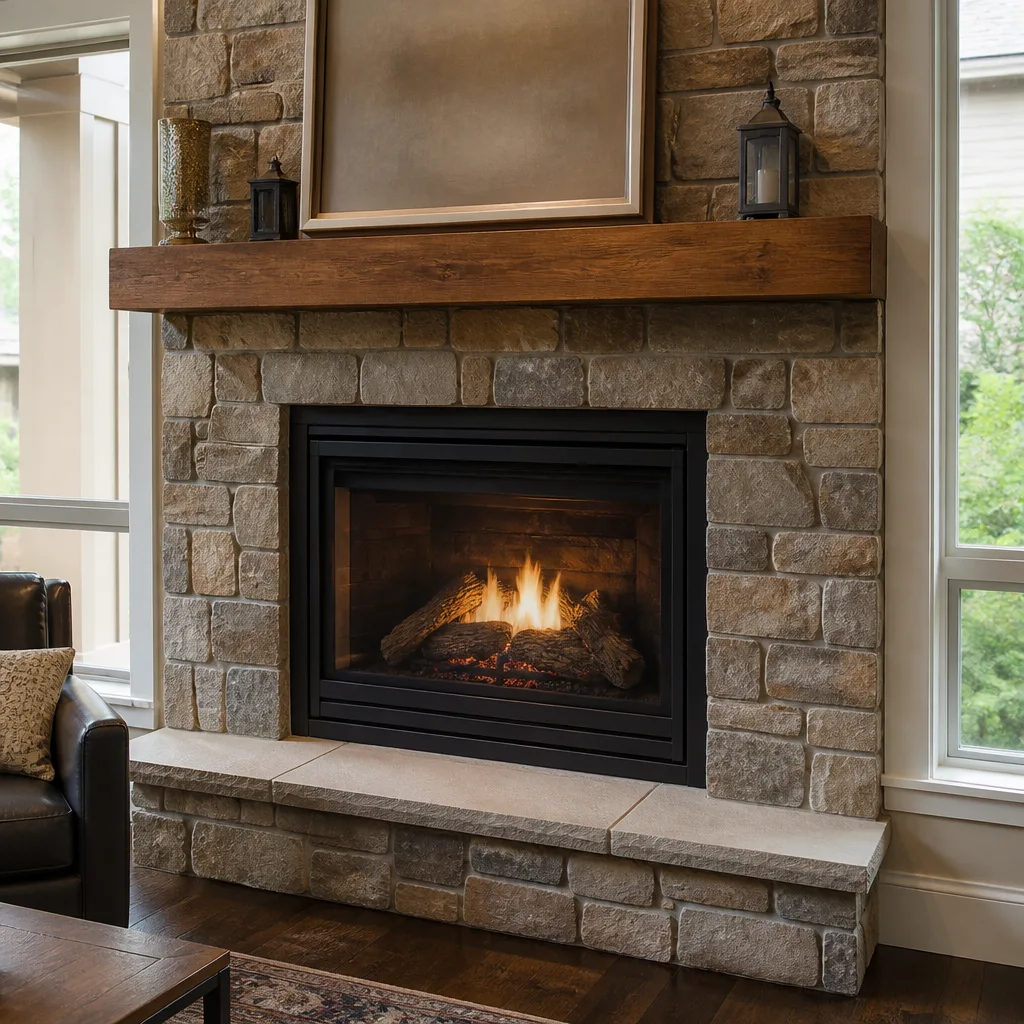
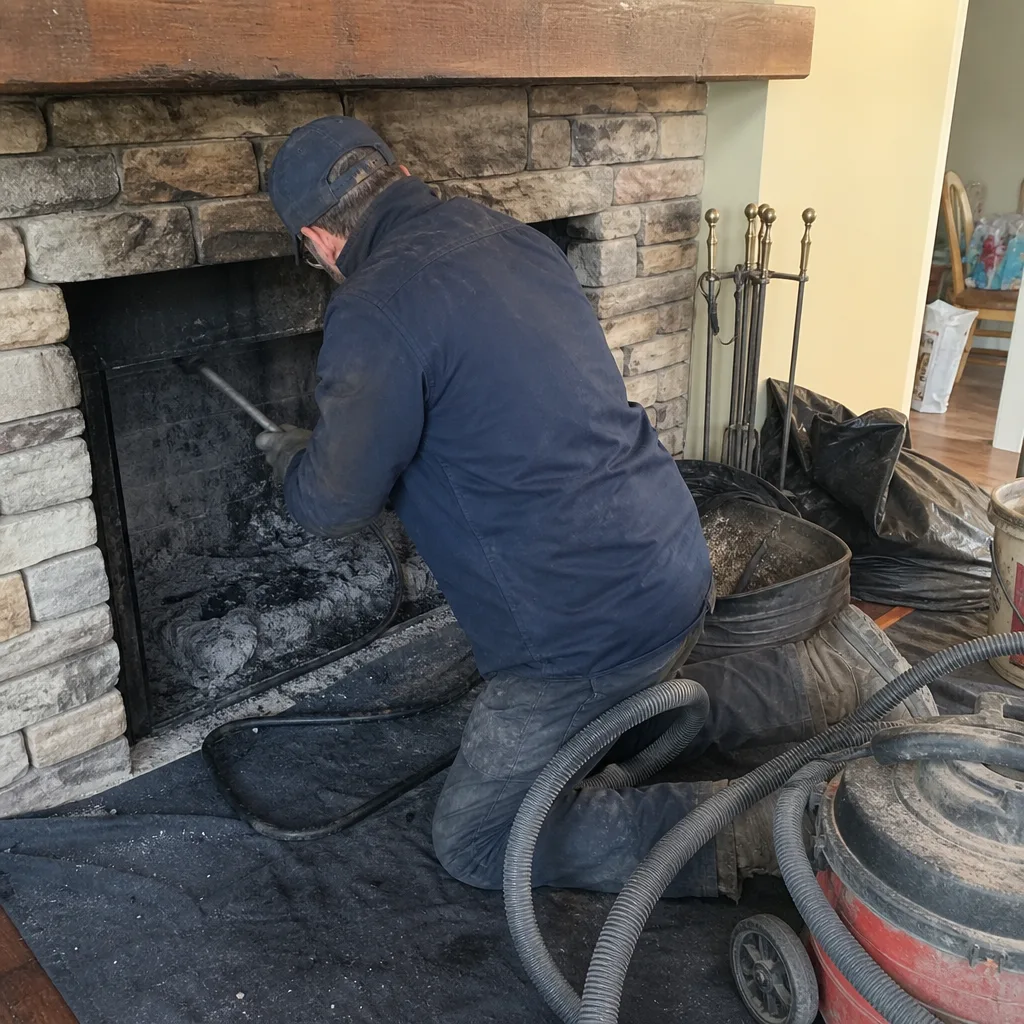 Before
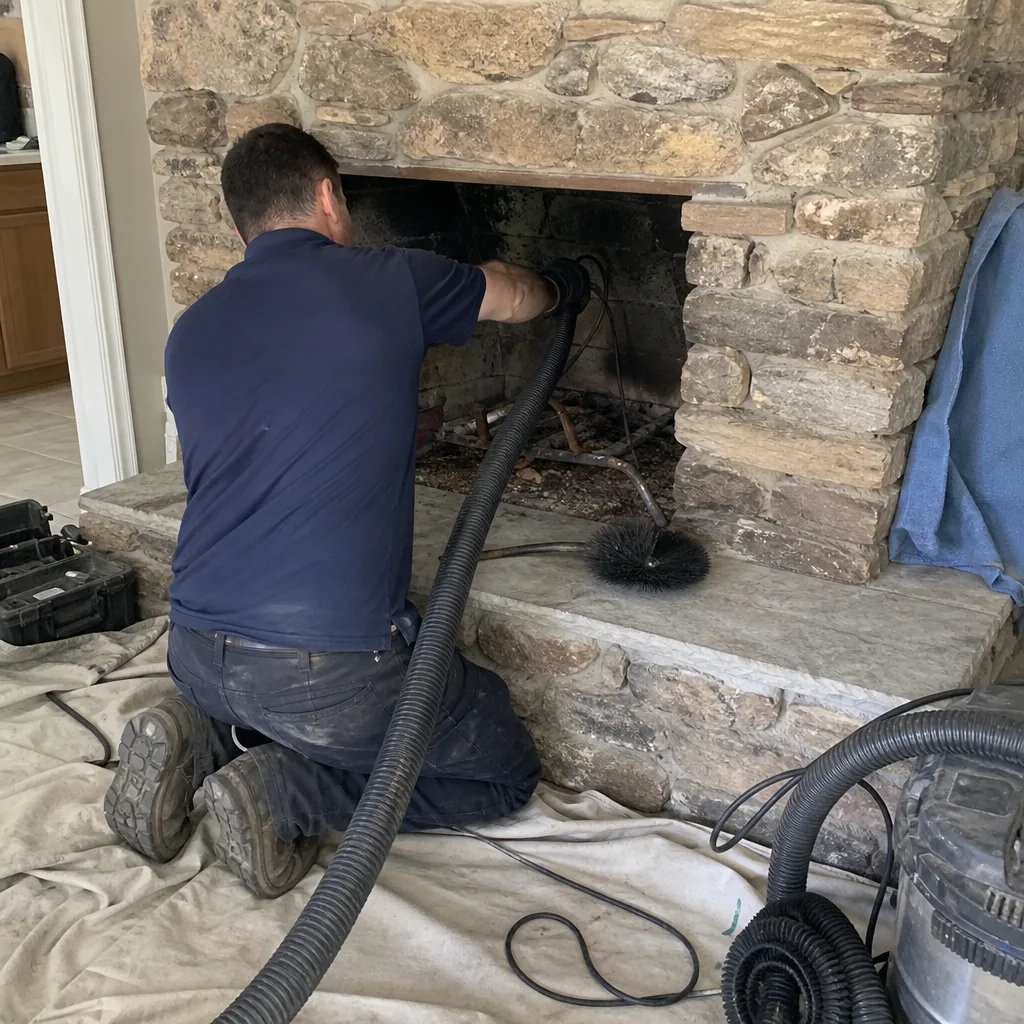 After
After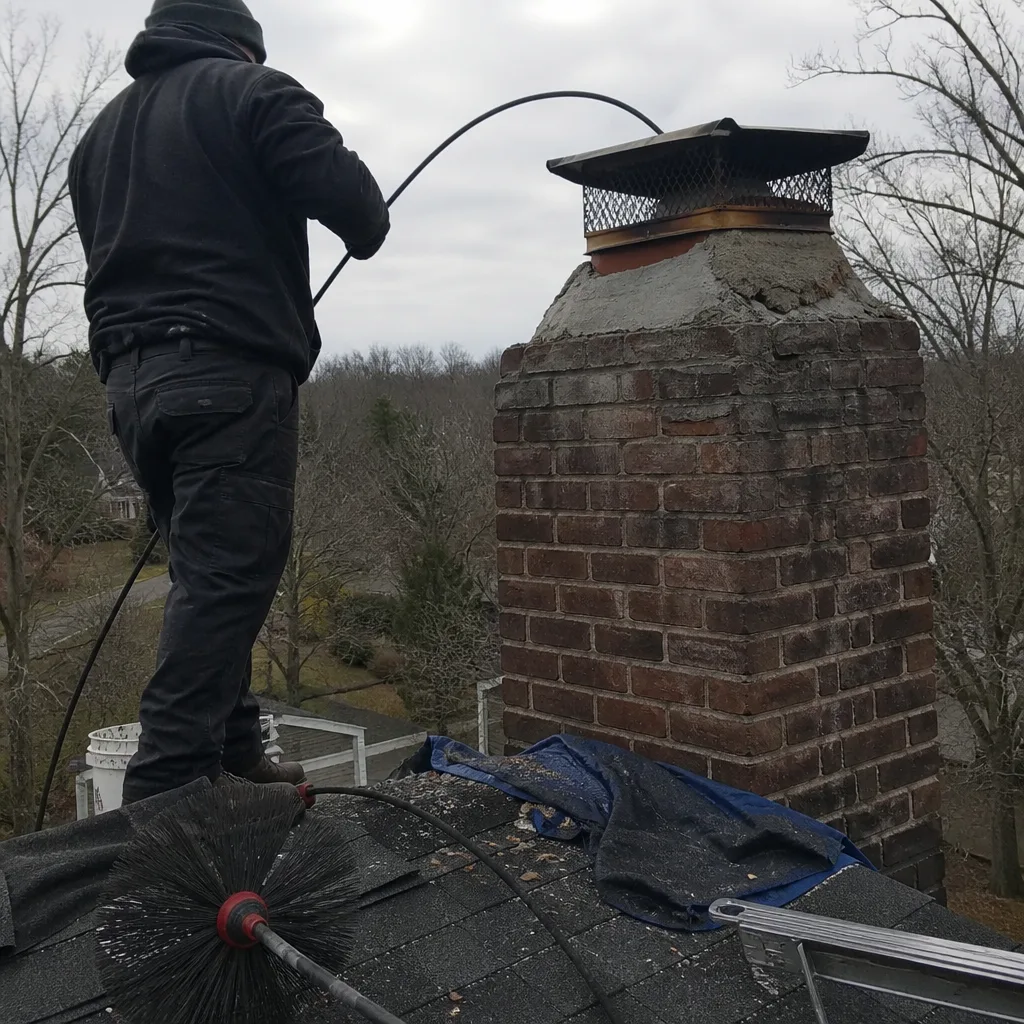 Before
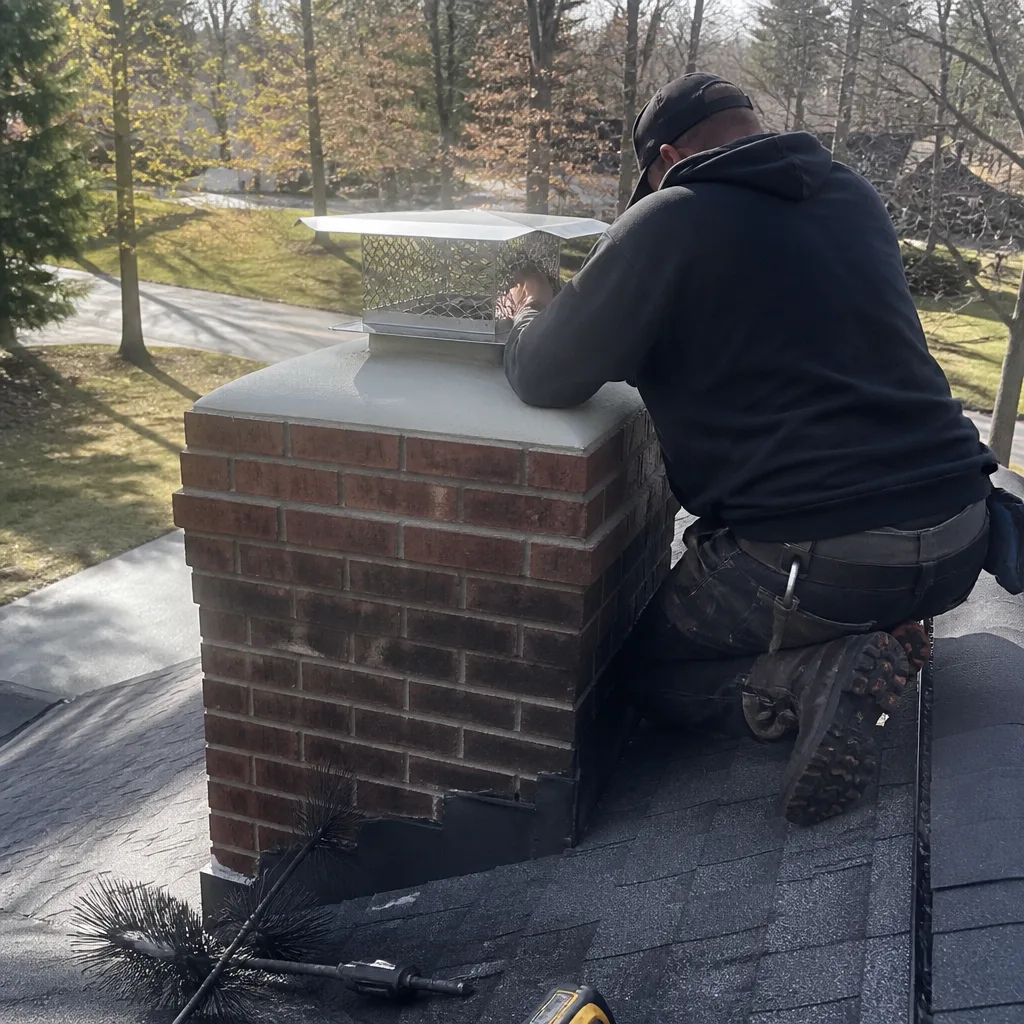 After
After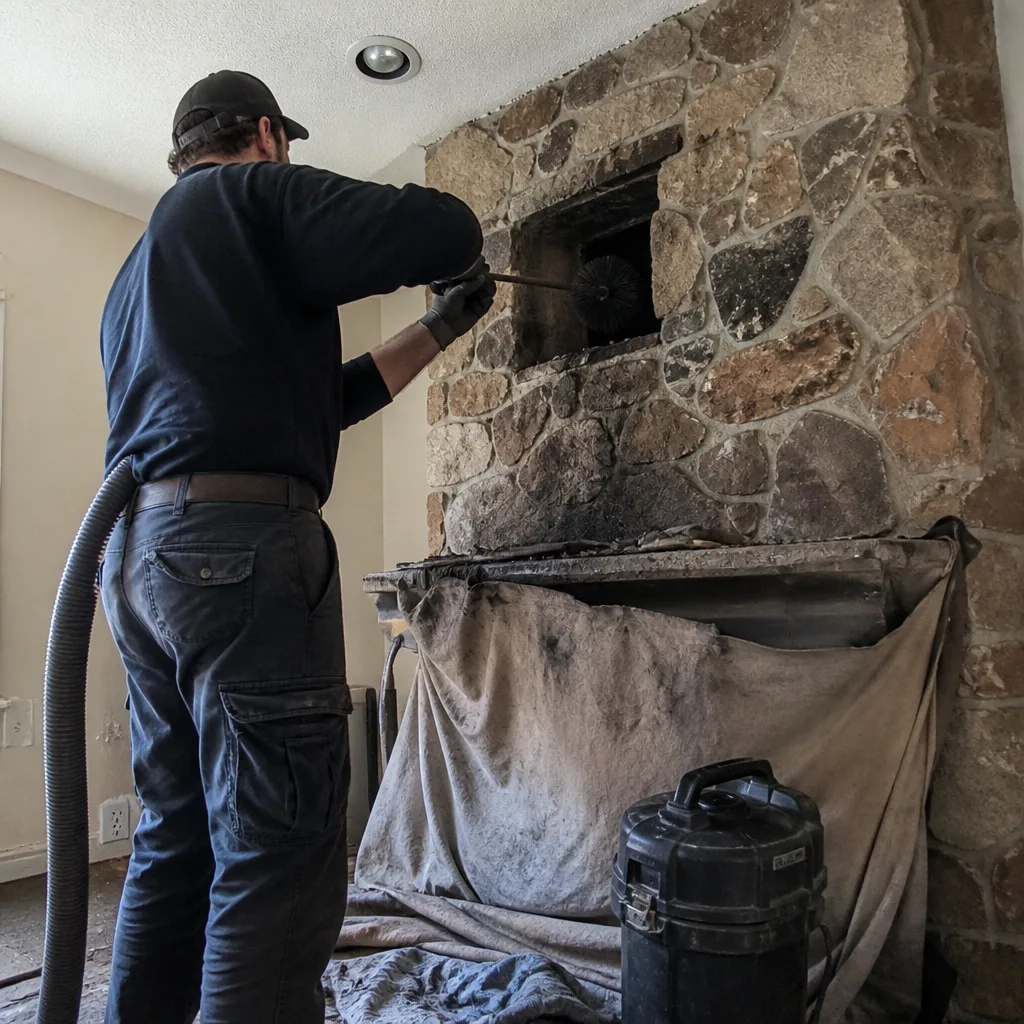 Before
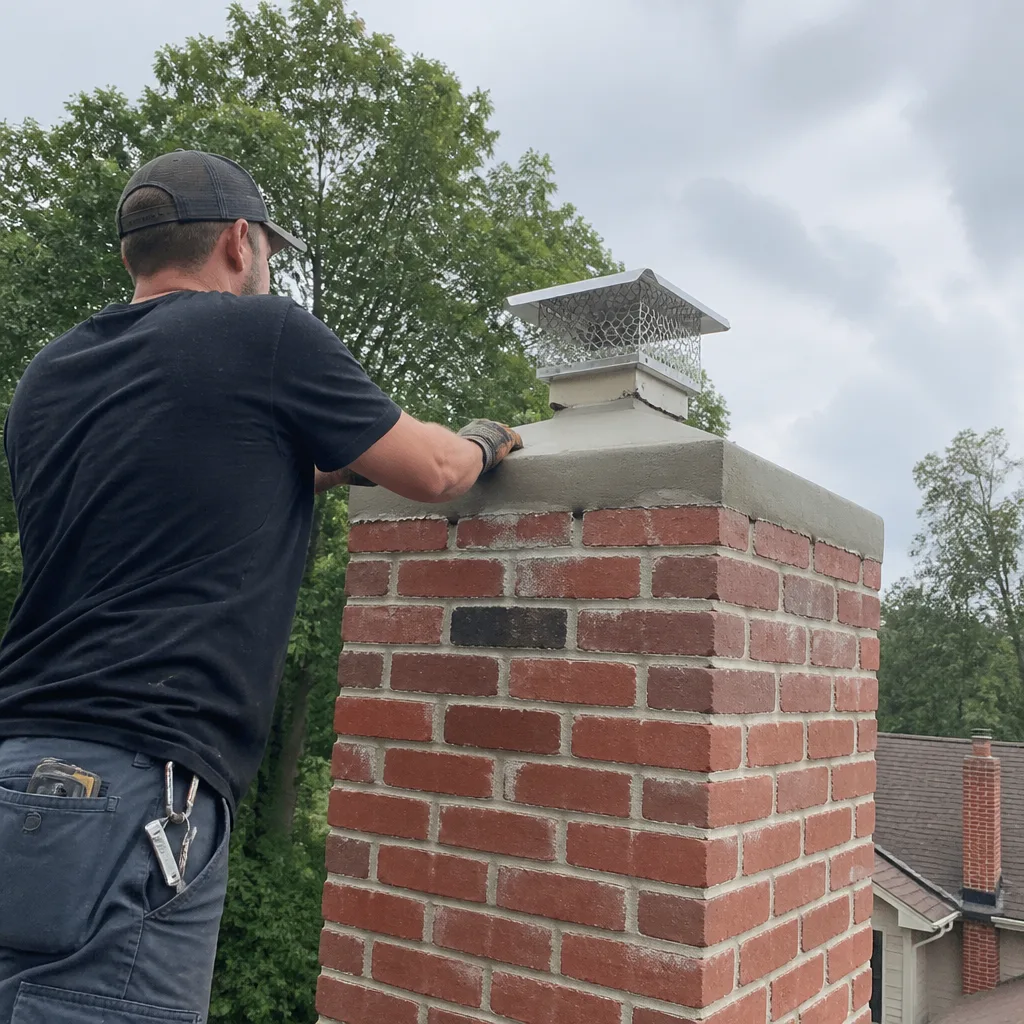 After
AfterChimney Cleaning Permits, Codes & Inspections in MD: What You Need to Know
In Maryland, you can clean a chimney without pulling a permit. But if that cleaning uncovers a cracked flue liner, and you decide to repair it, Howard County now requires a permit and a follow-up inspection. That distinction, between maintenance and modification, is where homeowners in Ellicott City get surprised mid-project with costs they never budgeted for. This guide draws the line clearly using Maryland’s actual code structure, not paraphrases or approximations, and pairs well with our complete guide to chimney cleaning in Ellicott City. You’ll learn what triggers a permit, what doesn’t, what your insurance policy actually means by “code-compliant condition,” and how a documented inspection protects you before you ever spend a dollar on repairs.
Quick Answer
Routine chimney sweeping and Level 1 visual inspections in Maryland require no permit from the county or state. However, most liner repairs, relining, flue modifications, and structural rebuilds in Howard County do require a permit and inspection under the county’s adopted building codes, which incorporate NFPA 211 by reference. The safest way to know where your job lands is to get a documented Level 2 camera inspection first, because that report becomes your pre-permit evidence and your negotiating tool with contractors, insurers, and home buyers; see our chimney cleaning warning signs reference for when to schedule one.
Table of Contents
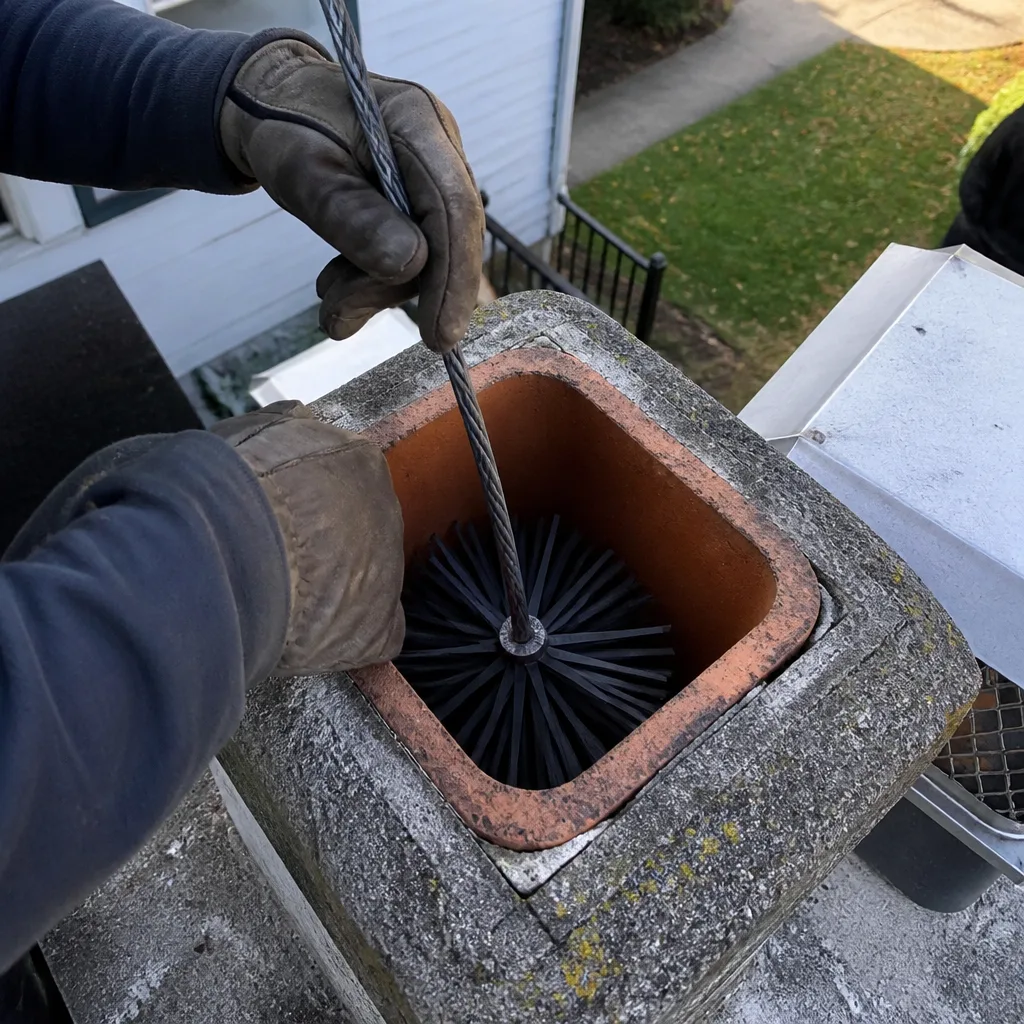
- Maryland’s Code Structure: What Actually Applies to Your Chimney
- The Permit Threshold: Cleaning vs. Repair vs. Rebuild in Howard County
- NFPA 211 in Maryland: The Standard Behind the Code
- How a Level 2 Inspection Functions as Pre-Permit Documentation
- Insurance Language: “Code-Compliant Condition” and Your Policy
- Real Estate Transactions: When Chimney Condition Becomes a Legal Question
- Common Mistakes to Avoid
- When to Call a Professional
- Frequently Asked Questions
BeforeAfterMaryland’s Code Structure: What Actually Applies to Your Chimney
Maryland does not have a single statewide chimney code. Instead, the state adopts the International Residential Code (IRC) as its baseline, and each county layers local amendments on top. Howard County, where we work daily in Ellicott City, enforces its own version of the IRC with specific provisions for fireplace and chimney work. What matters for homeowners: the IRC defers to NFPA 211 for the actual mechanics of chimney construction, liner sizing, and inspection standards. So when a county inspector signs off on a liner repair, they’re checking against NFPA 211 requirements as adopted through the county’s code path.
This creates a common point of confusion. A contractor might tell you “the state doesn’t require a permit for this.” That’s technically true in some counties. But Howard County’s permitting desk is the authority that matters for an Ellicott City address. What one Maryland county allows, Howard County may regulate. We’ve seen homeowners in Columbia, Elkridge, and Ellicott City assume a job needed no permit because their contractor said so, only to discover at resale that the work lacked the required inspection. That gap becomes a title defect, not just a maintenance annoyance.
For reference, the relevant Howard County code path runs through the county’s adoption of the IRC as amended by local ordinance. The county requires permits for “alteration, repair, addition, or improvement” to a building’s mechanical or structural systems where the work value exceeds a set threshold, and chimney liner work typically clears that threshold once teardown begins. We’ll cover the specific dollar and scope triggers below.
The Permit Threshold: Cleaning vs. Repair vs. Rebuild in Howard County
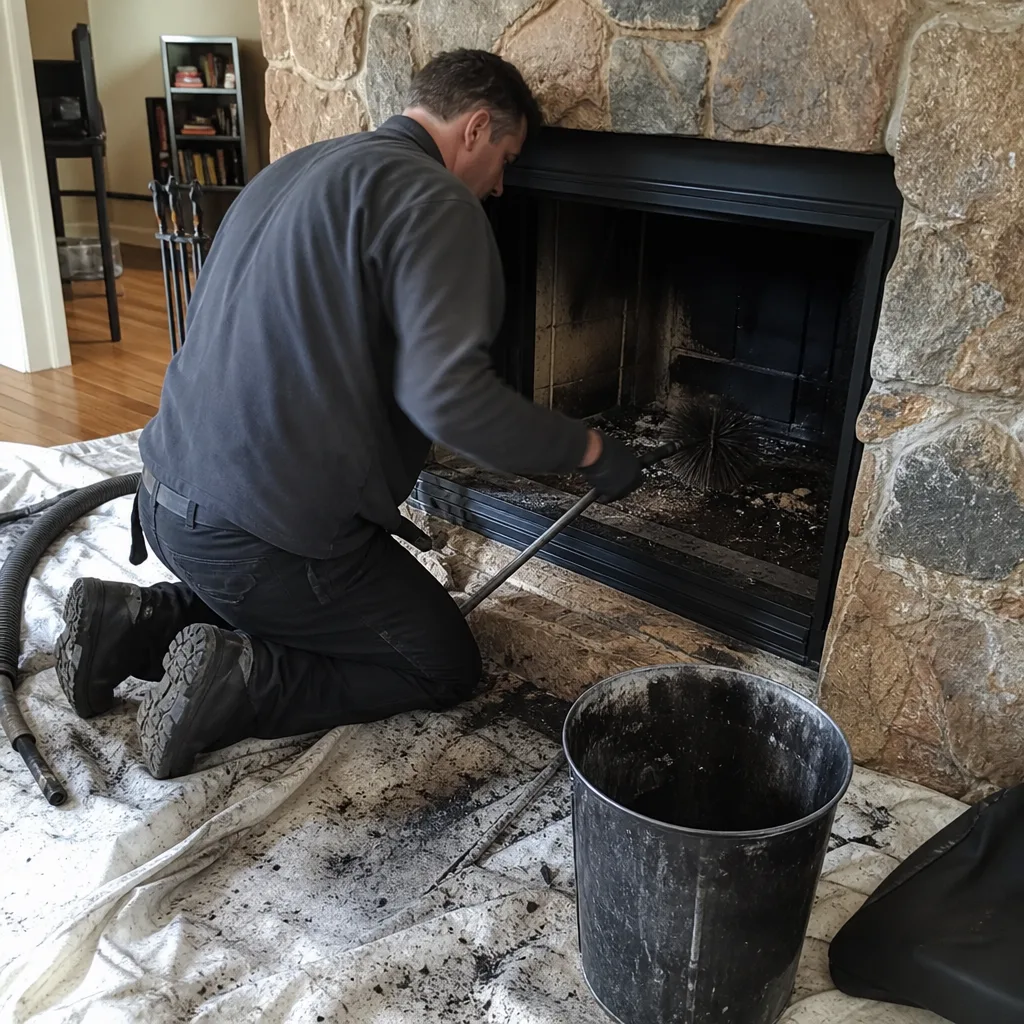
Here’s the line in plain terms. Sweeping a flue, removing creosote, vacuuming out a firebox, and performing a Level 1 inspection are maintenance activities. No permit. No inspection. You could do this every month and never talk to the county. The moment you break that boundary and begin modifying the chimney system, you enter permit territory.
Howard County’s building code permit trigger for chimney work hinges on scope. Specifically:
- Relining a flue with a stainless steel system (we source DuraFlex and Copperfield products for these jobs) requires a mechanical permit because you’re altering the venting system that carries combustion gases.
- Repairing or replacing a clay tile liner where tiles are removed and reset requires a permit. Patching minor cracks with a resurfacing product like HeatShield may fall under “repair” in some interpretations, but Howard County inspectors have consistently treated partial removal as an alteration, not maintenance.
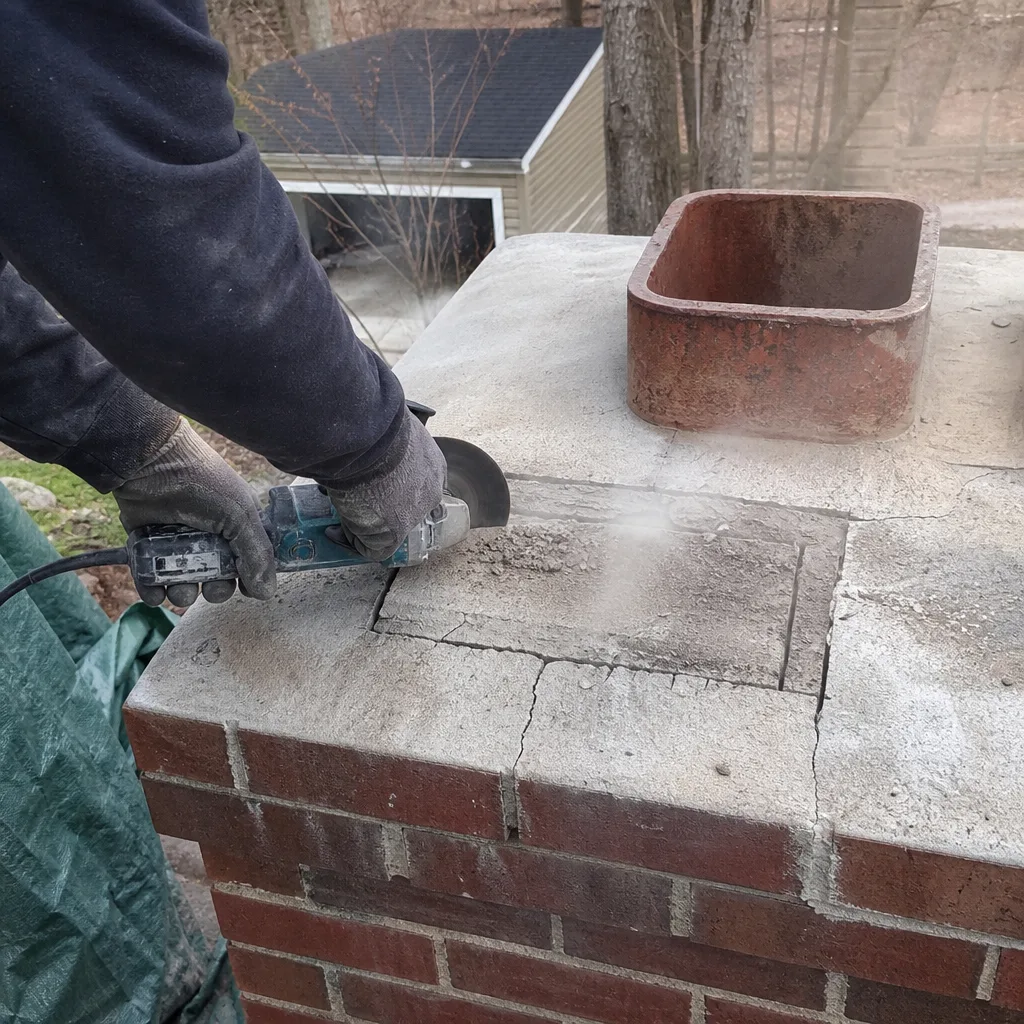
- Rebuilding a chimney from the roofline up, or rebuilding a firebox, requires a structural permit. This is the highest-scrutiny category because it involves load-bearing masonry.
- Chimney cap or chase cover replacement typically does not require a permit when it’s a like-for-like swap with no flue modification. But if the cap replacement includes extending the flue or changing its cross-section, the county may require a permit because you’ve altered draft characteristics.
- Complete demolition of a chimney, even if you’re not rebuilding, requires a demolition permit in Howard County. Removing the chimney changes the building’s structural envelope.
The practical takeaway for Ellicott City homeowners: if the word “liner” appears in your repair quote, ask the contractor to confirm in writing whether the scope requires a Howard County permit. If they hesitate, that’s your red flag, because the permit is not optional and the inspection record is yours to keep. At Level Two Chimney Ellicott City, we include permit status on every written scope we issue, because chimney repair in Ellicott City should never leave a homeowner guessing whether their home is code-compliant.
NFPA 211 in Maryland: The Standard Behind the Code
NFPA 211 is the National Fire Protection Association standard for chimneys, fireplaces, vents, and solid fuel burning appliances. Maryland doesn’t maintain its own separate chimney construction standard. The state’s adoption of the IRC pulls NFPA 211 in by reference, which means its provisions have the force of code when a local jurisdiction enforces them. Howard County does enforce them.
What NFPA 211 actually requires, in the context of cleaning and inspection:
- Chimneys shall be inspected at least once a year for solid fuel appliances, and cleaned when creosote buildup reaches 1/8 inch or more.
- Level 1 inspections apply to systems being used under the same conditions as before: no fuel changes, no appliance changes, no known damage. This is the standard annual sweep-and-look.
- Level 2 inspections are required when any system change occurs: new appliance, fuel type change, relining, or property transfer. Level 2 adds camera scanning of the entire flue interior, accessible attics, and exterior surfaces.
- Level 3 inspections are invoked when a Level 2 reveals concealed damage requiring partial demolition to view. Level 3 is rare for routine cleaning but not uncommon for older Ellicott City chimneys with hidden firebox damage.
Here’s the part most homeowners never hear: NFPA 211’s Level 2 requirement triggers automatically during home sales in Maryland. When you buy or sell a home with a fireplace in Howard County, the standard’s property-transfer provision means a Level 2 inspection is the recognized scope of care. If your home has never had one, you’re not legally out of compliance, but you are behind the standard that your insurance adjuster and a future buyer’s attorney will reference. We’ve performed thousands of Level 2 inspections in Ellicott City since 2009, and the camera rarely says “nothing to see here” on a chimney that hasn’t been opened in a decade.
How a Level 2 Inspection Functions as Pre-Permit Documentation
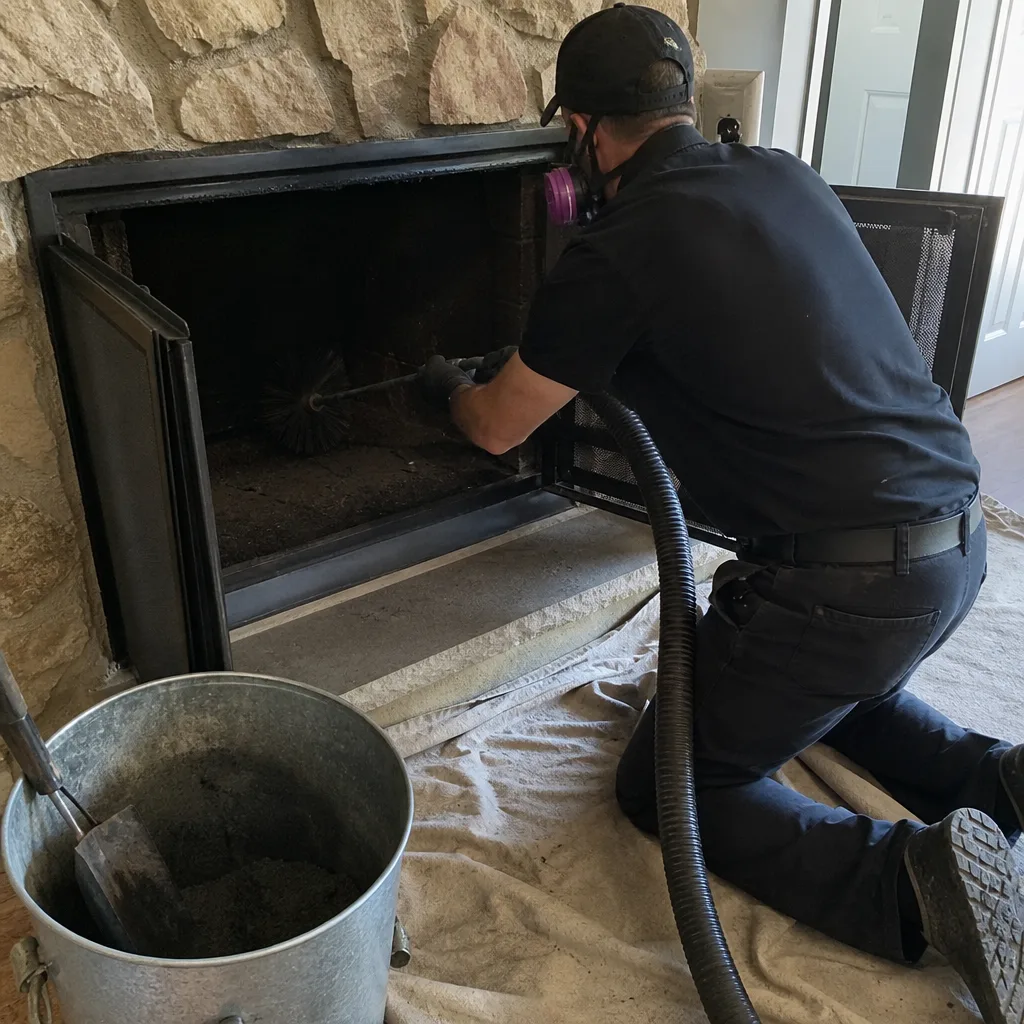
A Level 2 inspection report is the single most useful document to have before you pull a permit in Howard County. Here’s why. When you apply for a liner repair or relining permit, the county wants to know what condition the existing system is in, because the permit scope depends on it. If you submit a vague description (“fix chimney”), the permit office may issue a generic mechanical permit that doesn’t cover the full scope. If the inspector arrives and finds additional damage beyond what the permit describes, the job stops while you amend the application. That’s time and money, and on a chimney that’s halfway open, it’s a bad week.
A Level 2 camera report changes that sequence. It gives the permit office:
- Exact flue dimensions and current liner material, which the permit application needs for vent sizing.
- Photographic evidence of cracks, spalling, or creosote classification, which narrows the scope to what’s actually wrong.
- Documented chimney height and clearances, which matter for any rebuild or crown work.
- A professional assessment of whether the firebox and smoke chamber are damaged, which changes the permit from mechanical to structural if they are.
We complete a Level 2 inspection with a documented photo record on every visit, which has been our practice since 2009 and became Clause 4 of the Haven Standard. The report includes still images from the camera scan, a written condition summary, and a scope recommendation. When a homeowner brings that to the Howard County permit desk, they’re filing from a position of certainty instead of guesswork. And when the inspector arrives, the job matches the permit, because the permit matches the evidence.
Insurance Language: “Code-Compliant Condition” and Your Policy
Most Maryland homeowners never read the chimney clause in their policy until a claim is open. Then they discover the phrase “code-compliant condition” or “maintained in accordance with applicable code.” What that means in practice: if a chimney fire occurs and the investigation finds the flue had 1/2 inch of creosote and a cracked liner that predated the fire, the insurer has grounds to deny or reduce the claim. Not because the chimney was dangerous, but because the homeowner couldn’t document that the system met the code standard of care at the time of the loss.
This is not a scare tactic. It’s how claims adjusters work. They look for maintenance records. If you have six years of Level 2 inspection reports showing a clean flue and documented liner condition, your claim moves faster and the denial risk drops significantly. If you have no records at all, you’re asking the insurer to take your word for something the physical evidence contradicts.
For Ellicott City homeowners, there’s a climate factor too. Howard County’s freeze-thaw cycles cause masonry spalling, which opens crown cracks, which lets water into the flue, which accelerates liner deterioration. A chimney that was swept annually but never inspected for water damage can look maintained on paper and be failing inside. That’s why we recommend pairing your annual sweep with a camera scan, even if NFPA 211 only requires it on system changes. The documentation is what your insurer will ask for, and the photo record is what you’ll have.
Real Estate Transactions: When Chimney Condition Becomes a Legal Question
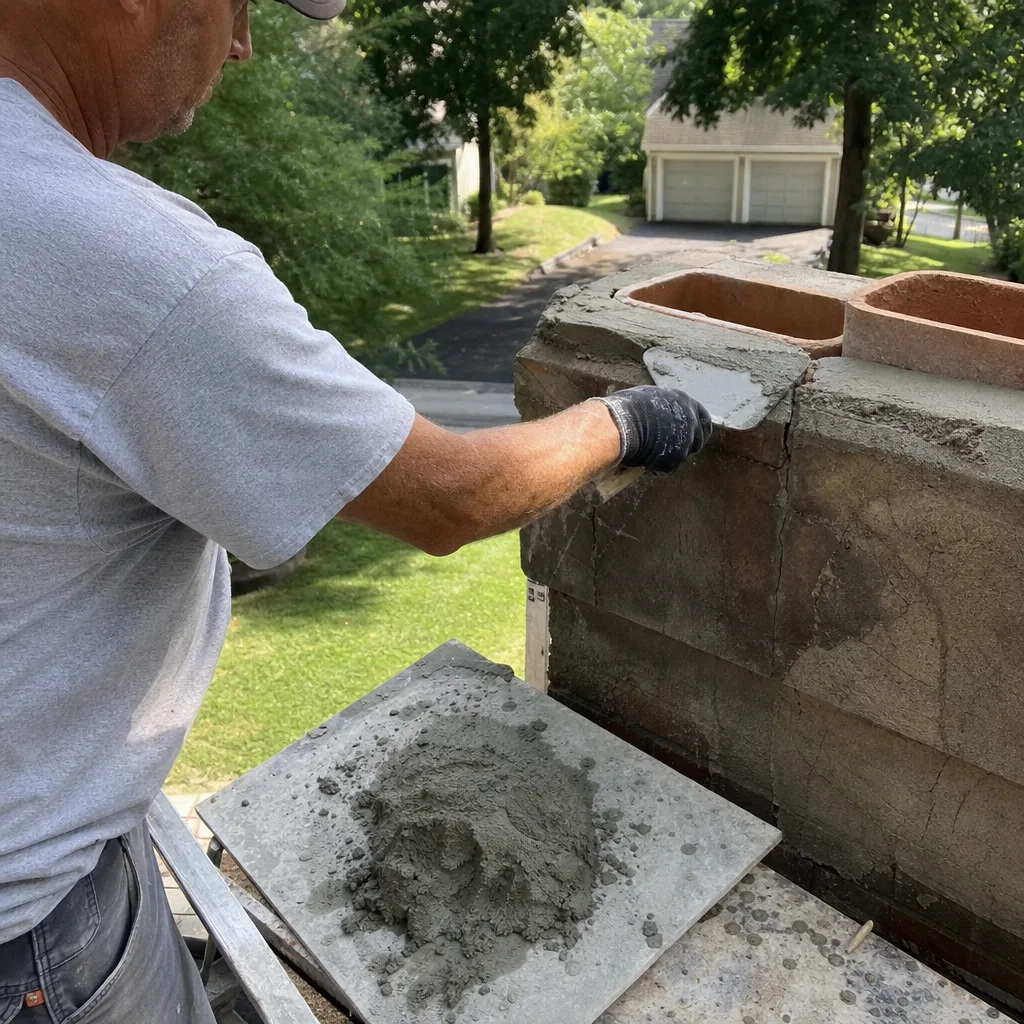
In Maryland, home sellers must complete a Residential Property Disclosure and Disclaimer Statement. The form asks about known defects in structural systems, including the chimney and fireplace. The key word is “known.” Sellers are not required to inspect the chimney before listing. But if they have knowledge of a defect and don’t disclose it, they’ve created liability. That’s why chimney condition becomes a legal question, not just a maintenance question, the moment a sale begins.
Here’s the sequence that plays out in Ellicott City and across Howard County:
- A buyer’s home inspector notes visible chimney issues: cracked crown, spalling brick, rusted damper, or a flue they couldn’t fully see.
- The buyer requests a Level 2 chimney inspection as a condition of the sale. This is standard language in Maryland real estate contingencies now, especially for homes built before 1990.
- The inspection reveals what the home inspector couldn’t see: a cracked flue liner, missing mortar in the smoke chamber, or a chimney that’s a creosote fire waiting for a spark.
- The buyer asks for a repair credit or a full repair with a permit and inspection. The seller, now armed with a documented defect, is negotiating from a different position than they were the previous week.
This is why sellers who get a Level 2 inspection before listing are in a stronger position. They can address issues on their own timeline, with their own contractor, at their own negotiated price. They can present a documented photo record to buyers, which reads as transparency rather than evasion. In our experience with Ellicott City transactions, a pre-listing Level 2 report pays for itself in negotiation leverage, and often in real dollars, because the seller isn’t forced into a repair credit on the buyer’s timeline. Level Two Chimney Ellicott City home has helped hundreds of local sellers prepare their chimneys for market with exactly this documentation.
Common Mistakes to Avoid
- Assuming a “clean and inspect” covers everything. A Level 1 sweep looks at accessible areas. It doesn’t camera-scan the flue interior. In older Ellicott City chimneys, the worst damage hides between the flue tiles, and only a Level 2 camera scan finds it.
- Trusting a contractor who says no permit is needed without checking. Howard County’s threshold is specific, and the contractor who says “we do this all the time without permits” won’t be there when the permit history comes up at resale.
- Skipping the pre-inspection before hiring a repair crew. If you start a repair without a Level 2 report, the contractor discovers the true scope mid-job, the price changes, and you’re making decisions under a deadline. The inspection first, always.
- Filing a chimney fire claim without maintenance records. If you can’t document a clean flue, the investigation will assume the fire was preventable. Get the records before you need them.
- Signing a real estate disclosure without understanding what “known” means. If you’ve seen a bad inspection report, you know. Disclose it or face liability. This is not legal advice, but it is a pattern we’ve seen resolve badly for sellers who hoped the buyer wouldn’t ask.
- Assuming new construction means code-compliant. We’ve inspected chimneys in Ellicott City homes built within the last decade that never had a proper crown installed. Builders cut corners. Your chimney is your responsibility now.
When to Call a Professional
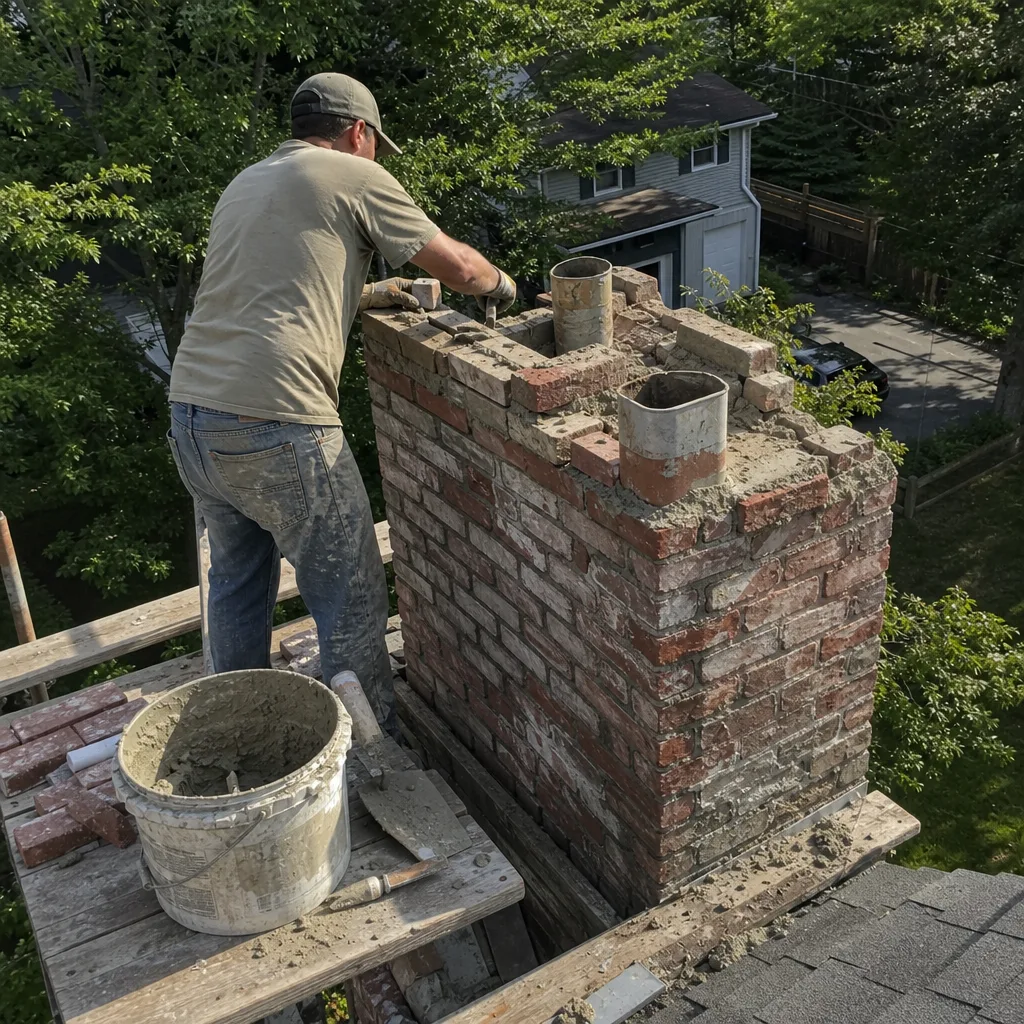
Call a professional when you see signs of water intrusion: dark stains on the ceiling near the chimney, efflorescence on the brick face, or a rusted damper. Call when you smell smoke in the house after the fire is out. Call when you’re buying or selling a home in Howard County and the transaction requires a Level 2 inspection. Call when your chimney was swept but the sweep didn’t show you camera footage. And call when you’re looking at a repair quote and the contractor can’t tell you whether the county requires a permit. Chimney cleaning and sweep in Ellicott City should come with a written scope, a documented photo record, and a straight answer on permits. Level Two Chimney Ellicott City offers free estimates in Ellicott City, call (443) 363-5262. We’ll tell you what we found, not what we felt about it.
Frequently Asked Questions
No. Routine chimney sweeping and Level 1 inspections are maintenance activities that require no permit anywhere in Maryland, including Howard County. Sweep away, as often as needed. What requires a permit is modification: liner work, rebuilds, and flue alterations.
In Ellicott City, a standard chimney sweep with a Level 1 inspection typically runs $179 to $329 depending on the chimney’s height, accessibility, and how much creosote has accumulated. A Level 2 camera inspection, which we recommend for any system change or property transfer, adds $150 to $300 in most cases. We don’t call for quotes, we hand you a written price before work starts, because that’s the only way to know what you’re paying for. Call (443) 363-5262 for a free estimate that names its own number.
NFPA 211 requires annual inspection and cleaning when creosote reaches 1/8 inch. In practice, an Ellicott City home that burns two cords of wood per season needs a sweep every year. Gas fireplaces can go longer between cleanings but still need annual inspection for venting and liner condition.
Creosote class advances from flaky Class I to glazed Class III, which is harder to remove and more likely to sustain a chimney fire if ignited. The liner deteriorates through freeze-thaw and acidic condensation, and by the time visible symptoms appear, the repair is larger than a sweep would have cost, which is why we publish a Chimney Cleaning & Sweep Maintenance Checklist for Ellicott City Homeowners. In Ellicott City’s climate, water damage accelerates every year, so a skipped inspection is never “fine, probably.”
Yes, in nearly all cases. Installing a stainless steel liner (we use DuraFlex and Copperfield systems) modifies the venting path and requires a mechanical permit in Howard County. The county treats it as an alteration, not maintenance, and the inspection is part of the permit record. A written Level 2 report first makes the permit process faster.
You need a new liner if the camera scan shows cracks that penetrate the flue’s inner wall, if the liner has shifted and broken the gas seal, or if the previous liner was never installed at all. If you’re not sure, ask to see the footage. Any company that says “trust us” without showing you the camera screen is a company you should show the door. We’ve done fireplace services in Ellicott City long enough to know that evidence is the only honest salesperson. Call (443) 363-5262 for a free estimate and we’ll show you exactly what the camera sees.
The Bottom Line
In Maryland, you can sweep without a permit and repair nothing without one. The line between the two runs through Howard County’s building code, which incorporates NFPA 211 and triggers permits for liner work and structural rebuilds. The tool that saves you money on both sides of that line is documentation: a Level 2 camera inspection that becomes your pre-permit evidence, your insurance record, and your real estate negotiation position. Ellicott City homeowners who get the inspection before the repair quote, and the written price before the work starts, are the ones who never get surprised mid-project, and can find more guides & resources on our blog. The rest are gambling on a chimney they’ve never actually seen.
Written by Corrine Halstead, Owner at Level Two Chimney Ellicott City, serving Ellicott City since 2009.