
Last updated September 20, 2026
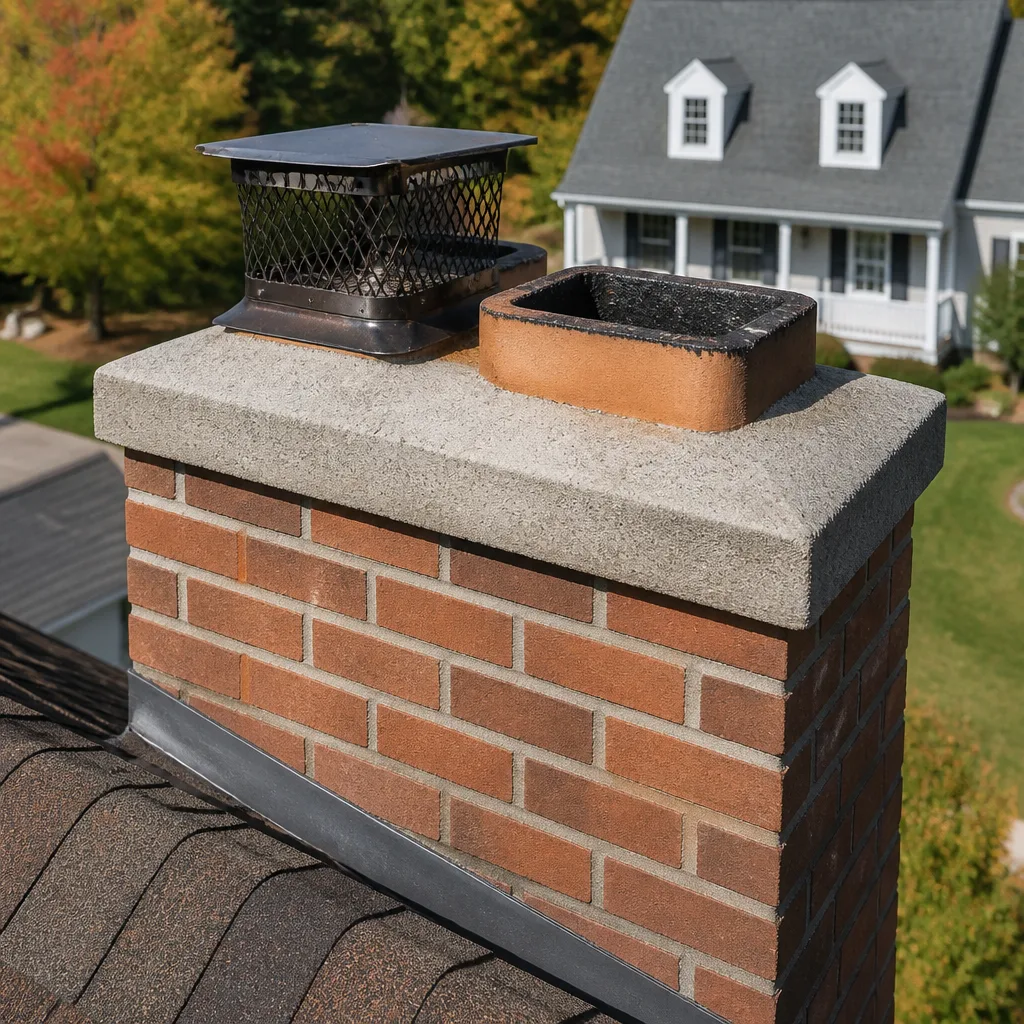
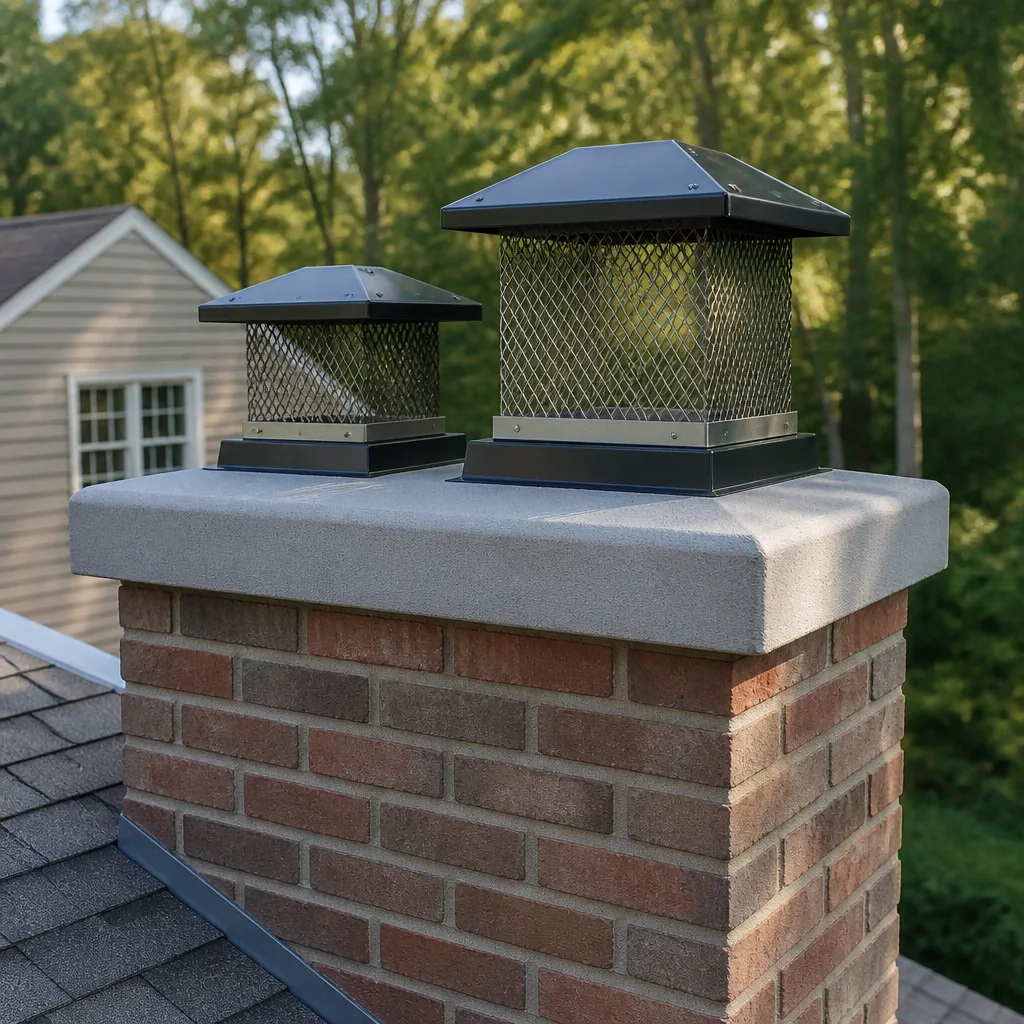
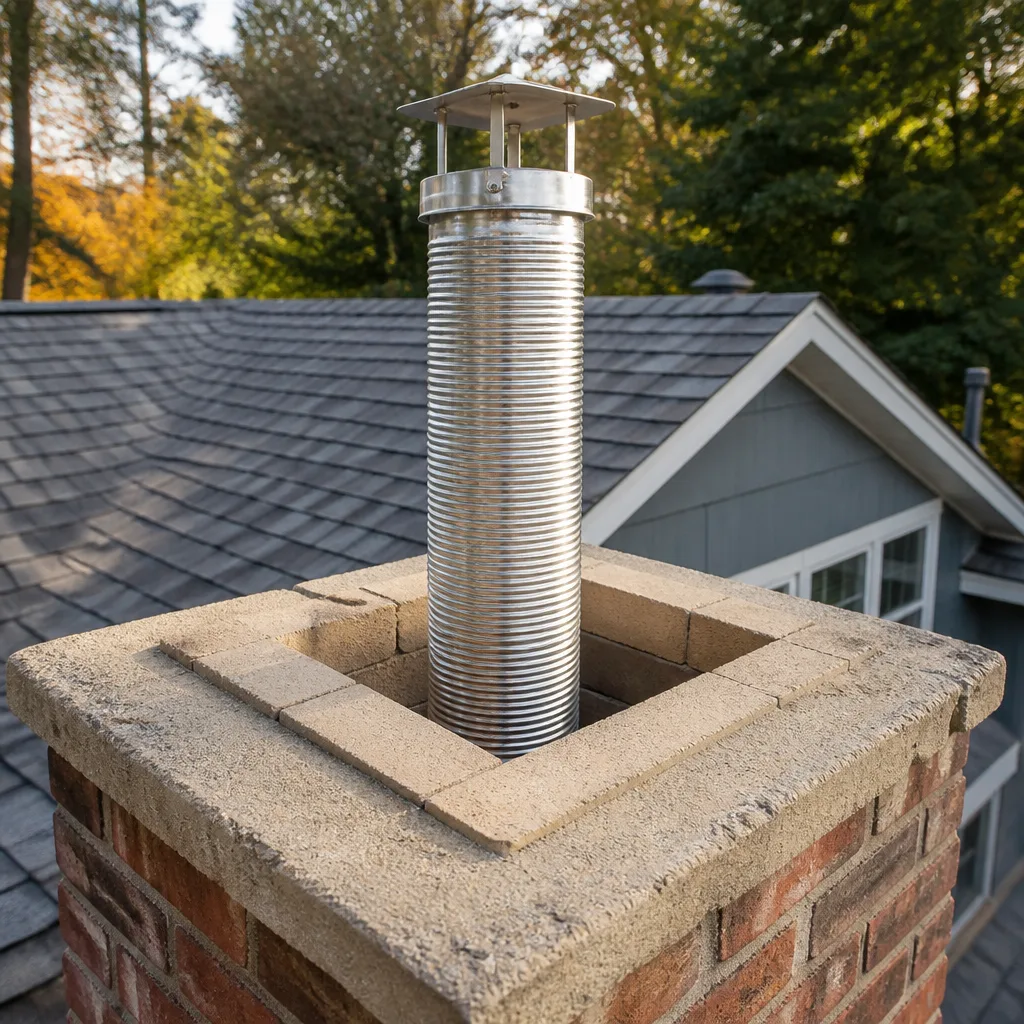
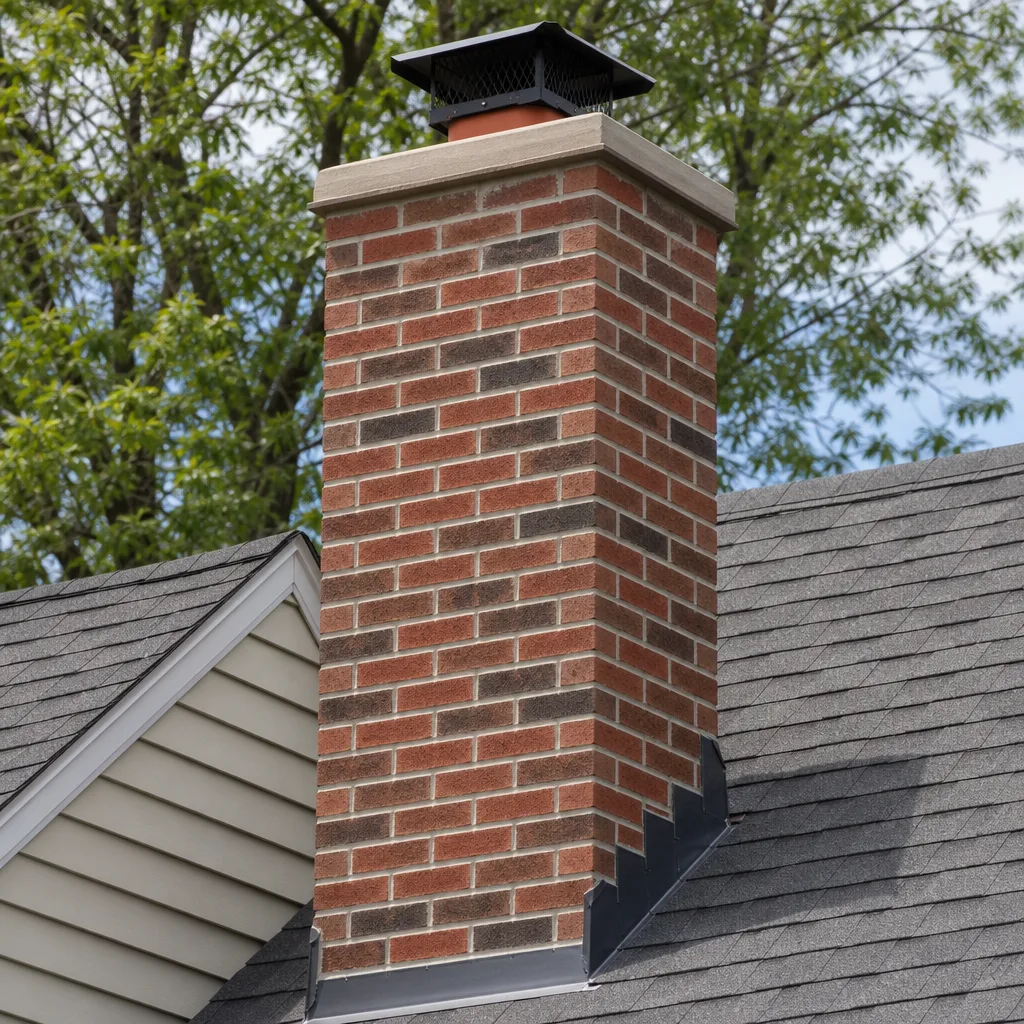
Level 1 sweep and inspection to the NFPA 211 annual standard - flue, crown, cap, and flashing checked and photographed
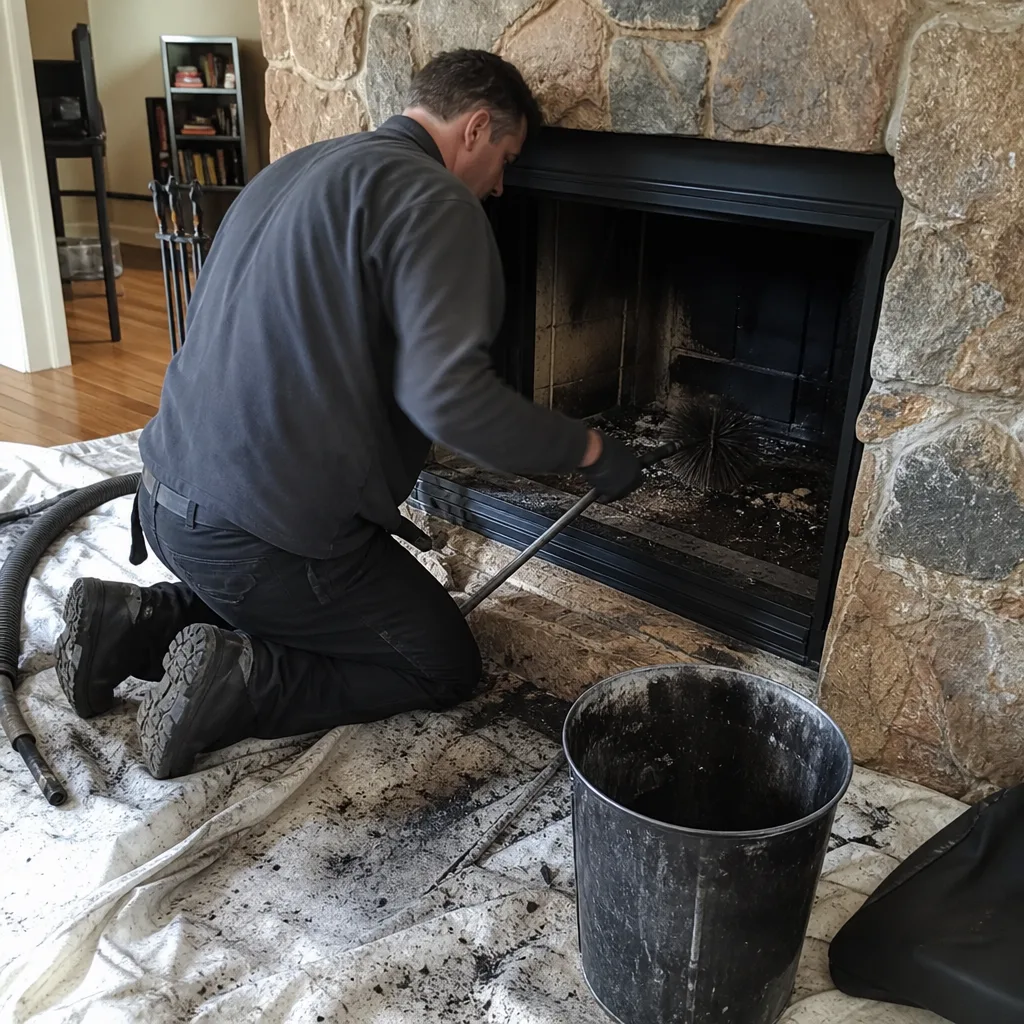
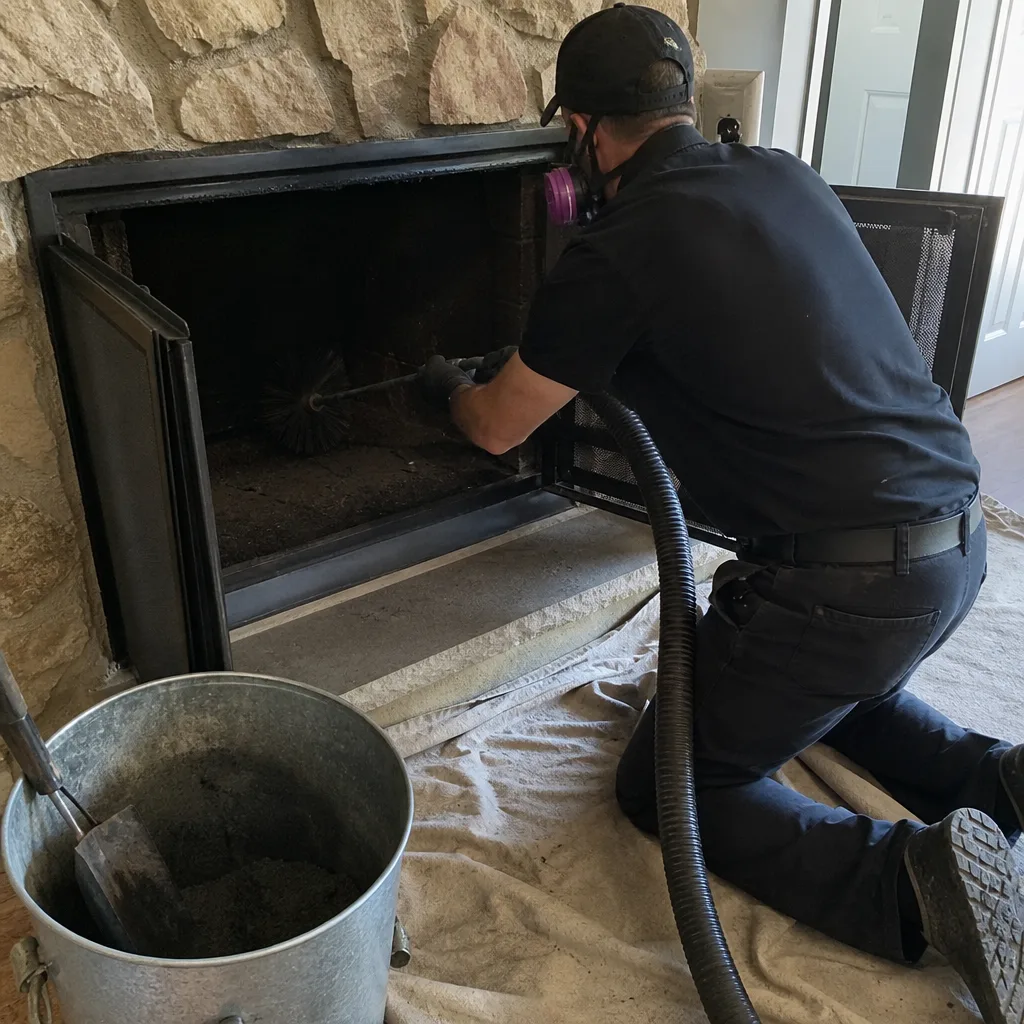
Chimney sweep logs do not sweep chimneys. They loosen some creosote - which then falls where a brush and vacuum still have to collect it.
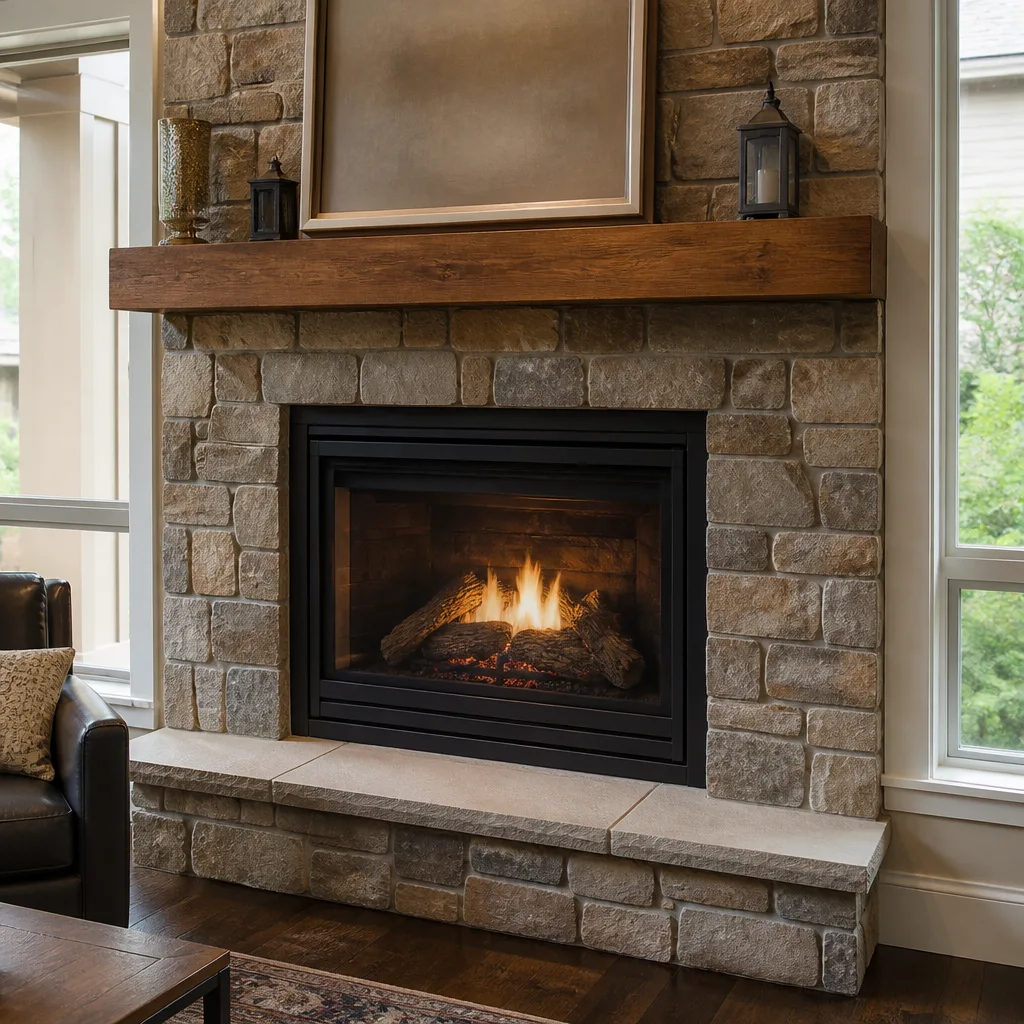
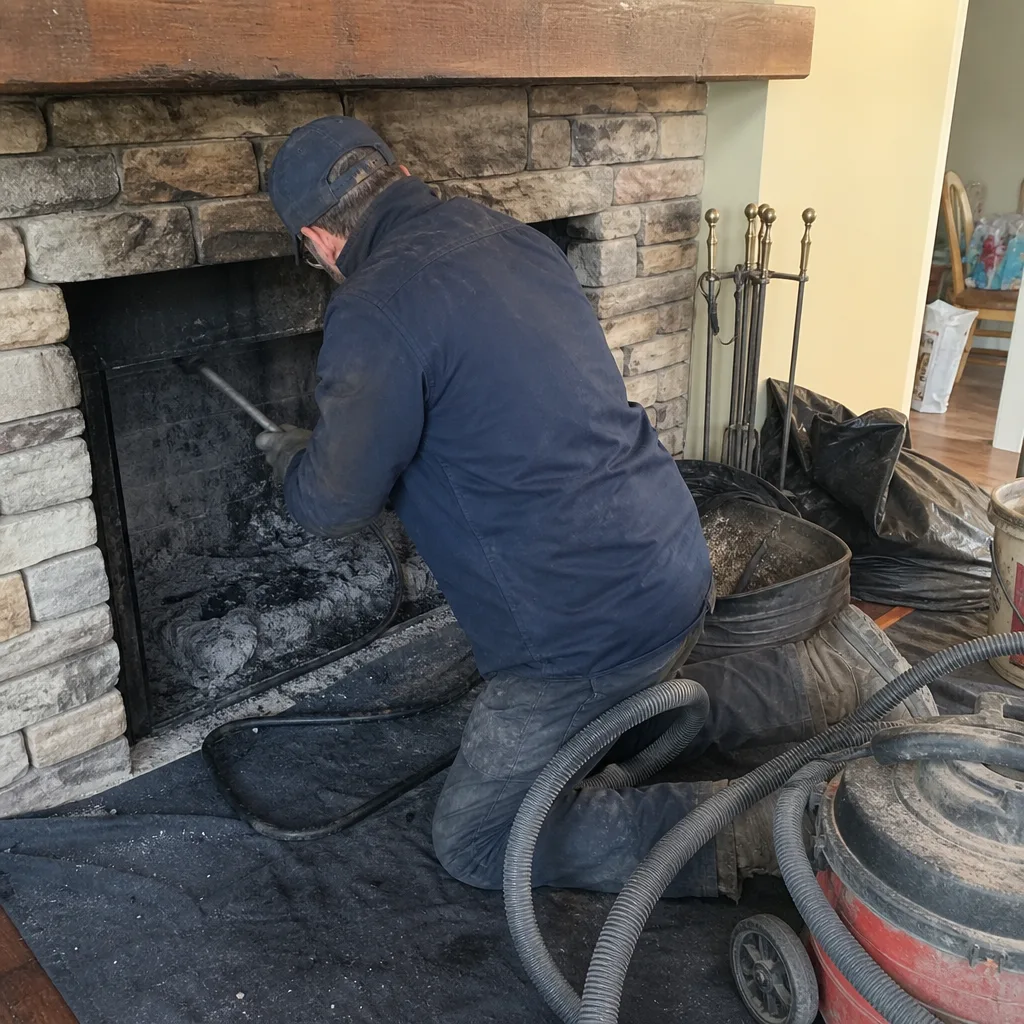 Before
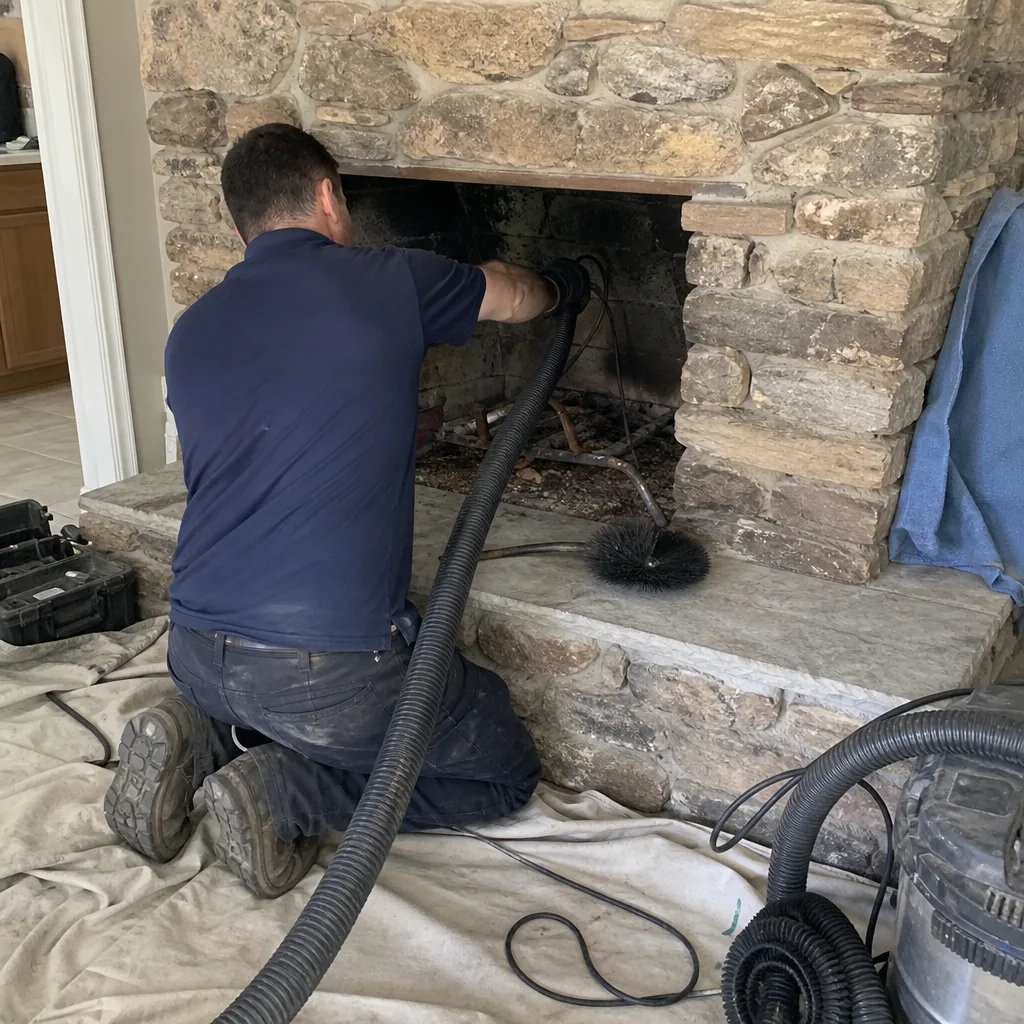 After
After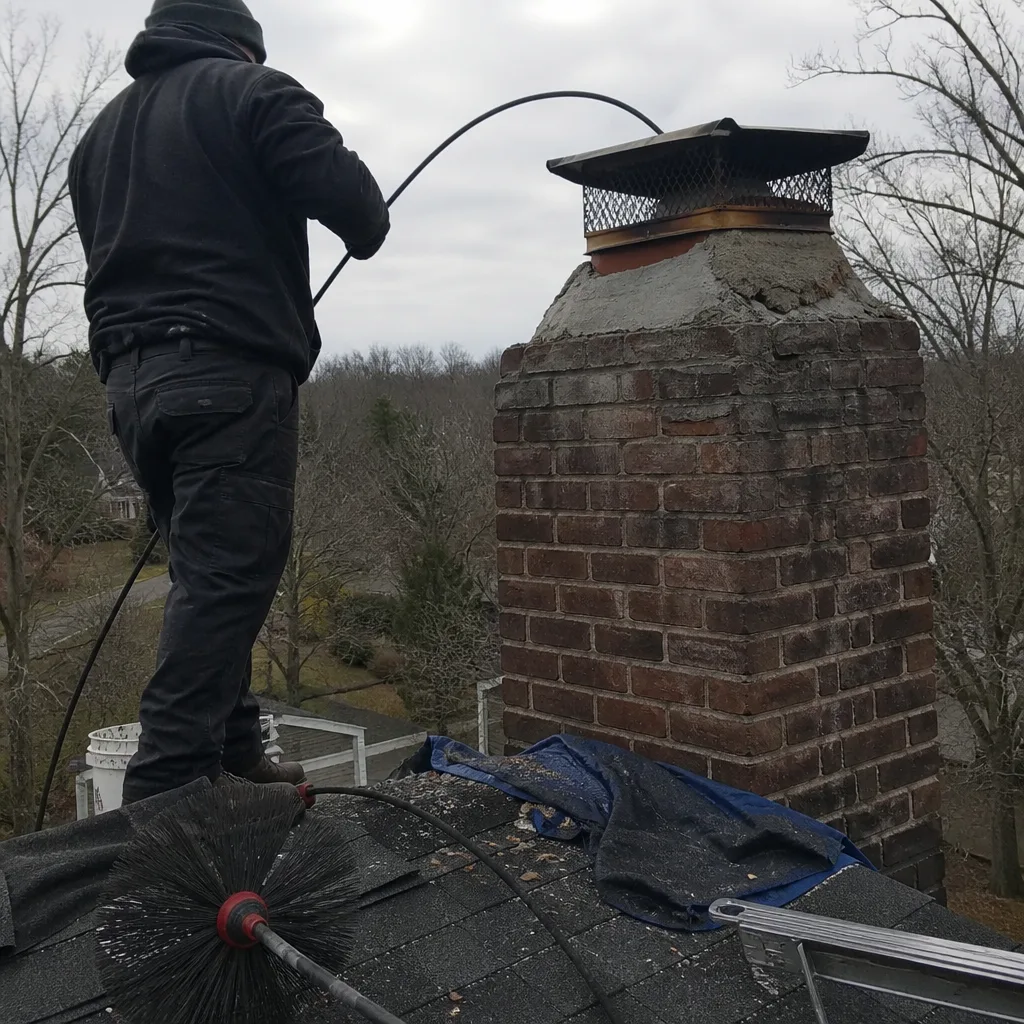 Before
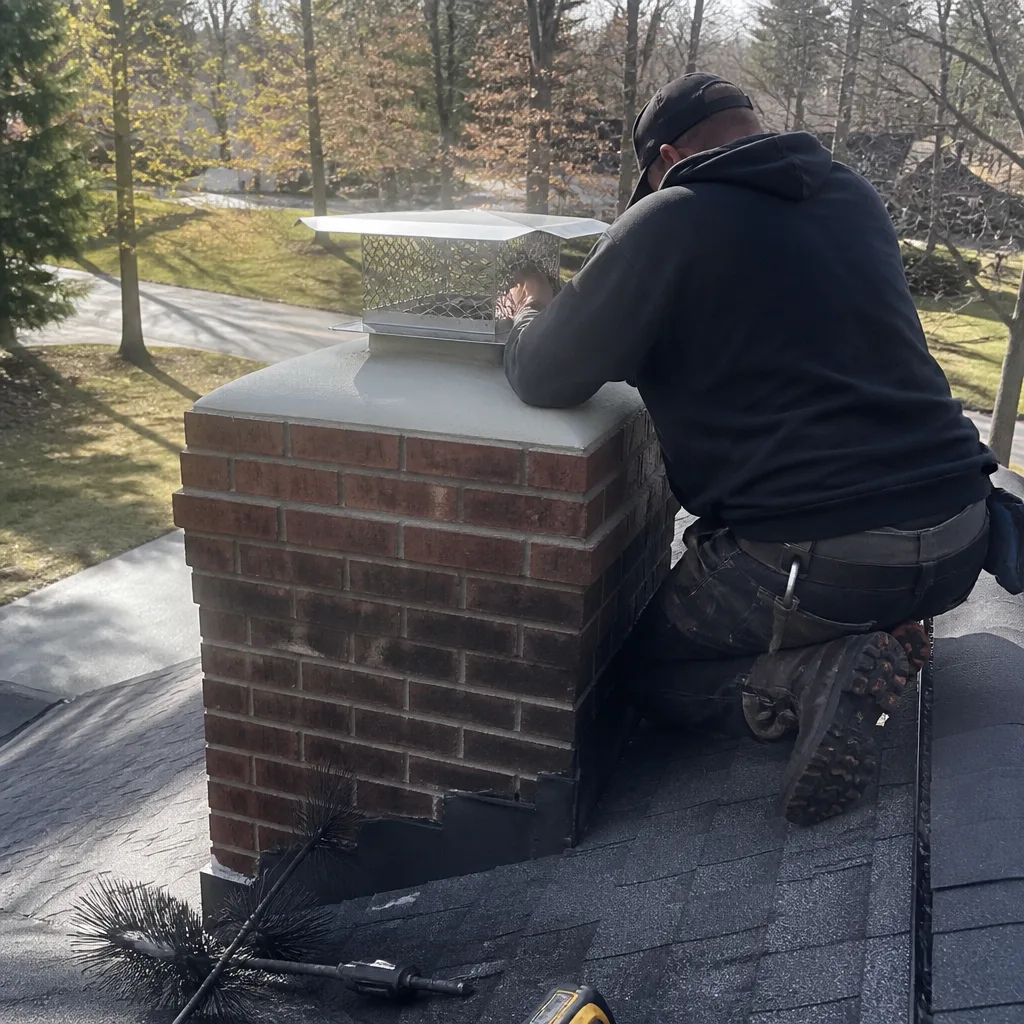 After
After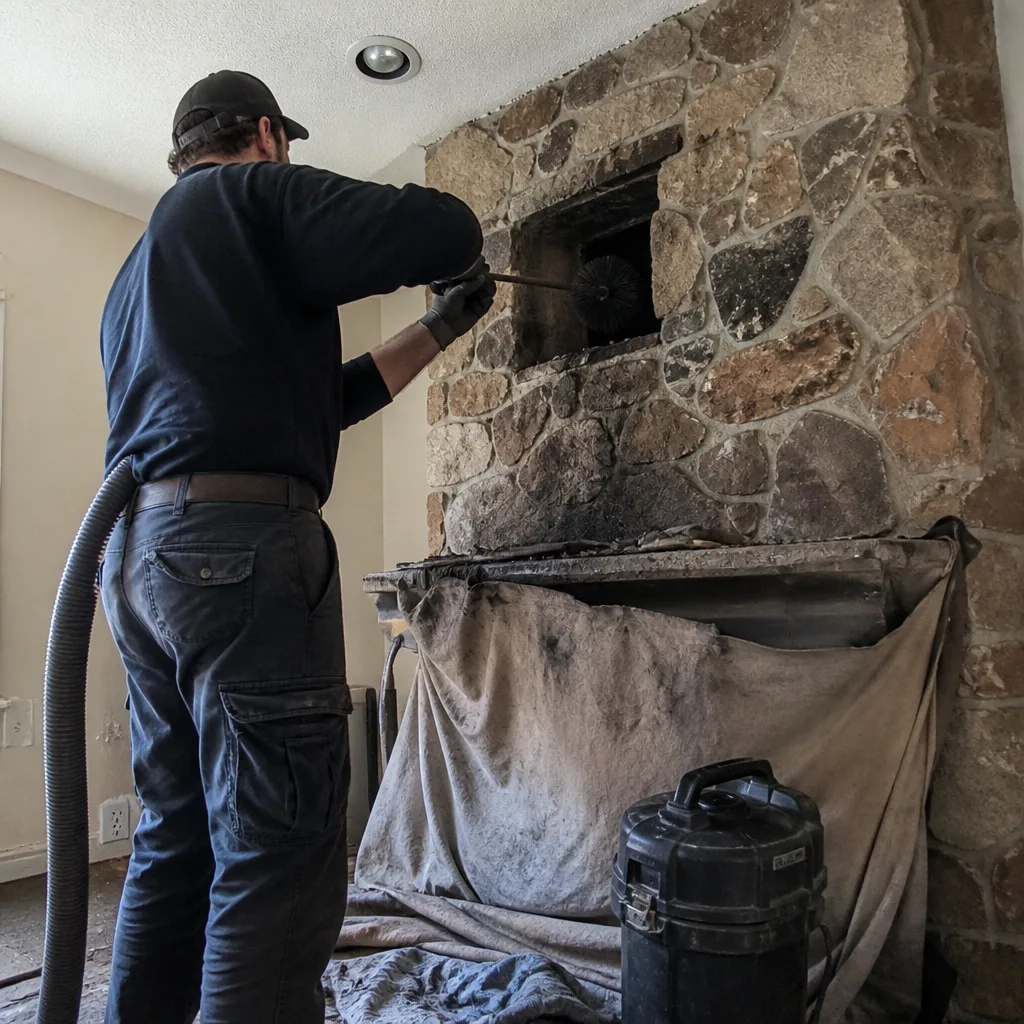 Before
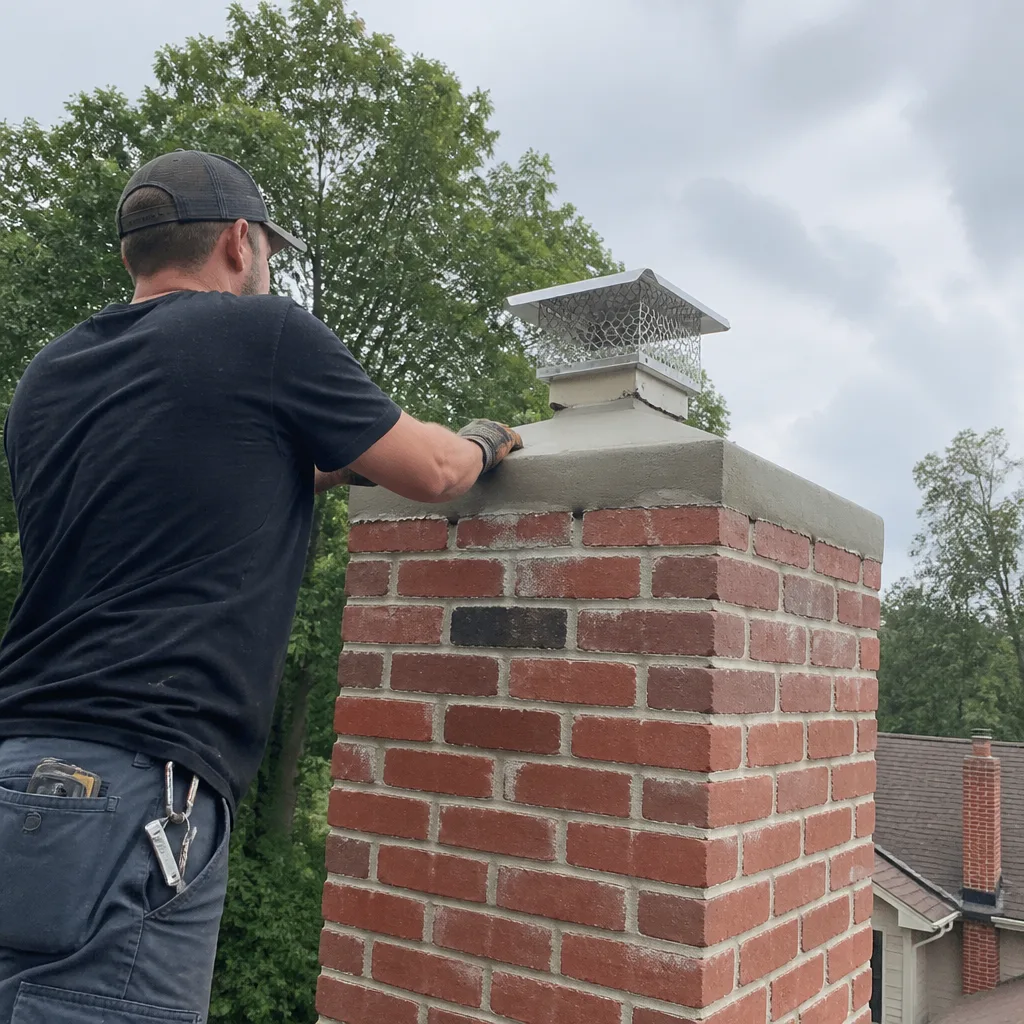 After
AfterSeasonal Chimney Cleaning Care for Ellicott City: Year-Round Homeowner’s Guide
The chimney blockage most likely to cause a carbon monoxide event in Ellicott City doesn’t build up in November. It moves in between March and June, when chimney swifts and raccoons are actively nesting in uncapped flues across Howard County. A fireplace that worked perfectly on its last burn in February can be fully obstructed by the time you light the first fire in October, and you’d never know it from the living room. This guide assigns specific chimney tasks to each season based on what Maryland weather actually does to masonry, and pairs with our Chimney Cleaning & Sweep Maintenance Checklist for Ellicott City Homeowners so you’ll know what to check, when to check it, and when a problem is worth a phone call.
Quick Answer
A seasonal chimney care schedule for Ellicott City means a visual inspection of crown mortar and flashing every March, a closed-flue humidity check through July and August, a professional Chimney Cleaning & Sweep in Ellicott City between late September and mid-October, and monthly draft monitoring during winter burn months. The most important single action is confirming your flue cap is intact before April, because spring nesting season creates more dangerous blockages than a year of creosote buildup.
Table of Contents
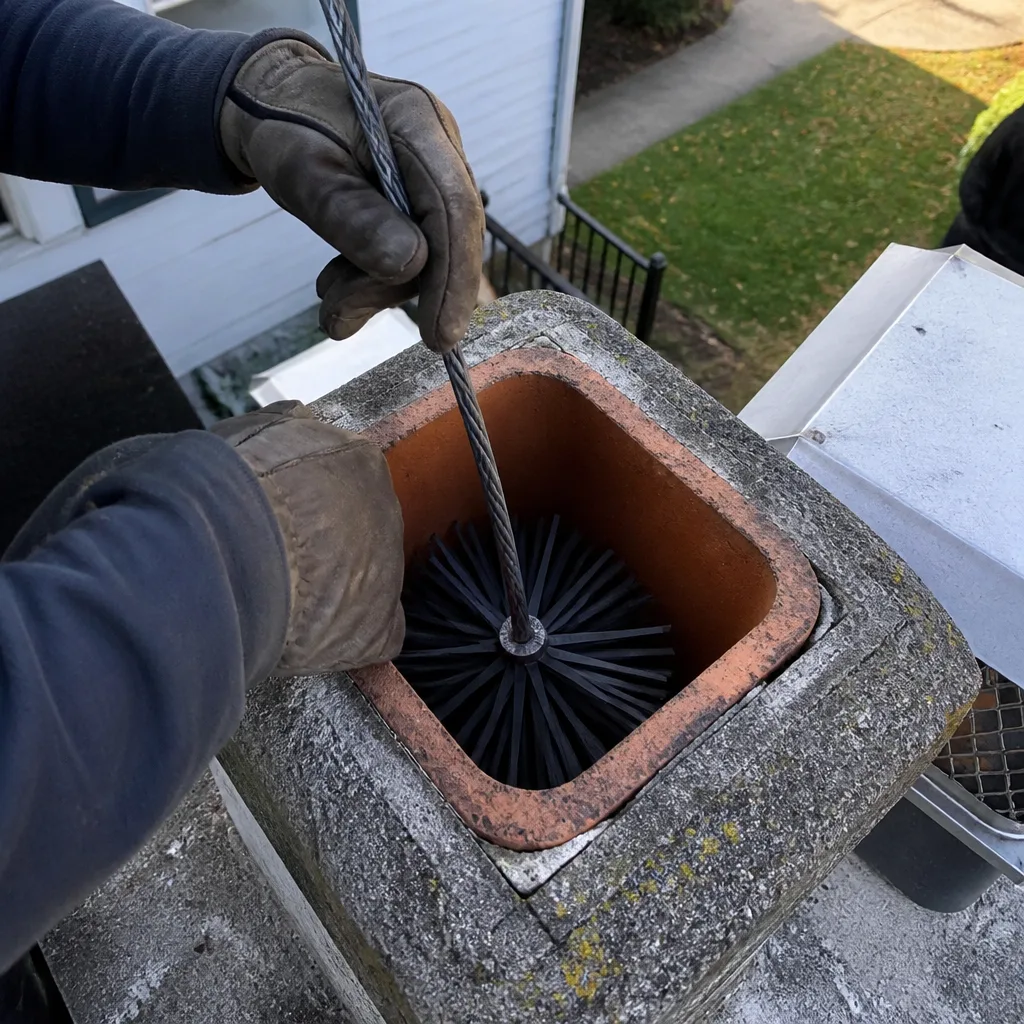
- Spring: Freeze-Thaw Damage and Nesting Season
- Summer: Humidity, Efflorescence, and the Closed Flue
- Fall: The Real Optimal Sweep Window for Ellicott City
- Winter: Monitoring Draft Between Service Visits
- Building a Four-Season Chimney Maintenance Calendar
- What Different Chimney Problems Look Like From the Ground
- Common Mistakes to Avoid
- When to Call a Professional
- Frequently Asked Questions
BeforeAfterSpring: Freeze-Thaw Damage and Nesting Season
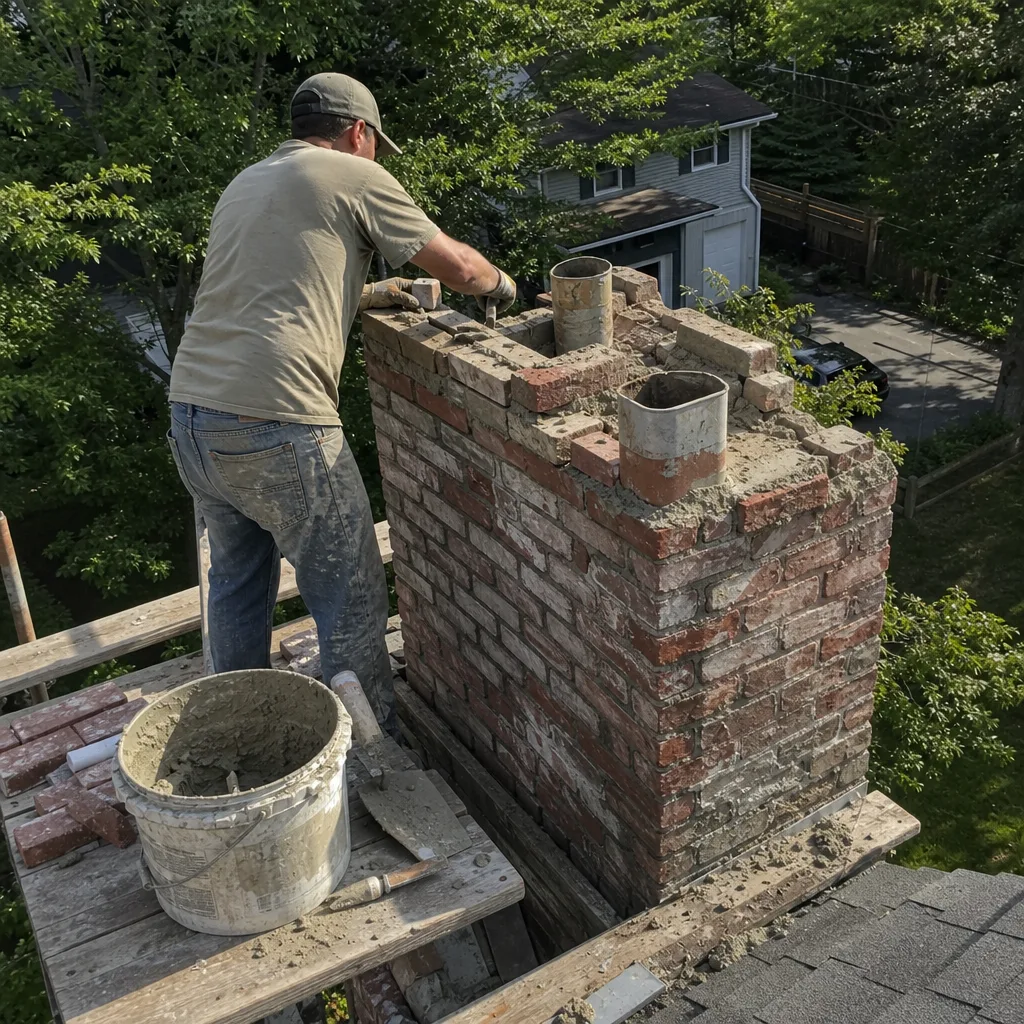
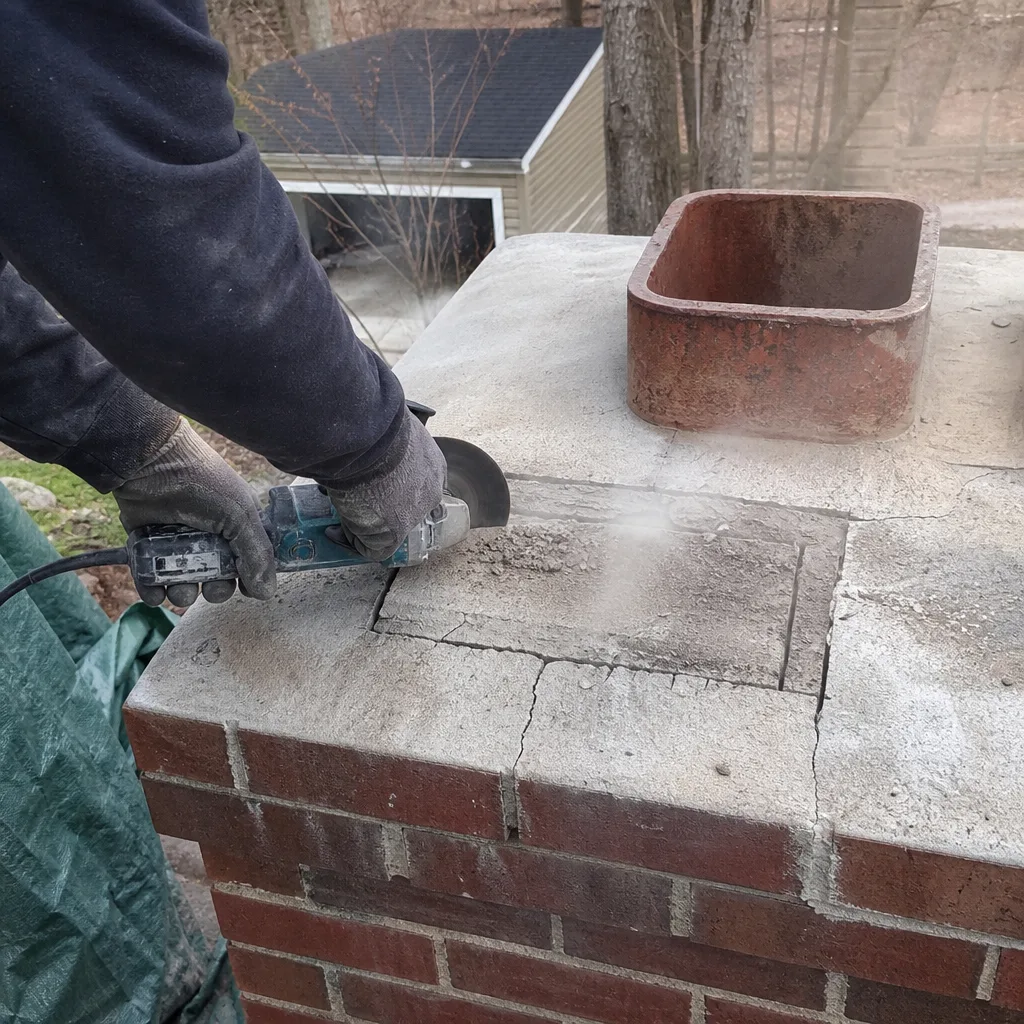
March and April are when Ellicott City chimneys show their winter wounds. A Maryland winter cycles through freeze-thaw conditions dozens of times, and each cycle works like a pry bar on crown mortar. Water seeps into hairline cracks during warmer days, freezes and expands at night, and the crack widens. After a few winters of this, the crown develops spalling: small pieces of mortar and brick face breaking away, leaving the softer inner material exposed.
Here’s what happens and why it matters:
- Spalling on the crown lets water enter the chimney’s core. That water then migrates through the masonry and appears inside as staining near the firebox, or outside as white mineral streaks on the brick face.
- Flashing failure shows up at the roof line. If you can see gaps between the flashing and the brick, or if the flashing has lifted away from the shingles, water is getting into the roof deck. By May, this shows up as stains on interior ceilings near the chimney chase.
- Chimney swifts return to Maryland in April. These birds are protected by federal law, and they will build nests on the inside of an uncapped flue. Once eggs are present, you cannot legally remove the nest until the young have fledged, usually by early August.
- Raccoons favor chimneys without caps for spring denning. A raccoon in a flue is not a curiosity. It’s a blockage that can send carbon monoxide into the house the first time you light a fire in fall.
In neighborhoods like Dorsey’s Search, Font Hill, and Dunloggin, mature trees overhang many rooflines, which gives raccoons easy access to chimney tops and makes a durable cap with a properly sized mesh screen the difference between a clear flue and a closed one. If you haven’t visually confirmed your cap is secure before mid-April, that’s the highest-value check on your spring list.
In our experience inspecting thousands of Ellicott City chimneys since 2009, we see the same spring sequence year after year: homeowners discover crown spalling in March, schedule a fix in May, and by then a nest has already gone in. The order matters. Cap first, crown second.
Summer: Humidity, Efflorescence, and the Closed Flue
Ellicott City’s July and August weather is humid, frequently above 70 percent relative humidity, with afternoon thunderstorms that soak brick and then a sun that bakes it dry. This wet-dry cycling accelerates efflorescence: the white, powdery mineral deposits that form on chimney exteriors as moisture moves through the masonry and evaporates, leaving salts behind.
Efflorescence isn’t just cosmetic. Here’s what it tells you and what it doesn’t:
- Mild efflorescence on a chimney that dries fully between rains is often a cosmetic issue. It can be brushed off and monitored.
- Heavy, recurring efflorescence on one face of the chimney usually indicates a water entry point: a cracked crown, a failed mortar joint, or flashing that has separated. The minerals are a symptom, not the problem.
- Efflorescence inside the firebox during summer is a stronger signal. That means water is entering the flue itself and running down the liner. Interior efflorescence in August is a reason to schedule an inspection before burn season.
The second summer issue is the closed flue. When a chimney sits sealed through humid months, the warm, moisture-heavy air inside the flue has nowhere to go. On brick liners, this accelerates deterioration of mortar joints. On any liner type, a closed flue with a missing cap will collect leaves, twigs, and the kind of organic debris that becomes a fuel block if it dries out before the first fire.
Our recommendation for Ellicott City is simple: if you’re not using the fireplace between May and September, leave the damper open a quarter-inch on dry days to allow air exchange, and confirm the top-sealing cap is in good shape. If you have a standard damper that only opens fully or not at all, consider a chimney cap damper, which seals the top and keeps humidity, animals, and summer air out while still allowing the flue to breathe. We install these regularly on older Howard County homes that have original cast-iron dampers from the 1960s and 70s, many of which no longer seal completely.
Fall: The Real Optimal Sweep Window for Ellicott City
The standard advice is “clean your chimney in the fall.” But fall is not one day, and in Ellicott City the difference between mid-September and mid-November is the difference between a calm appointment slot and a scramble after the first cold snap. See our Chimney Cleaning Cost Breakdown: The Ellicott City Homeowner’s Reference for 2026 to budget ahead.
The optimal window for a Chimney Cleaning & Sweep in Ellicott City is late September through mid-October, for three reasons:
- The weather is still cooperative. Sweeping involves working on the roof and running tools down the flue. In late September and early October, you’re not yet fighting ice on roof tiles or early darkness.
- Swifts are gone, raccoons haven’t moved in. By late September, chimney swifts have migrated. Raccoons typically don’t seek winter shelter until late October or November. A sweep in this window confirms the flue is clear and lets you cap any openings before wildlife season starts.
- You’re ahead of the demand curve. Howard County chimney companies book heavily once nighttime temps drop below 45 degrees. The first 50-degree night in November is when call volume doubles. If you’re scheduling then, you’re competing for the last available appointments and potentially waiting weeks.
What should a fall sweep actually include? At minimum, a cleaning that removes creosote and soot, a visual inspection of the liner, and confirmation that the cap, crown, and flashing are all intact. Our Chimney Cleaning Permits, Codes & Inspections in MD: What You Need to Know explains the regulatory side. We do more than that by default. Every visit includes a camera-scan inspection that documents the flue condition, smoke chamber, and liner, and every customer walks away with a photo record of what we found. That’s not an add-on with us. It’s been standard on every job since 2009, and it’s written into Clause 4 of the Haven Standard, which requires a documented photo record on every visit.
If you’ve never timed your sweep this way, the first year you do, you’ll notice the difference. You’ll have a completed, documented cleaning before Halloween, not a waitlist number in November.
Winter: Monitoring Draft Between Service Visits
Once the chimney is swept and the burning season starts, your job shifts from maintaining to monitoring. A fireplace that was fine in October can develop draft problems by January, especially after heavy use or a stretch of cold, still days that trap air pressure differences around the house.
Here are the specific, observable signs to watch for during winter burning months:
- Smoke entering the room on startup. A small amount of cold-air backdraft on startup is common, but smoke that keeps pushing back after the flue warms up suggests an obstruction, a downdraft issue from overhanging trees or the roofline, or a damper that isn’t opening fully. Watch for the difference between a 30-second startup puff and a persistent draft reversal.
- Burning smell in the house when the fireplace is not in use. If you smell smoke or soot when there’s no fire, it usually means negative pressure in the house is pulling flue gases back down. This is a carbon monoxide risk pattern and worth a same-week professional check.
- Black, shiny creosote buildup visible near the damper. If you shine a flashlight up the flue from inside and see glossy, tar-like deposits, that’s Class III creosote, the kind most likely to ignite. If you’re seeing that during the season, you’re burning either unseasoned wood, too-cool fires, or both. The chimney may need a mid-season sweep, especially if you burn more than three fires a week.
- White staining appearing on exterior brick during winter. This is efflorescence showing up mid-season, and it means water is active in the masonry. The crown and flashing need attention, but the fix can usually wait until the freeze-thaw cycle settles in early spring.
If you see any of the first three signs, stop using the fireplace until it’s checked. The cost of an inspection is modest compared to the cost of a chimney fire or carbon monoxide poisoning, and both are real outcomes in Howard County every winter.
Building a Four-Season Chimney Maintenance Calendar
The cleanest way to make this stick is to tie each task to an Ellicott City weather pattern, not a calendar date. Maryland’s seasons don’t start on the solstice, so your chimney calendar shouldn’t either.
Here’s the schedule we recommend to homeowners in Ellicott City:
- March 1 to April 15: visual cap, crown, and flashing check. The last hard freezes are passing, but you’re before the main nesting window. Walk around the chimney from the ground. Look for missing mortar, cracked crown edges, lifted flashing, and whether the cap is still on. If you can’t see the cap from the ground, mark it as unconfirmed, not confirmed.
- May through August: humidity and efflorescence monitoring. Check the brick face monthly after heavy rain. Photograph any white deposits so you can tell whether they’re growing. It’s a 5-minute check that gives you a baseline.
- Late September to mid-October: professional cleaning and Level 2 camera-scan inspection. This is the annual sweep window. Book it by Labor Day to get the slot you want.
- November through February: monthly draft monitoring during burn season. Watch for the four signs in the section above. At minimum, check for smoke entering the room, burning smells when the fireplace is idle, and visible glossy creosote.
- After any severe storm with high wind or hail: do a ground-level check for cap damage, displaced flashing, or new crown cracks. You don’t need to get on the roof.
If you want reminders without paying for an app, these dates map nicely to existing rhythms, and you can find more guides & resources on our blog: the first day you mow grass in spring is cap-check day. The July week you’re not on vacation is efflorescence photo day. The September Tuesday after Labor Day is booking day. December 1 is creosote check day.
What Different Chimney Problems Look Like From the Ground
Most Ellicott City homeowners shouldn’t be on their roofs. Steep pitches, two-story homes, and older heat-weakened shingles make climbing up more risk than the inspection is worth. But a lot can be seen from the ground if you know what to look for.
Crown and cap issues
From the ground, a damaged crown often looks like an uneven top edge, dark stains running down from the top course of brick, or a cap that appears tilted. If your cap is missing entirely, you’ll likely see the flue opening as a dark rectangle at the top. That’s an immediate flag because it means the chimney is fully open to birds, rain, and debris.
Flashing and roofline leaks
Stand far enough back to see where the chimney meets the roof. Flashing problems usually show as dark staining on the shingles immediately around the chimney, or as lifted metal that catches light differently than the roofing. Inside the house, the companion signs are ceiling stains or paint bubbling near the chimney chase.
Masonry deterioration
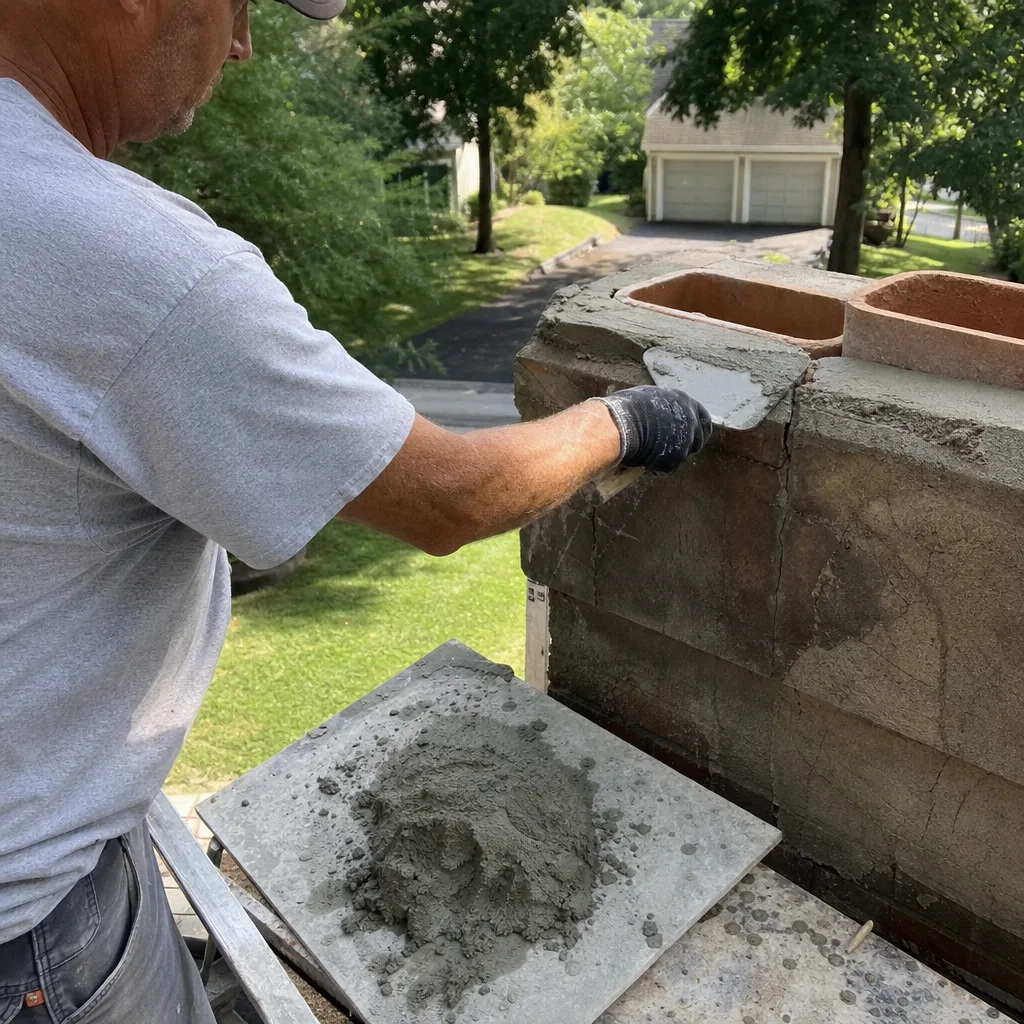
Look for missing mortar joints between bricks, especially in the top third of the chimney where weather exposure is most severe. In older Ellicott City neighborhoods like St. John’s Lane and the historic district, many chimneys are original to 1940s and 1950s construction, and mortar joints are simply past their service life. If you can see daylight through a joint from the ground, that’s a structural problem, not a cosmetic one.
Liner problems you can’t see from outside
The flue liner is not visible from the ground, which is exactly why a camera-scan inspection matters. A liner can be cracked, spalling, or partially collapsed behind intact exterior brick, and you’ll only find it with a camera down the flue. That’s the inspection we perform on every job, and it’s the same standard (NFPA 211 Level 2) that home inspectors and insurance companies reference. If you’re buying or selling a home in Ellicott City, this is the single most important chimney check you can do, because it’s the one thing a visual inspection from outside will always miss.
We’ve written more about Chimney Repair in Ellicott City for homeowners who want a deeper look at how liner damage, crown repair, and repointing are actually addressed in our market.
Common Mistakes to Avoid
- Assuming no fireplace use means no chimney care. Even chimneys on homes without active fireplaces still need cap and crown maintenance. Water intrusion through the chimney is one of the leading causes of attic mold and ceiling damage in Ellicott City homes where the fireplace hasn’t been lit in years.
- Scheduling a November sweep and expecting a fast appointment. By the time the first cold snap hits Howard County, reputable chimney companies are booked two to four weeks out. If you want a pre-season sweep, book it in September.
- Ignoring a missing or damaged cap because “we don’t get animals.” Howard County has robust populations of raccoons, squirrels, and chimney swifts. Every uncapped flue is eventually occupied or blocked. The question is when, not whether.
- Treating efflorescence as a permanent cosmetic issue. White deposits that keep returning after cleaning are a moisture signal. If you don’t find the water entry point, the underlying masonry damage gets worse every freeze-thaw cycle.
- Burning wood that hasn’t been seasoned properly. Wet wood creates low-temperature fires that produce Class III creosote fast. In Ellicott City’s humid climate, wood needs to be split and stacked for at least 12 months, sometimes longer, to reach the moisture content that burns cleanly.
- Doing a “finger sweep” of the flue from inside and calling it maintained. You can’t see the top of the flue, the liner walls, or the smoke chamber from the firebox. A proper cleaning requires specialized brushes, rods, and a clear path down the entire flue. Amateur sweeping can push debris further in and leave the most dangerous deposits untouched.
- Leaving the damper fully closed all summer. Trapped humidity accelerates liner and mortar deterioration. If your damper doesn’t allow a partially open position, address that before next summer.
When to Call a Professional
Call a chimney professional if you see smoke entering the room during normal operation, smell soot when the fireplace is idle, find animal nesting material in the firebox, notice water staining on the ceiling near the chimney, or see black, shiny creosote inside the flue. These are not slow-burner issues. They indicate an active blockage, a draft failure, or an active leak, and the longer they wait, the more expensive the repair. Fireplace Services in Ellicott City also cover gas log conversion and inspection, which matters if you’re switching from wood to gas and want to confirm the existing chimney is safe for venting. Level Two Chimney Ellicott City offers free estimates in Ellicott City; call (443) 363-5262 and a live person answers, 24 hours a day.
Frequently Asked Questions
A standard chimney cleaning and inspection in Ellicott City typically runs $180 to $340 depending on flue size, roof pitch, and whether there’s significant creosote buildup requiring extra work. That range includes a visual inspection at most companies. At Level Two Chimney Ellicott City, it also includes a camera-scan inspection and a documented photo record on every job, which is Clause 4 of the Haven Standard and has been our default since 2009. Call (443) 363-5262 for an exact written quote; estimates are free.
Once per year, before burning season, if you use the fireplace regularly. The NFPA standard (NFPA 211) says chimneys should be cleaned when there’s 1/8 inch or more of creosote buildup, and for most Ellicott City homeowners who burn wood from October through March, that threshold arrives within one season. If you only burn occasionally, like a few fires a year on holidays, a cleaning every other year may be sufficient, but you should still have an annual inspection to check for animal blockages and water intrusion. Call us at (443) 363-5262 if you’re not sure which schedule fits your usage.
Not always. Hairline cracks in clay tile liners can sometimes be addressed with a resurfacing product like HeatShield rather than a full liner replacement. But if the liner has separated, collapsed, or the flue is too large for the appliance it serves, a full stainless steel liner installation may be the right call. What matters is that you’re making the decision based on what the camera shows, not on a sales pitch. We never recommend a liner replacement without camera evidence you can see for yourself. Call (443) 363-5262 for a free estimate and a photo record of whatever we find.
Creosote builds up as a sticky, then flaky, then glossy tar-like layer on the flue walls. Glossy Class III creosote is combustible, and once it reaches a certain thickness, a hot fire can ignite it and burn at over 2,000 degrees. The result is a chimney fire that cracks liners, warps dampers, and can spread to the roof structure through cracked masonry. Separately, if an animal has been nesting in the flue, the blockage itself can push carbon monoxide into the home when you light the first fire. These are both preventable outcomes. Call (443) 363-5262 to get a cleaning scheduled before they become possibilities.
Late September through mid-October. By then, chimney swifts have migrated south, raccoons haven’t yet moved in for the winter, and the weather still allows safe roof work. You’ll also get an appointment slot without waiting weeks. If you miss that window, the next best time is whenever you can get on the schedule before the first hard freeze. Call (443) 363-5262 now to get a written quote, and we’ll work around your calendar, not ours.
Yes, for visible exterior issues like missing caps, cracked crowns, lifted flashing, and missing mortar joints. You cannot see the flue liner, smoke chamber, or upper flue interior from the ground or from the firebox. Those require a camera-scan inspection, which is the standard we use on every job. If your ground-level check finds anything suspicious, or if you simply want a documented record of the flue’s condition before burning season, call (443) 363-5262. We’ll inspect it, photograph it, and give you a written price before any work starts.
The Bottom Line
Ellicott City’s climate doesn’t damage chimneys on a convenient schedule, so your maintenance shouldn’t follow one either. The freeze-thaw damage that appears every March, the humidity-driven efflorescence that accumulates through summer, and the nesting season that peaks in May all set up the conditions that make or break your fall burn season. A professional sweep between late September and mid-October, paired with a spring cap check and monthly visual monitoring, covers the failure points that matter. Level Two Chimney Ellicott City has been serving homeowners here since 2009. Learn more about Level Two Chimney Ellicott City home services or call (443) 363-5262 for a free estimate.
Written by Corrine Halstead, Owner at Level Two Chimney Ellicott City, serving Ellicott City since 2009.