
Last updated September 20, 2026
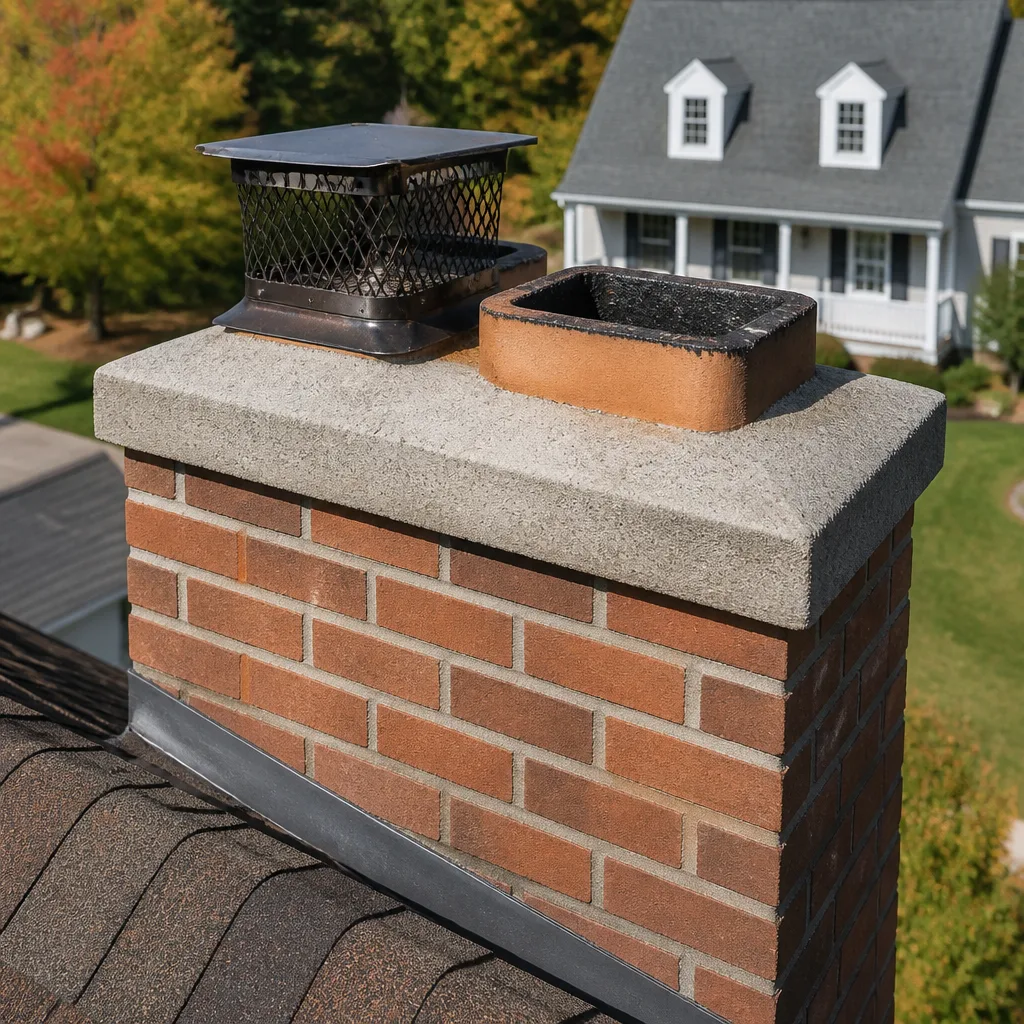
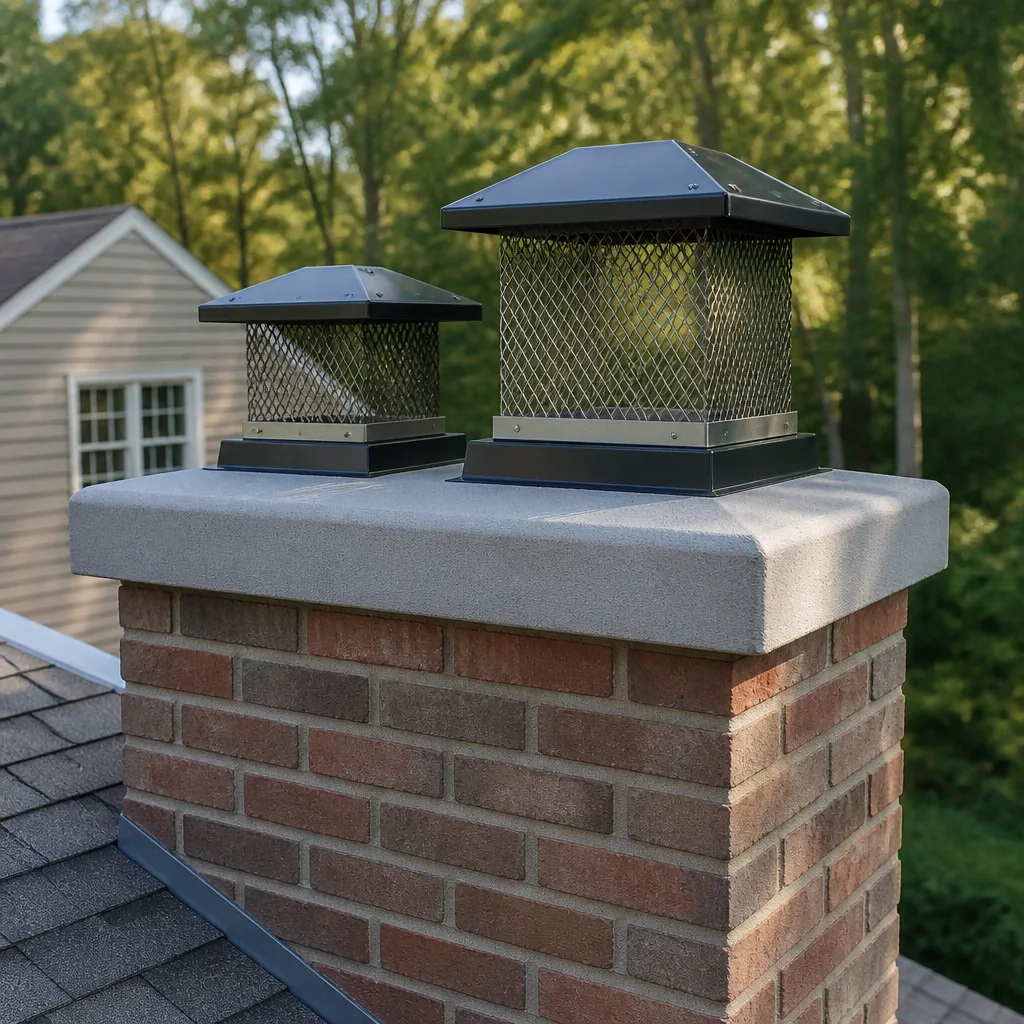
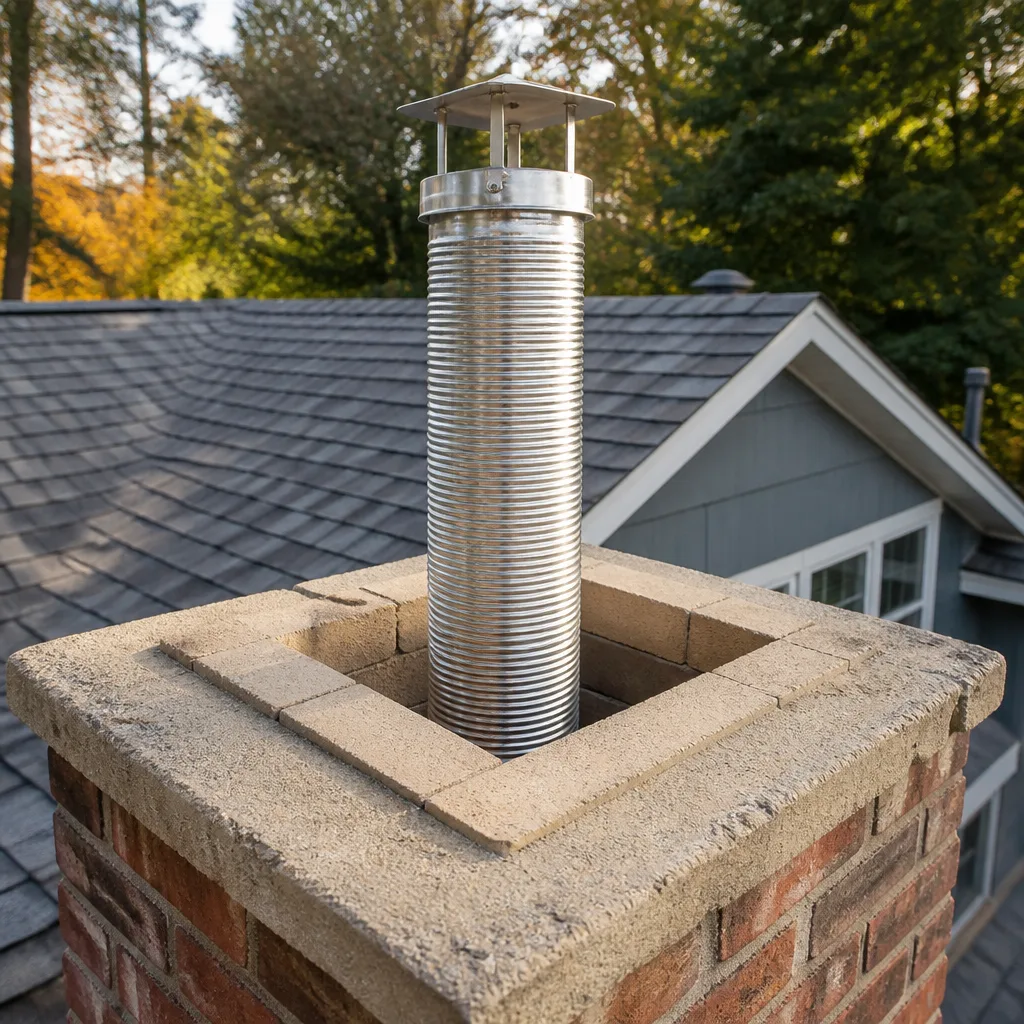
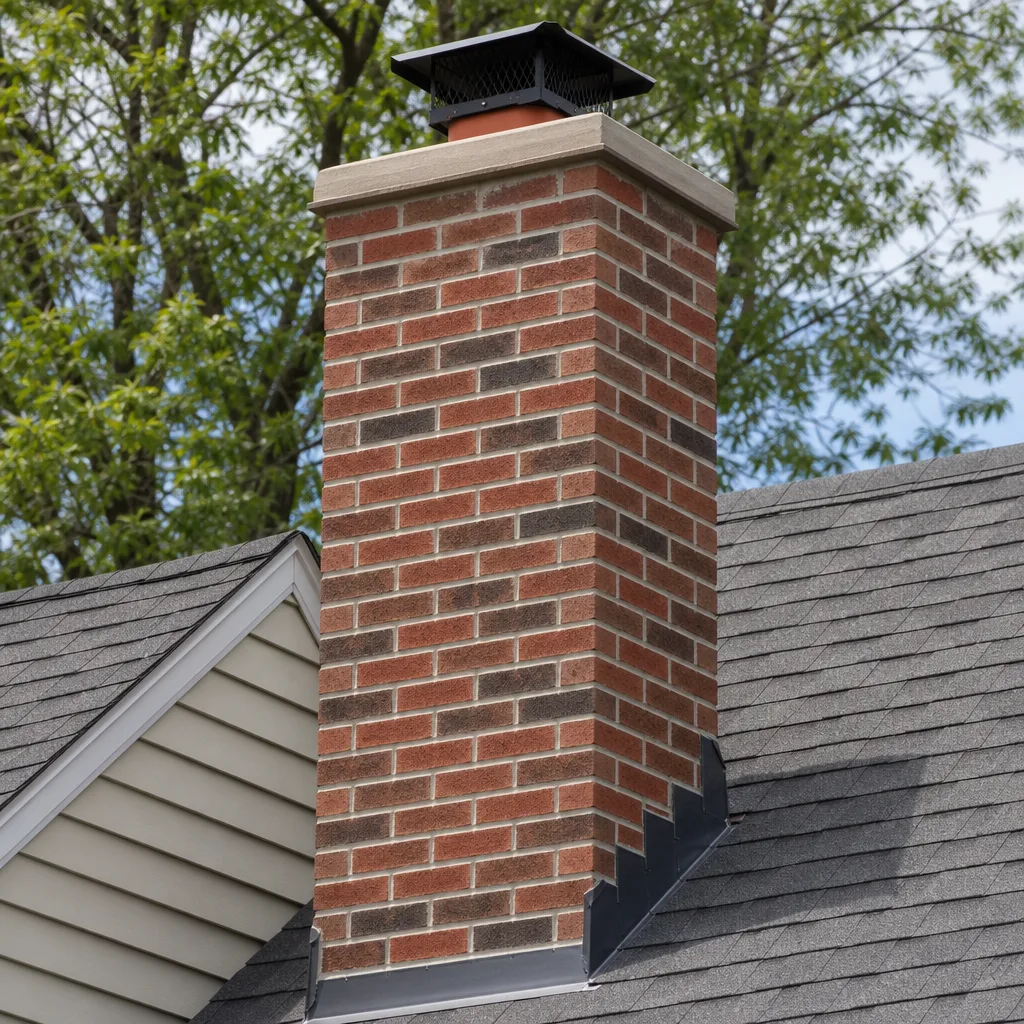
Level 1 sweep and inspection to the NFPA 211 annual standard - flue, crown, cap, and flashing checked and photographed
Chimney sweep logs do not sweep chimneys. They loosen some creosote - which then falls where a brush and vacuum still have to collect it.
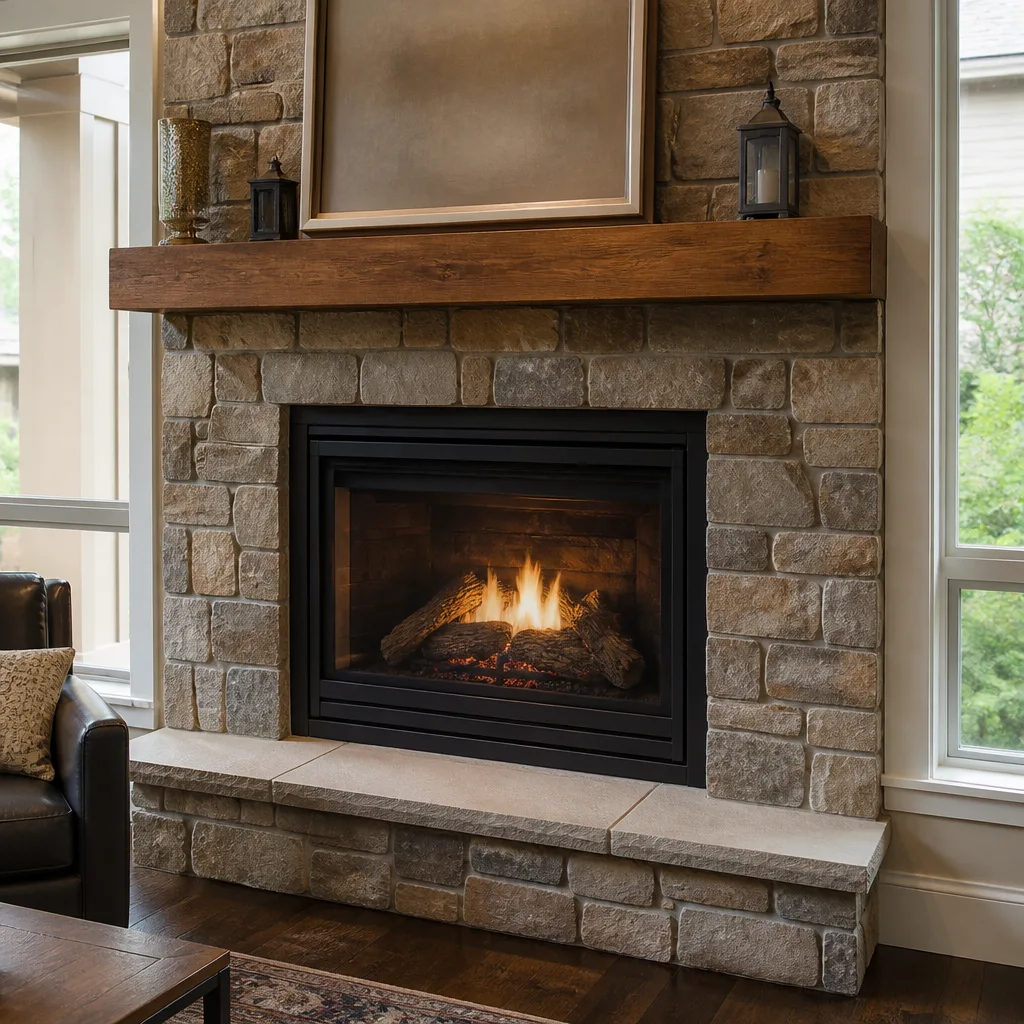
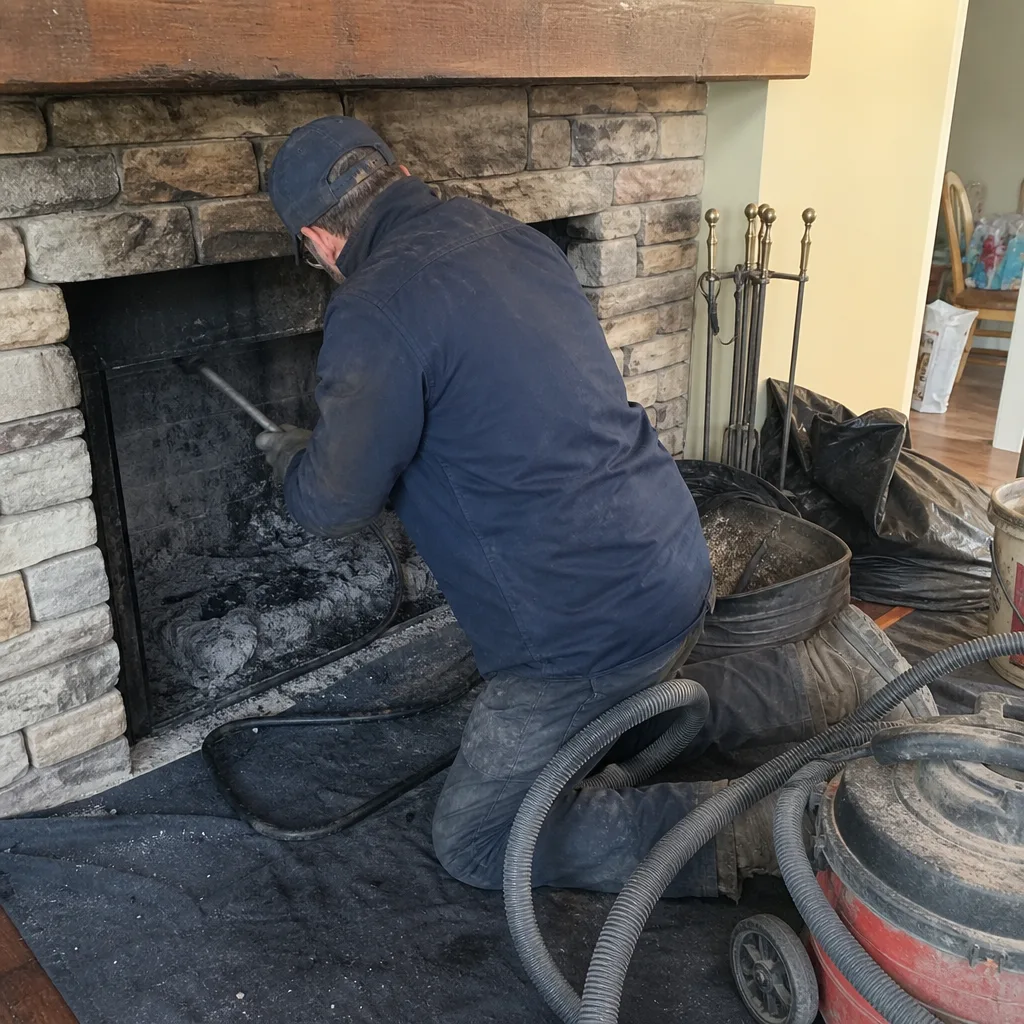 Before
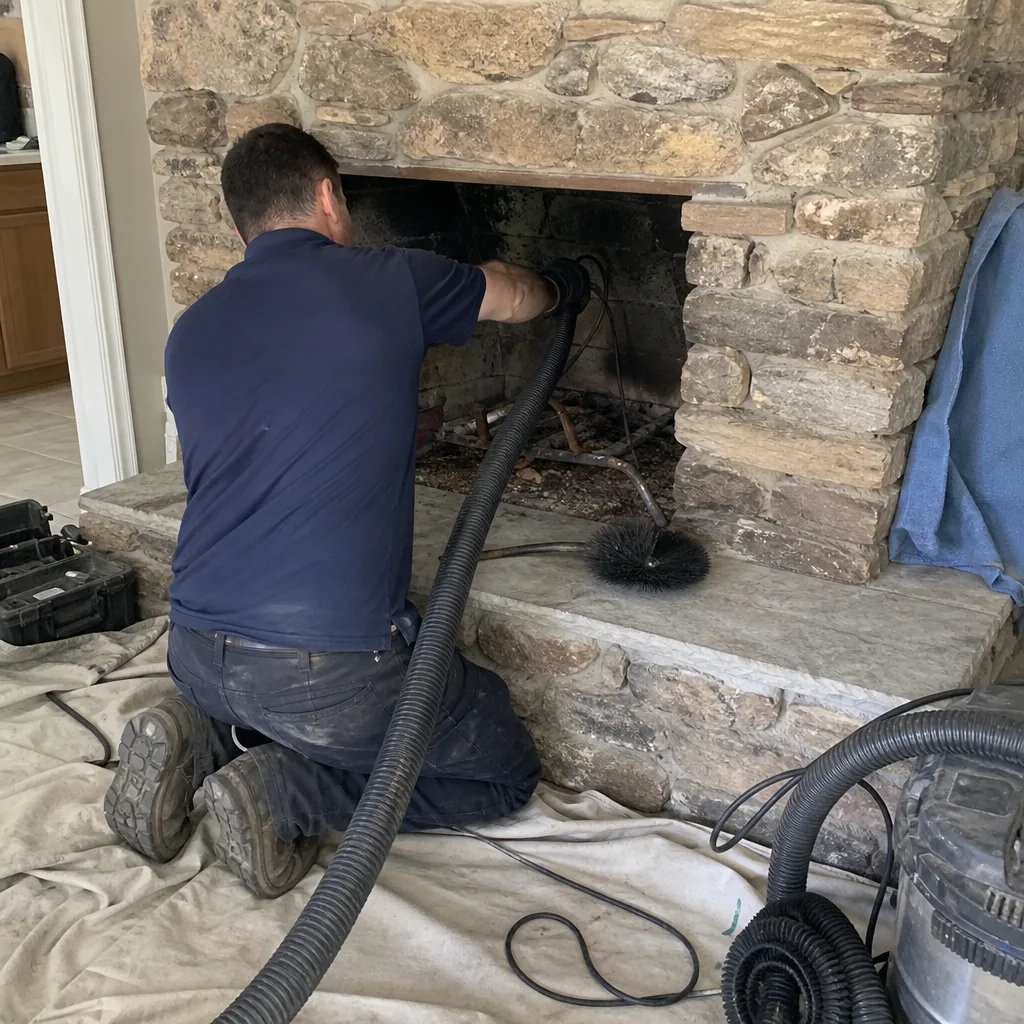 After
After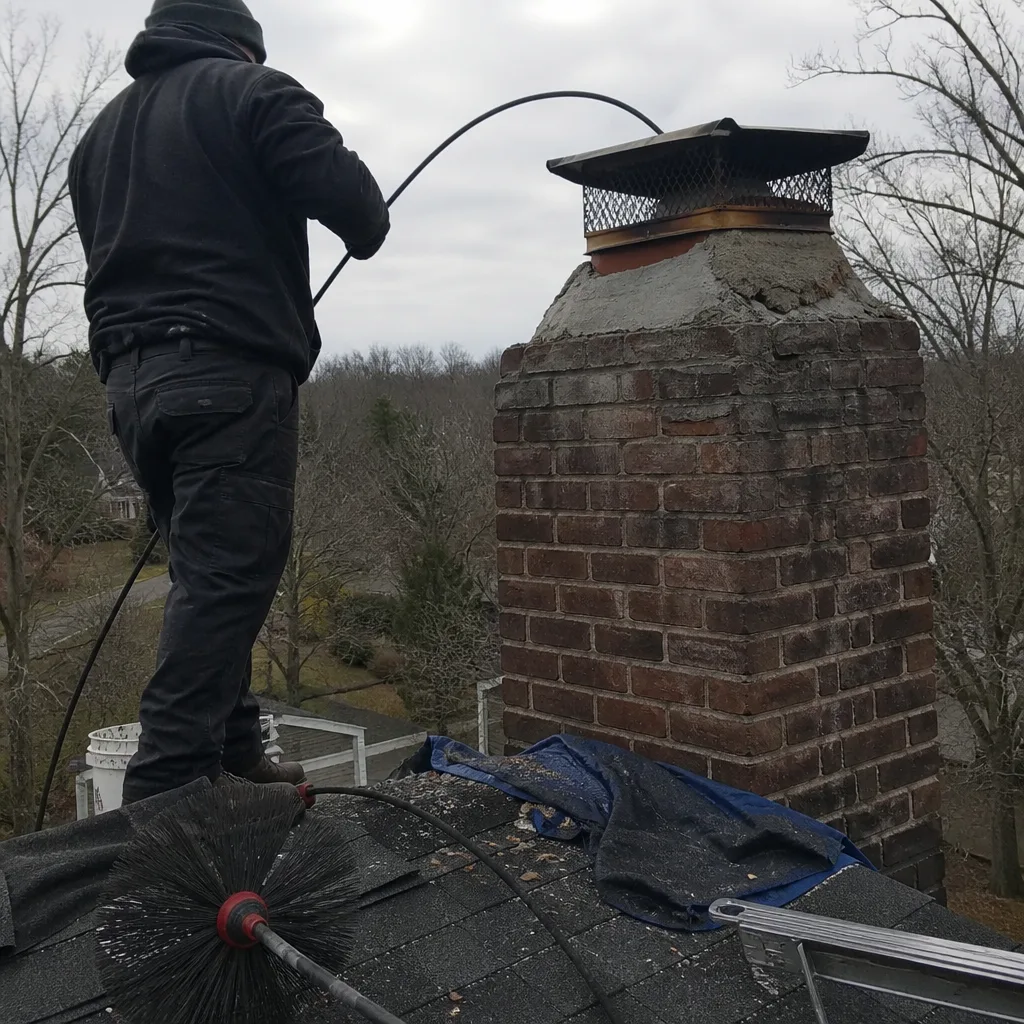 Before
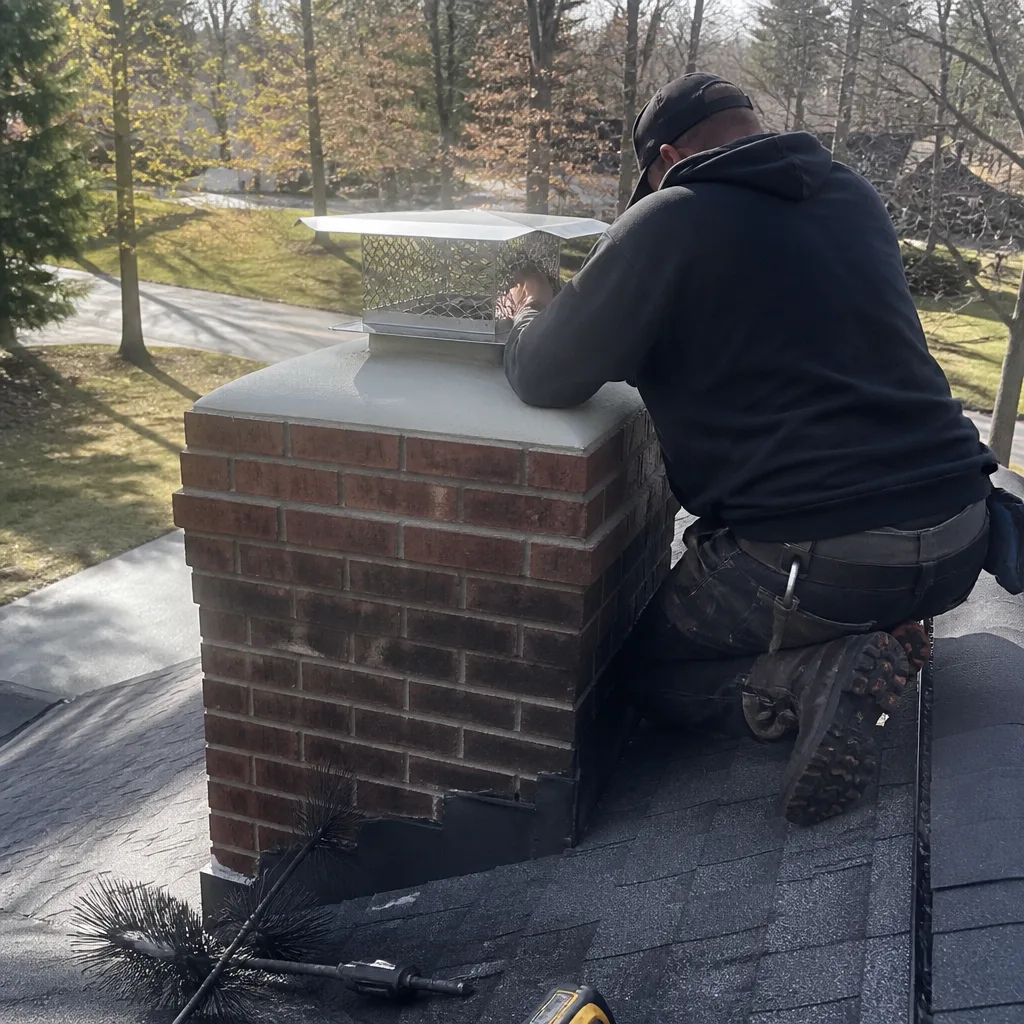 After
After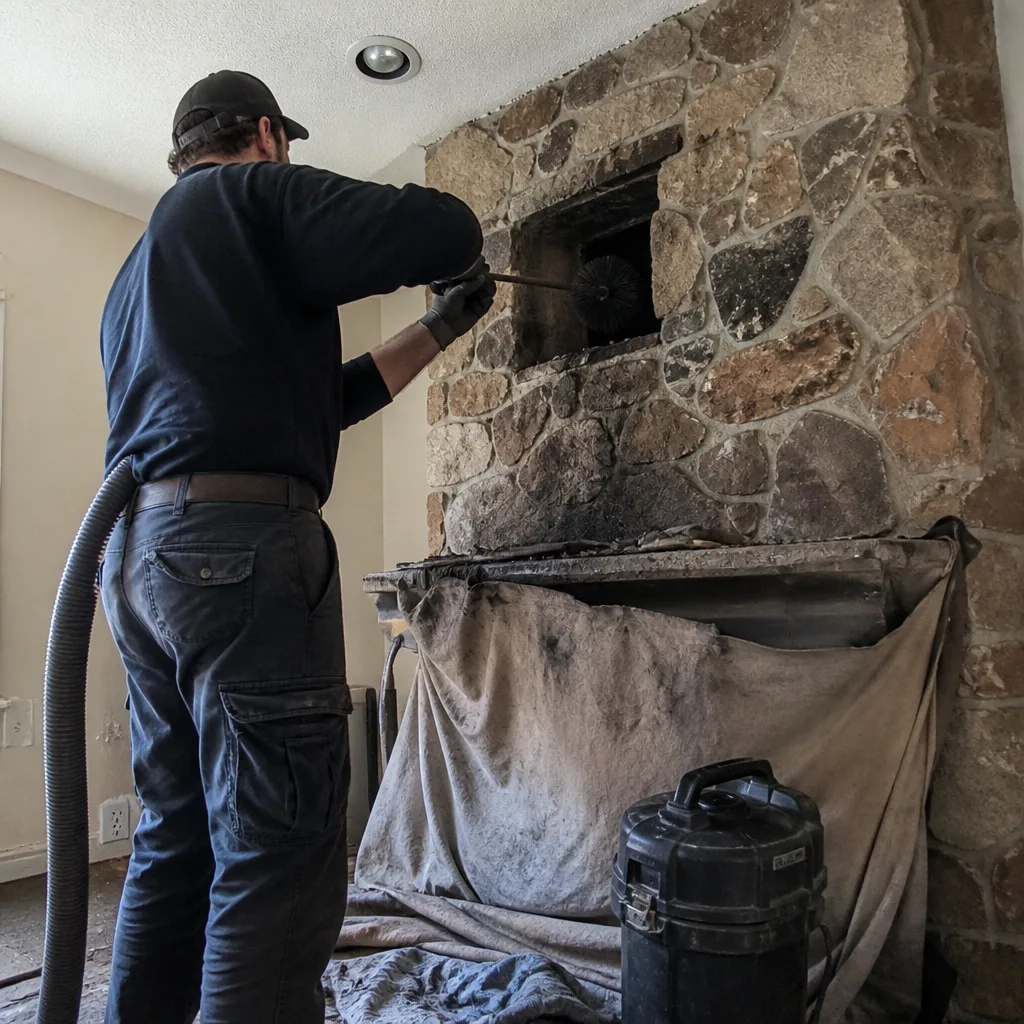 Before
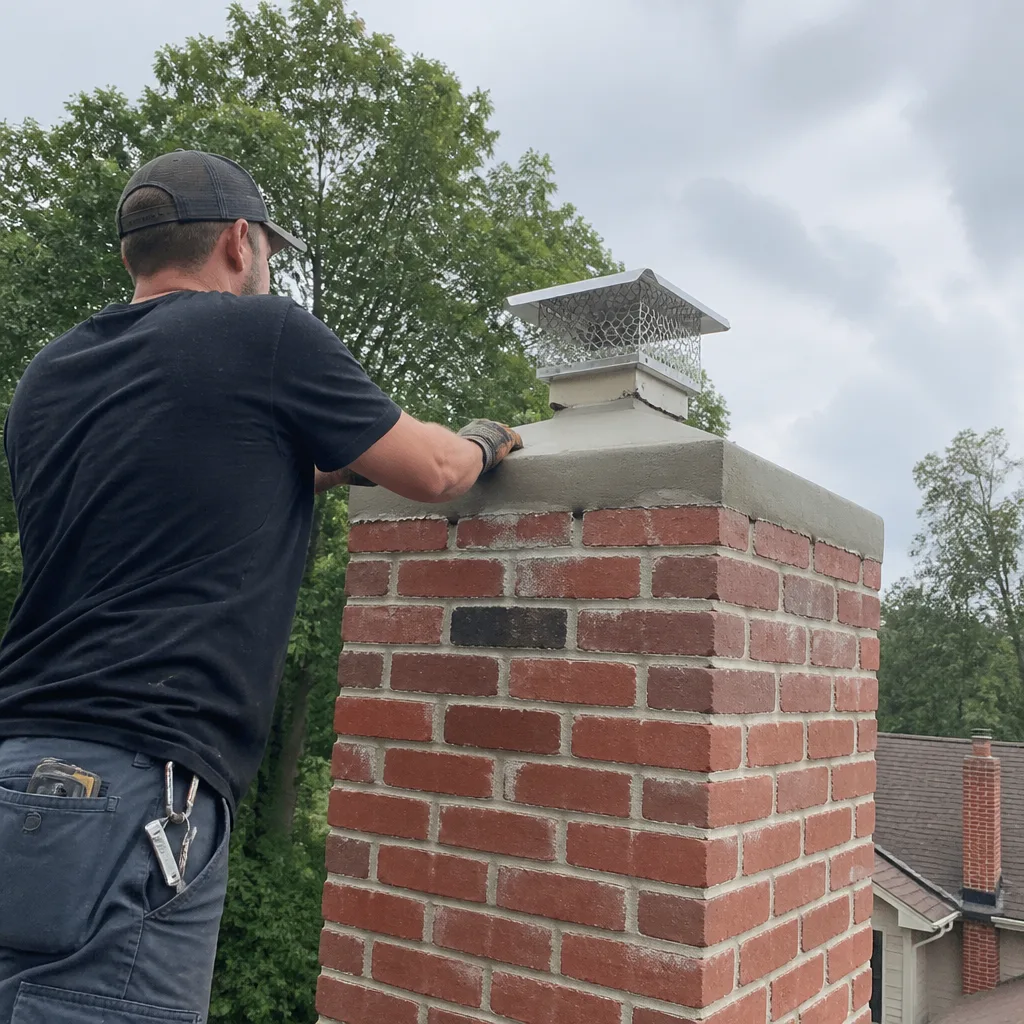 After
AfterChimney Cleaning Warning Signs: A Ellicott City Homeowner’s Reference Guide
Most chimney warning sign lists fail homeowners in one specific way: they treat a white stain on exterior brick and a white haze inside the firebox as equally urgent, when one is cosmetic and the other may mean your flue liner has breached. That distinction, and others like it, is what this guide-and our Complete Guide to Chimney Cleaning in Ellicott City-fixes. We inspect and clean chimneys in Ellicott City every week, and we’ve learned that homeowners make better decisions when signs are ranked by what they indicate about flue integrity and fire risk, not by how alarming they look. By the end of this reference, you’ll know which signs demand you stop using the fireplace today, which ones give you a 30-day window, and which ones just need a note for your next annual service.
Quick Answer
The most serious chimney warning signs in Ellicott City homes are a white haze or flaking inside the firebox (possible breached liner), a strong campfire-like smell when the fireplace isn’t in use, and audible popping or cracking from the flue during a fire. These indicate compromised flue integrity and require a professional camera inspection before the next burn. Cosmetic signs like white staining on exterior brick (efflorescence) or minor mortar cracks under 1/8 inch can typically wait for annual service.
Table of Contents
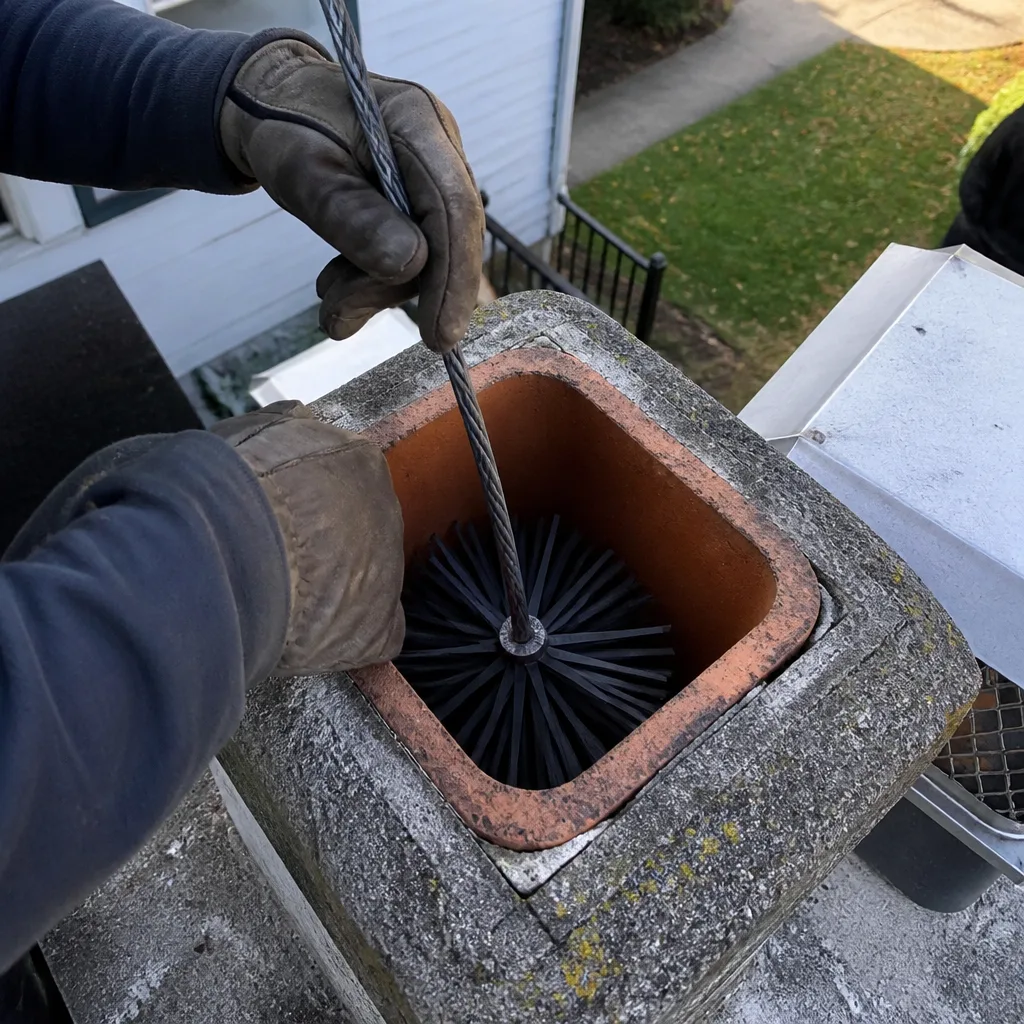
- The Tiered Warning System: Three Levels of Urgency
- Signs of Liner Damage vs. Surface-Only Deterioration
- Why Ellicott City’s 1965-1985 Housing Stock Fails Differently
- Settling, Draft, and Structural Sounds: How to Tell Them Apart
- What to Tell a Sweep When You Call
- Common Mistakes to Avoid
- When to Call a Professional
- Frequently Asked Questions
BeforeAfterThe Tiered Warning System: Three Levels of Urgency
Every chimney warning sign falls into one of three response tiers. The tier is determined by what the sign tells us about the flue’s ability to contain heat, smoke, and carbon monoxide within the chimney structure. Here’s how we rank them in Ellicott City homes, where seasonal freeze-thaw cycles accelerate deterioration in ways that warmer-climate guides don’t address.
Tier 1: Stop using the fireplace today. These signs indicate a possible breach in the flue system or a blockage that could push carbon monoxide into living spaces or ignite creosote inside the flue.
- White haze or flaking inside the firebox after a fire, especially if it wasn’t there before. This can indicate moisture penetrating a cracked flue liner and reacting with the clay tile.
- Strong campfire or barbecue smell in the house when the fireplace is cold and hasn’t been used for days. This often means creosote is off-gassing through a liner crack into wall cavities or the living space.
- Smoke entering the room during a fire, even mildly, after the damper is fully open and the flue has had 10 minutes to warm up.
- Pieces of clay tile or brick fragments in the firebox or at the base of the chimney. This is direct evidence of flue liner deterioration.
Tier 2: Schedule within 30 days. These signs suggest developing problems that will worsen with continued use but don’t yet represent an immediate containment failure.
- Black, shiny creosote buildup visible on the damper or firebox walls. This is Class III creosote, and while it doesn’t always indicate a liner problem, it becomes a fire risk with continued burning before removal.
- White staining on interior firebox walls that appears powdery rather than chalky, particularly if it reappears after cleaning. This often signals water intrusion through the crown or cap.
- Spalling brick on the chimney exterior, meaning brick faces that flake or pop off. Spalling means water has entered the brick and is now trapped, and Ellicott City’s freeze-thaw cycles will make it worse each winter.
- Rust on the damper or firebox accessories that wasn’t there the previous season. Rust means water is finding a path down the flue, and that path usually runs through the crown, cap, or flashing.
Tier 3: Note for annual service. These signs are cosmetic or maintenance-related and do not by themselves indicate a safety risk.
- White staining on exterior brick (efflorescence) that hasn’t changed in size or spread since you first noticed it. This is cosmetic mineral migration. Efflorescence does indicate moisture movement through masonry, but on its own it doesn’t mean your flue liner is compromised. On an Ellicott City chimney built in the 1970s, though, it’s worth having it photographed during your next sweep so you have a baseline if it spreads.
- Hairline mortar cracks under 1/8 inch in the firebox or exterior. These are normal expansion-contraction seams in Maryland’s seasonal temperature swings.
- Mild musty smell from the fireplace after heavy rain, if it clears within a day or two and isn’t accompanied by visible water. This often means the cap screen needs cleaning or the top-sealing damper needs adjustment.
Signs of Liner Damage vs. Surface-Only Deterioration
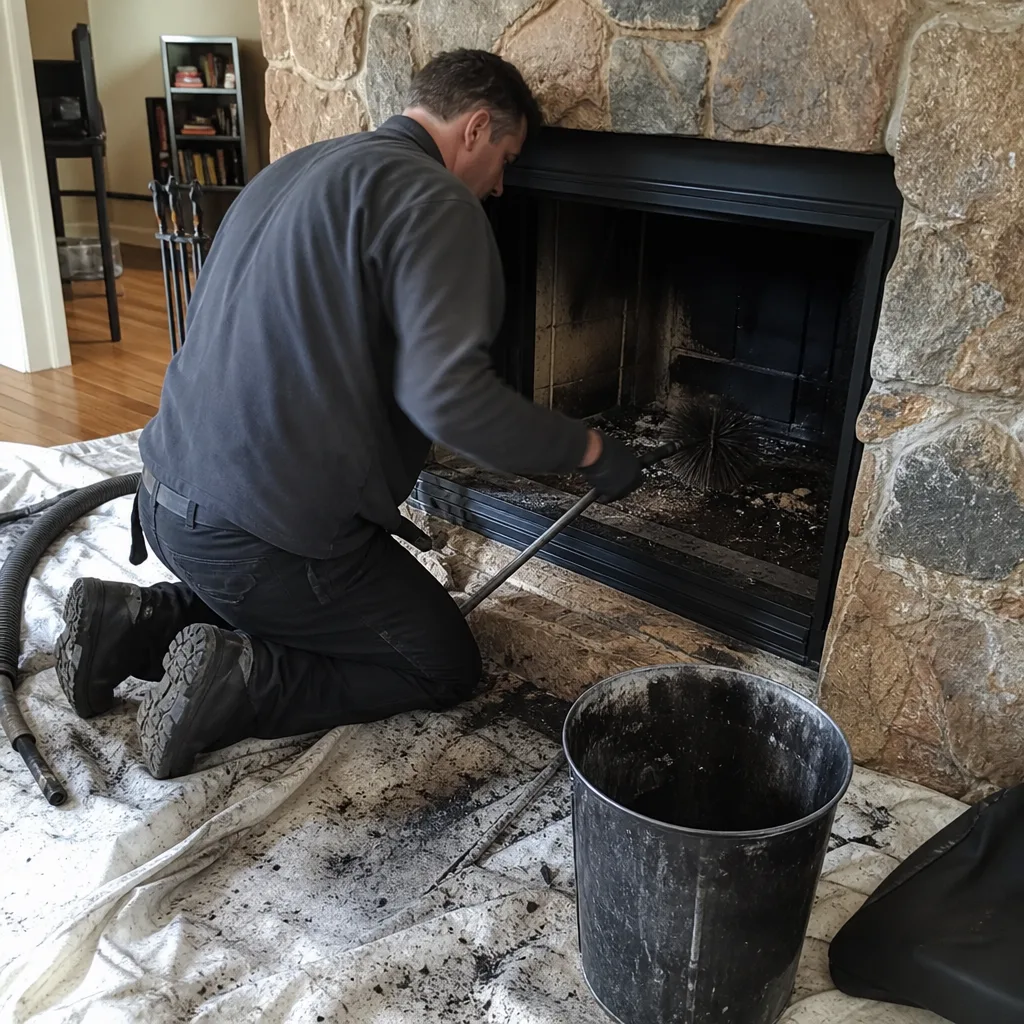
The single most useful distinction a homeowner can learn is the difference between what’s happening to the flue liner and what’s happening to the masonry around it. A flue liner, usually terra-cotta clay tile in Ellicott City homes built between 1965 and 1985, is the pipe inside the chimney that actually carries smoke and gases upward. The brick and mortar you see from the outside is the chimney structure. They fail differently, and they fail on different timelines.
Liner damage signs (inside the chimney):
- Flaking or scaling on the interior flue wall, visible only by camera. This is called spalling of the liner and means the clay tile is decomposing from heat and moisture cycling.
- White efflorescence inside the flue, which looks different from the firebox haze. Inside the flue, it indicates water has penetrated the liner and is wicking through the tile.
- Off-center or shifted tile sections, visible on camera. Clay tile liners are stacked during construction, and after decades of freeze-thaw in Howard County, the mortar joints between tiles can erode enough that tiles shift out of alignment, leaving gaps.
- Dark staining between tile joints, which shows smoke and creosote have been escaping into the chimney cavity rather than traveling up the flue.
Surface-only deterioration signs (outside the chimney):
- Efflorescence on exterior brick is moisture migrating through the brick itself, not through the liner. It’s unsightly but not a fire risk.
- Mortar joint erosion on the chimney stack is structural maintenance, a repointing issue, not a liner issue.
- Chimney cap surface rust is isolated to the cap component. It doesn’t tell you anything about the liner below unless the rust has created holes that let water in.
The problem in Ellicott City is that surface-only signs and liner signs often coexist, which is why a visual inspection from the ground tells you almost nothing about the liner. The only way to distinguish them is with a camera scan. Chimney Cleaning & Sweep in Ellicott City includes a camera scan on every visit, because without it, we’d be guessing, and guessing about liner integrity on a 1972 chimney is how people end up with carbon monoxide in their living rooms.
Why Ellicott City’s 1965-1985 Housing Stock Fails Differently
Ellicott City’s housing stock has a specific age profile that changes how chimneys fail. The majority of single-family homes in the established neighborhoods, from Dorsey’s Search to Centennial to areas along Frederick Road, were built between 1965 and 1985. That construction era came with specific chimney practices that newer-construction guides simply don’t address.
What was standard in that window:
- Terra-cotta clay tile liners with mortar joints between each tile section. The clay tiles themselves hold up reasonably well, but the mortar joints erode over 40 to 60 years of heating and cooling cycles. When those joints fail, the liner becomes a series of disconnected pipe sections with gaps between them.
- Single-wythe brick chimneys, meaning one layer of brick carrying the entire structural load with no additional masonry leaf behind it. Single-wythe construction is more vulnerable to water penetration and freeze-thaw spalling than the double-wythe chimneys used in pre-1940 homes or the pre-fabricated systems used after 1990.
- Original clay or concrete caps that were poured in place and have spent 40 to 60 years absorbing water. Once a cap cracks, water has a direct path into the chimney structure and down along the liner exterior, causing the exact spalling and joint erosion we’ve described.
In our experience in Ellicott City specifically, the most common failure sequence looks like this: the cap cracks around year 35, water enters during the next several freeze-thaw cycles, the top clay tile sections absorb and hold that water, the tile faces spall and flake, and within 5 to 10 years the top three or four feet of liner tile need partial replacement or the homeowner needs a full stainless liner retrofit. We see this sequence in homes from the 1960s and 1970s far more often than we see it in newer construction, and it’s why we ask about construction year when a homeowner calls.
If your Ellicott City home was built in this window and you haven’t had the chimney cap inspected in the last 15 years, the cap is overdue. A cracked cap is the entry point for 80% of the liner damage we document. The fix is preventative: a properly fitted cap with an overhang and a screen, or a full-coverage chase cover depending on your chimney type. Chimney Repair in Ellicott City covers cap replacement as a standalone service, quoted in writing before any work starts.
Settling, Draft, and Structural Sounds: How to Tell Them Apart
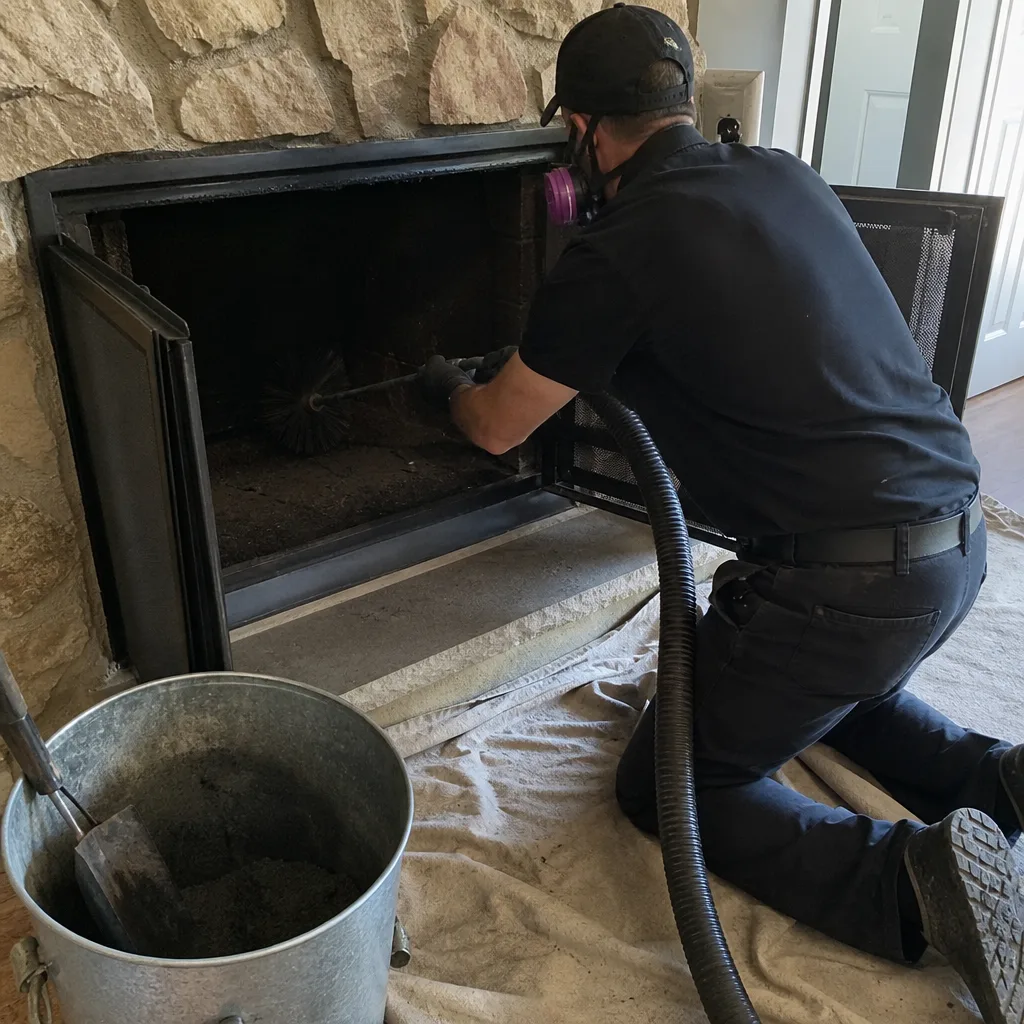
Houses make noise. Chimneys make noise. Most of it is harmless. Some of it is not. Here’s how to tell the difference when a fire is burning in an Ellicott City home during a typical Maryland winter.
Settling sounds: A single, low thump or crack from the chimney area when the fire first starts, followed by nothing. This is thermal expansion as the flue tile and firebox brick absorb heat. It’s normal. It happens every time if your chimney runs cold. It’s the same principle as a heating duct popping when the furnace kicks on.
Draft-related sounds: A soft, rhythmic whoosh or flutter that pulses with the fire. This is the flue drawing air. A well-drafted chimney should produce a steady, low sound. If you hear fluttering that seems to fight itself, or if the sound shifts under wind gusts, you may have a draft problem related to chimney height, cap design, or negative pressure in the house from competing exhaust appliances. This is an efficiency issue, not necessarily a safety one.
Structural movement sounds: A sharp crack or pop from the chimney that does not settle, or that repeats in quick succession, or that is followed by visible dust or debris falling into the firebox. This is not normal expansion. Terra-cotta tile makes a distinctive, almost ceramic “tink” sound when it cracks under thermal stress or pre-existing stress. If you hear a sound like a coffee mug cracking and then see small fragments in the firebox the next day, that’s liner material. Stop using the fireplace and schedule a camera inspection.
One note specific to wind: Ellicott City’s position in the Patapsco River valley means some neighborhoods get channeled wind patterns that push down the chimney and cause backdrafting sounds. If you hear a low moan from the chimney on windy days even when no fire is burning, that’s wind load on the cap or crown, and it’s usually not structural. A properly sized and fitted cap from Fireplace Services in Ellicott City often resolves it.
What to Tell a Sweep When You Call
The language you use when you call a chimney company determines whether you get a surface cleaning or a camera inspection. In Ellicott City specifically, some companies will still quote a $99 sweep over the phone and send a technician who looks up the flue with a flashlight, or doesn’t look at all. Here’s the exact language that gets you the right service.
Say these things, in this order:
- “I need a Level 2 camera inspection, not just a sweep.” This is the NFPA 211 term for a scan of the full flue interior. Using the term filters out companies that don’t own camera equipment.
- “I want photos of the liner from the camera scan included with my report.” If the company hesitates, that’s your answer. A legitimate company sends you the images as part of the service.
- “I have a home built in [year]. The chimney is [brick / stone], and I’ve [seen / smelled / heard] [specific sign from the tier list above].” The construction year and the specific sign tell the technician what they’re most likely looking for. On a 1974 brick chimney in Ellicott City, they’ll expect a clay tile liner and should be prepared to assess cap and joint condition.
- “I want a written price before any work starts, and I want to know what the price includes.” Every legitimate sweep should be able to quote you a flat or range price for the service over the phone. If they won’t, you’re being set up for an upsell after they’re already in the house.
- “Will I get a documented record of what you found?” A camera scan without a photo record is a flashlight job with better marketing. The entire point of the camera is the proof.
When you call Level Two Chimney Ellicott City home, a live person answers 24/7. We’ve operated under the Haven Standard since 2009, and Clause 1 of that standard is a written price, written scope, and written warranty before anyone starts. Clause 4 is a documented photo record on every visit. If you call us and ask for those two things by name, you’ll get them, because they’re the default, not an add-on.
Common Mistakes to Avoid
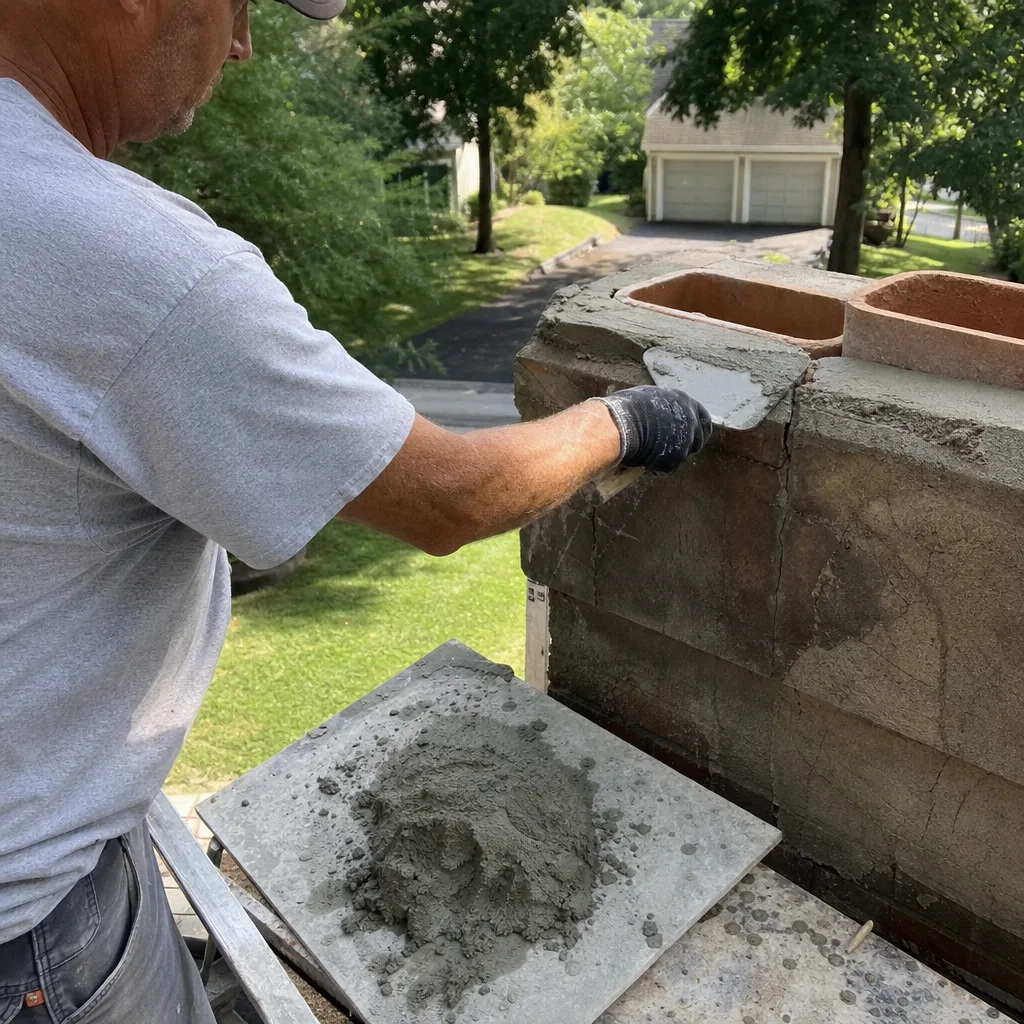
- Waiting for a visible problem before scheduling anything. Most liner damage in Ellicott City homes is invisible from the exterior and visible only by camera. By the time you see tile fragments in the firebox, the liner has already been failing for years. Annual service with a camera scan catches it before you see it.
- Ignoring a white haze in the firebox because it looks like the white staining on the brick outside. Exterior efflorescence and interior flue efflorescence look similar and mean completely different things. Interior haze after a fire can indicate moisture breaching the liner. Exterior staining on brick indicates moisture moving through masonry. One is a possible safety issue. The other is cosmetic. Learn the difference, or have both documented so you know what’s changing.
- Burning artificial logs or wrapping paper. Artificial logs burn at inconsistent temperatures and can leave residue that mimics creosote, complicating inspection. Wrapping paper produces fast, high heat and can ignite accumulated creosote. Ellicott City fire departments respond to chimney fires every burning season, and the majority start with an avoidable ignition source.
- Painting or sealing exterior chimney brick with regular house paint or waterproof sealant. Brick needs to breathe. Trapping moisture inside with paint or non-breathable sealant accelerates spalling and freeze-thaw damage in Maryland winters. If you want to seal the exterior, use a siloxane-based breathable water repellent designed for masonry, and have it applied by someone who can assess the brick condition first.
- Assuming a chimney that hasn’t been used in years is fine to use. Disuse doesn’t prevent deterioration. It hides it. A liner that’s been breaking down while the fireplace sits cold for five years is still broken, and the first burn after a long dormant period is the most dangerous moment if creosote or debris has accumulated. Camera-scan first, burn second.
- Accepting a visual inspection from the ground as equivalent to a camera inspection. From the ground, a technician can see the cap, crown, and exterior brick. They cannot see the flue liner, the smoke chamber, or the damper condition. Those are the components that determine whether your chimney is safe to use. Accepting ground-level only is accepting half an inspection.
When to Call a Professional
Call a professional chimney company in Ellicott City if any of these apply: you see a white haze or flaking inside the firebox, you smell campfire when the fireplace is cold, you hear cracking sounds from the flue during a fire, you find tile fragments in the firebox, smoke enters the room, or your home was built before 1990 and the chimney hasn’t had a camera inspection in over three years. Annual service is standard even with no symptoms, but those specific signs should move a call to the top of your list. Level Two Chimney Ellicott City offers free estimates in Ellicott City, with a camera scan and documented photo record included on every visit. Written price before any work starts, always. Call (443) 363-5262.
Frequently Asked Questions
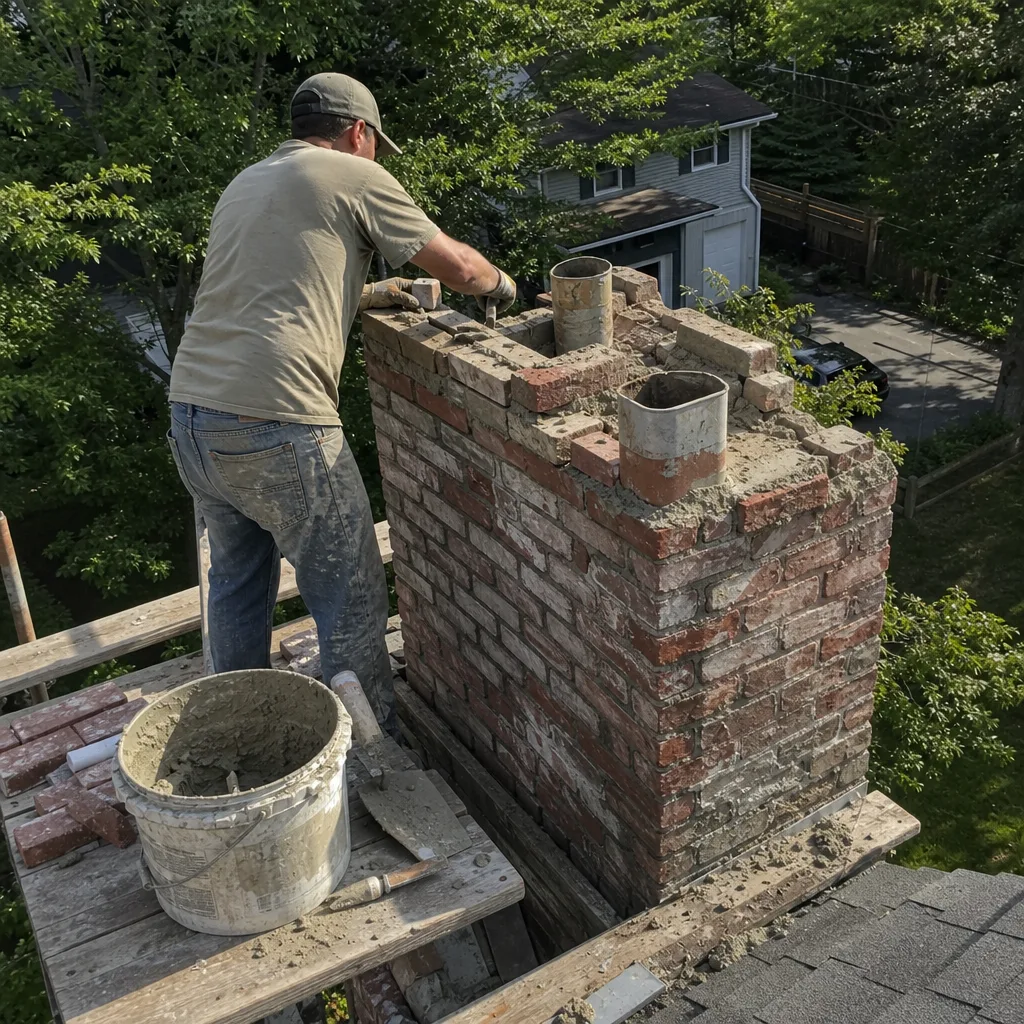
A chimney sweep in Ellicott City typically costs $189 to $289 for a standard cleaning with a camera inspection, depending on the chimney type, height, and whether there’s notable creosote buildup. A Level 2 camera inspection without cleaning runs $150 to $250 as a standalone service. When you call Level Two Chimney Ellicott City, we quote a written price before any work starts, and that price includes the camera scan and photo record, not just the sweep. Call (443) 363-5262 for an exact quote, free.
The National Fire Protection Association (NFPA 211) recommends a sweep whenever creosote accumulation reaches 1/8 inch or more, and an annual inspection regardless of use. In practice, if you burn wood fires more than twice a week during Ellicott City’s burning season, which runs roughly October through March, you should sweep annually. If you burn less, every two years is typically sufficient, but the camera inspection still needs to happen yearly because liner deterioration proceeds on its own schedule whether you burn or not.
You need a new flue liner if the camera inspection shows cracked or spalled tile, missing mortar joints between tile sections, or gaps that allow smoke and carbon monoxide to escape into the chimney cavity. That’s a factual, visible condition, not an opinion, which is why photo documentation matters. If a company tells you the liner needs replacement, ask to see the camera images. If they can’t produce them, get a second opinion. Level Two Chimney Ellicott City gives you a documented photo record on every visit under Haven Standard Clause 4, specifically so you can see exactly what we found. A free second opinion on any written estimate is always available.
The risk you’re taking has two components: creosote ignition and carbon monoxide accumulation. Creosote ignites at around 451 degrees Fahrenheit, and a hot fire can create that temperature in the flue. A chimney fire burns hot and fast and can crack the liner and spread to the house structure. Carbon monoxide accumulates when a blocked or damaged flue can’t vent combustion gases properly, pushing them back into the living space. Neither of these shows much of a warning before it’s happening. For most Ellicott City homeowners burning wood, annual sweeping costs less than one restaurant dinner, and it eliminates the primary ignition source and documents the liner condition. That’s the entire value proposition in two sentences.
Summer fireplace odor is usually a downdraft pulling creosote or soot odor from the flue back into the house, and it’s made worse by humidity, which is a factor every Ellicott City summer. The fix is usually a combination of cleaning the creosote, adjusting the damper or top-sealing damper, and ensuring the cap screen isn’t allowing humidity to condense on the flue walls. If the smell persists after cleaning, it can indicate water pooling in the smoke chamber, which is a crown or cap issue. A camera inspection identifies which cause you’re dealing with, and the solution is usually straightforward once you know.
You can photograph the firebox and the damper area with your phone, and that’s genuinely useful as a baseline. What you can’t do from below is see the flue liner above the damper, the smoke chamber condition, or the cap fit, and those are the components that actually determine safety. Professional camera systems are built for vertical flue travel with lighting and articulation, and a technician is trained to interpret what the lens passes. Your phone photo of the firebox won’t tell you whether the liner at the 10-foot mark has spalled. That’s what the professional camera is for. Call (443) 363-5262 for a camera-scan inspection with the images included.
The Bottom Line
Chimney warning signs matter because they tell you something about the flue’s ability to contain fire and combustion gases, and that ability degrades over time in ways you can’t see from the ground. In Ellicott City’s 1965 to 1985 housing stock, the failure mode is predictable: cracked cap, water entry, freeze-thaw cycling, tile spalling, liner compromise. The signs are there before the failure completes. Learn the tiers, check the interior of the firebox after each season, listen for the wrong sounds, and get a camera inspection annually. The camera is the only tool that sees the liner, and the liner is what keeps a fireplace from becoming a hazard. For more guides & resources, visit our blog. If you’re in Ellicott City and want a documented photo record of exactly what’s happening inside your chimney, call (443) 363-5262. Written price before work starts. Every time.
Written by Corrine Halstead, Owner at Level Two Chimney Ellicott City, serving Ellicott City since 2009.