
Last updated September 20, 2026
Level 1 sweep and inspection to the NFPA 211 annual standard - flue, crown, cap, and flashing checked and photographed
Chimney sweep logs do not sweep chimneys. They loosen some creosote - which then falls where a brush and vacuum still have to collect it.
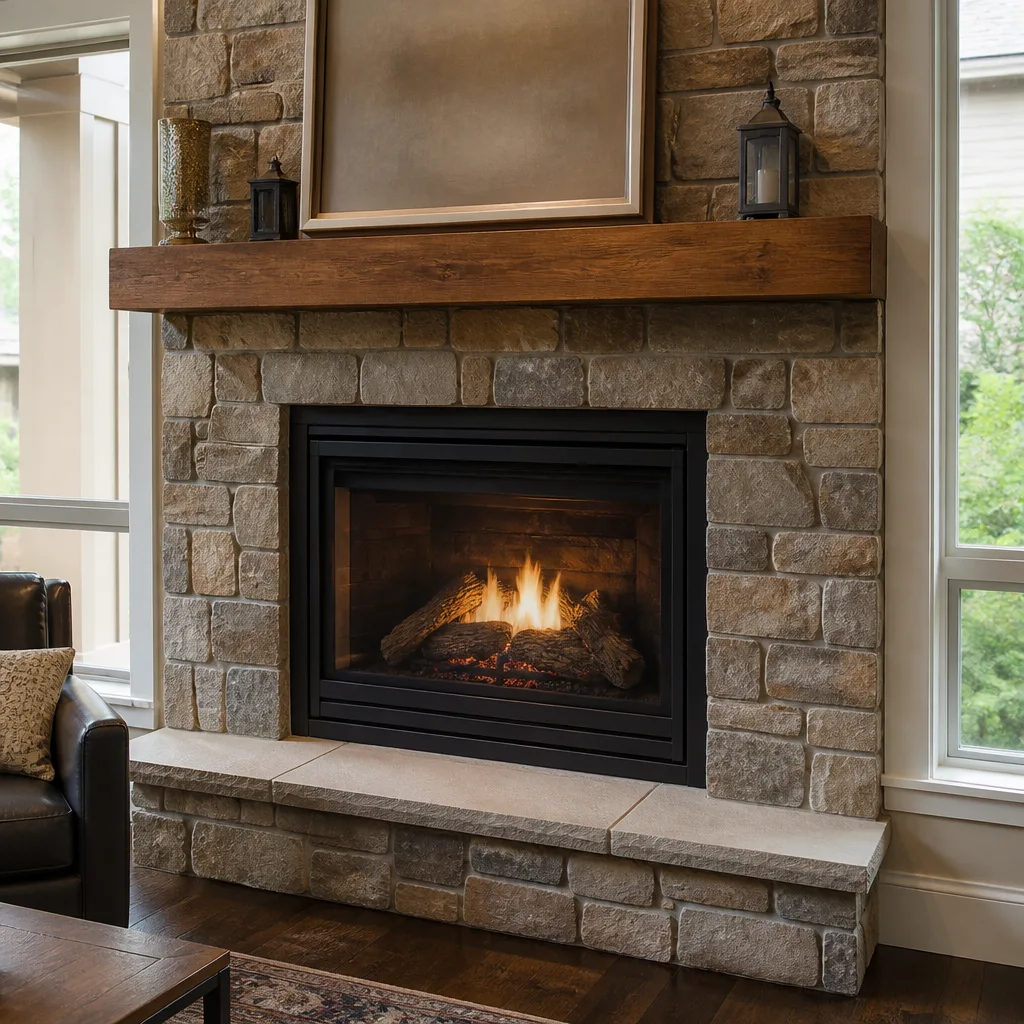
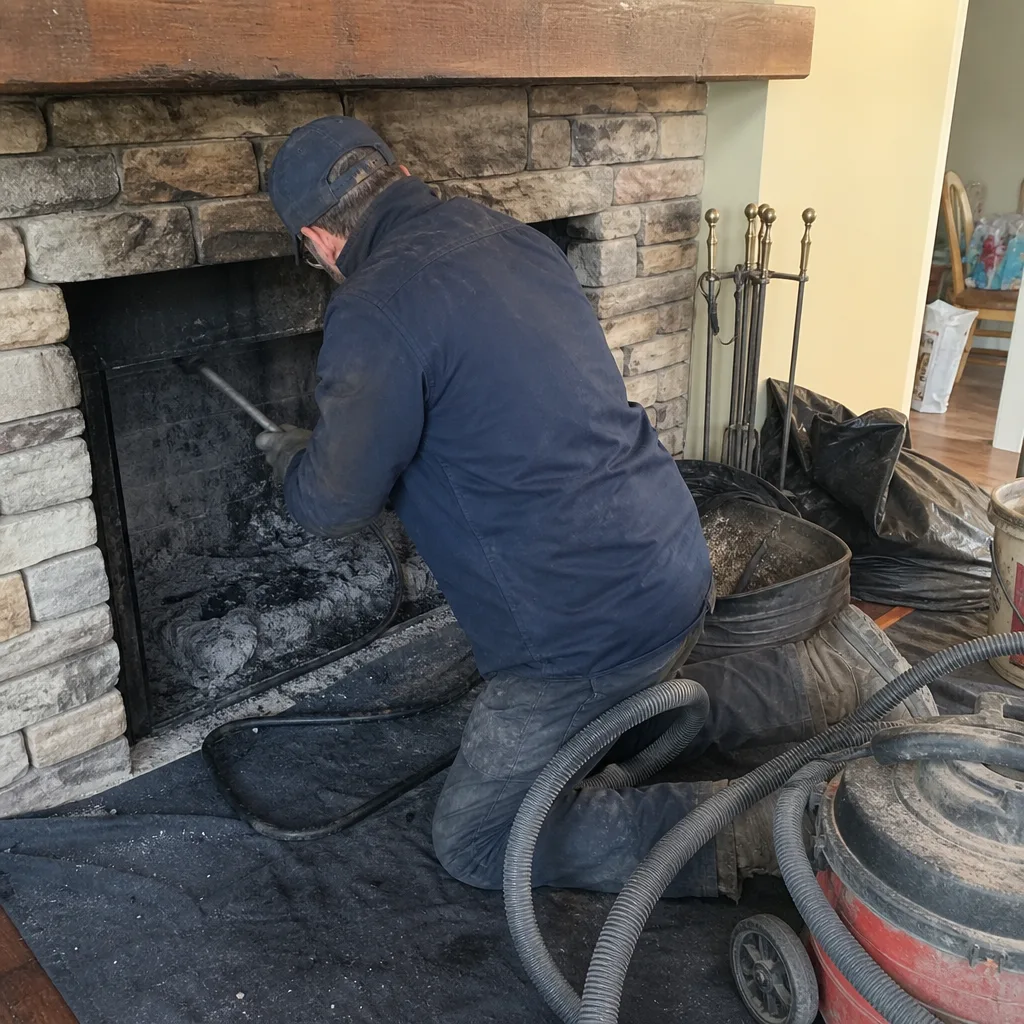 Before
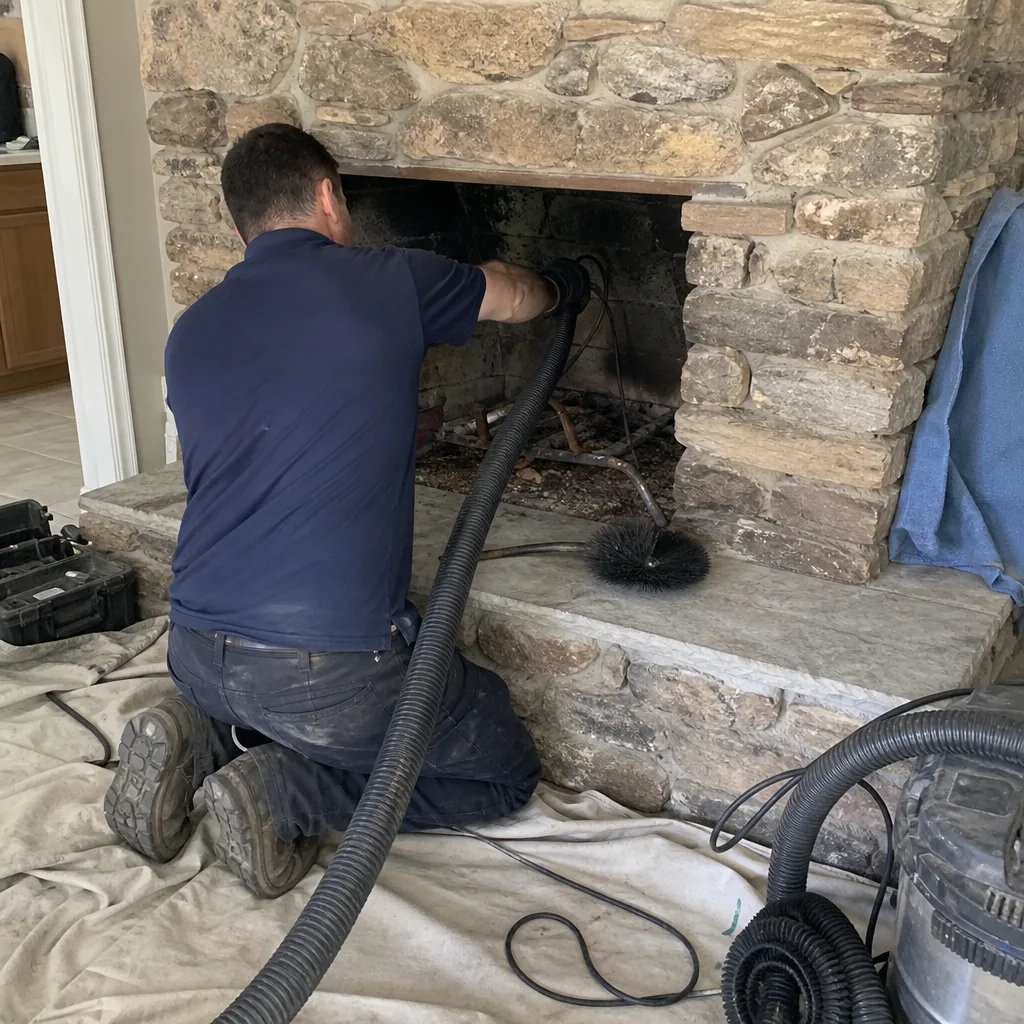 After
After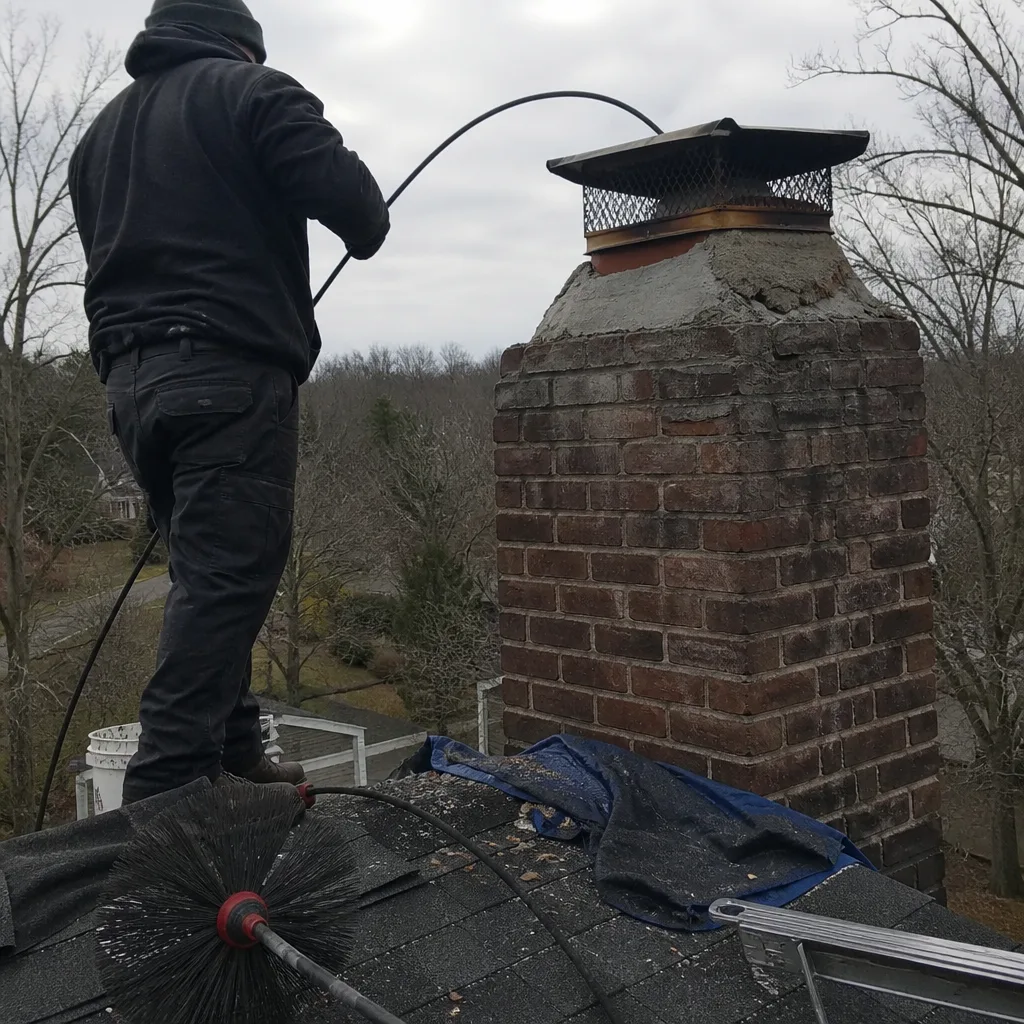 Before
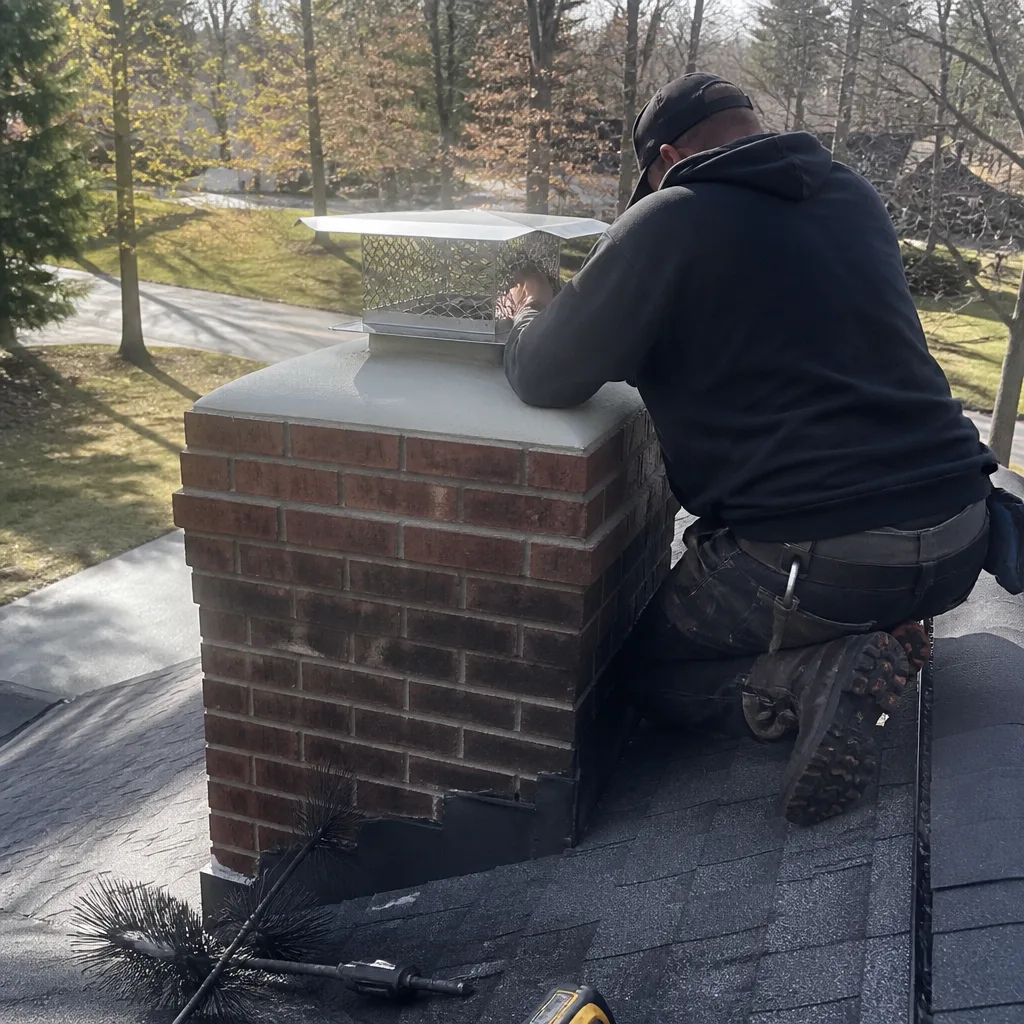 After
After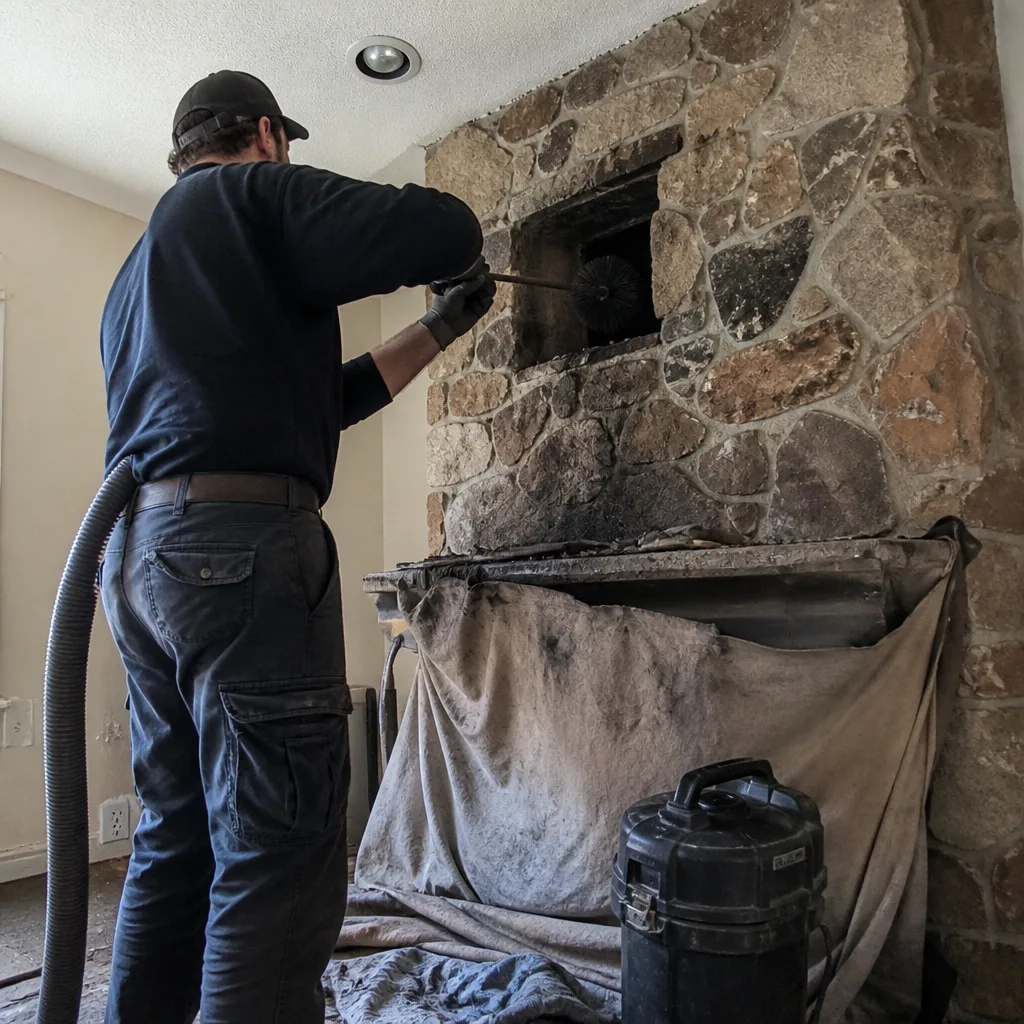 Before
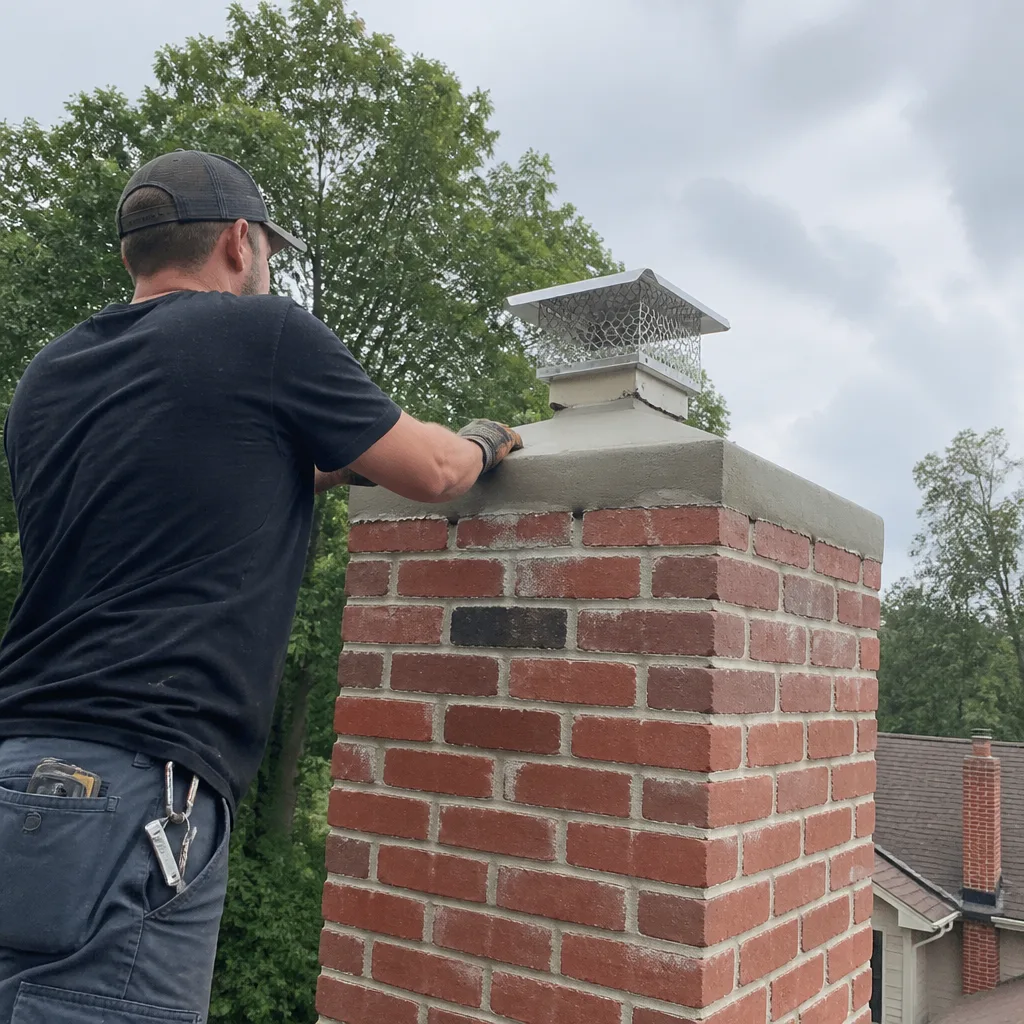 After
AfterDIY vs Professional Chimney Cleaning: The Ellicott City Homeowner’s Decision Guide
A $60 brush kit from the hardware store can remove surface soot from an accessible flue. That part is not complicated. What that brush kit cannot do is tell you whether the clay tile liner behind the soot is cracked, spalled, or missing entirely, and in Ellicott City, where most masonry fireplaces sit inside homes built between 1975 and 1995, that is the question that actually matters for fire safety. This guide lays out exactly what a homeowner can accomplish with a brush, what requires professional equipment and training, and where the real line between the two sits: documentation. For more guides & resources, see our blog.
Quick Answer
DIY chimney cleaning can remove light to moderate soot and creosote from an accessible flue, and for a low-use fireplace with a recently documented intact liner, that may be enough between professional inspections. But a homeowner cannot perform a camera-scan inspection, cannot measure draft, cannot smoke-test the flue, and cannot produce the written record an insurer or home buyer will ask for after a chimney fire or a real estate transaction. In Ellicott City, where 30 to 50 year old masonry chimneys are the norm, the cost of missing liner deterioration far exceeds the cost of a professional sweep. See our Chimney Cleaning Cost Breakdown: The Ellicott City Homeowner’s Reference for 2026 for detailed pricing.
Table of Contents
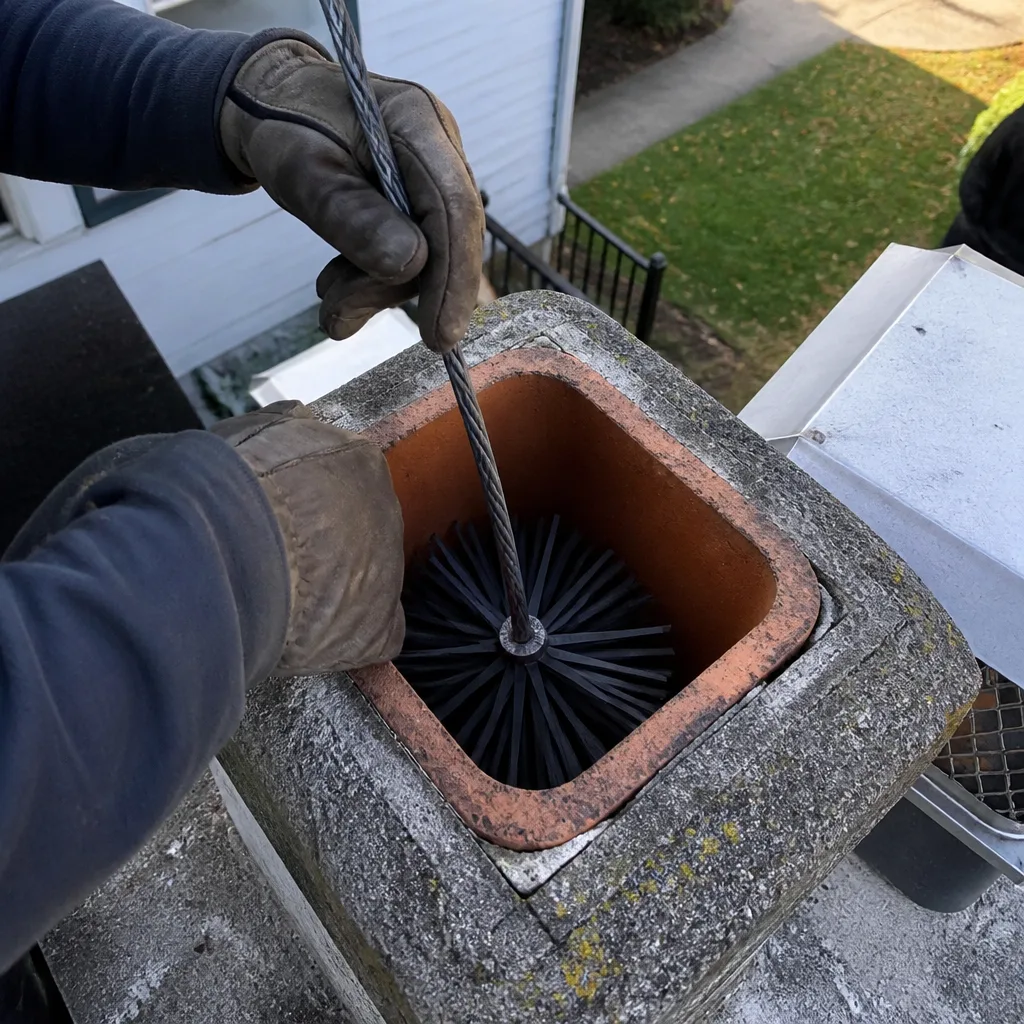
- What DIY Can Actually Do (and What It Cannot)
- What Professional Cleaning Accomplishes Beyond the Brush
- The Documentation Problem: What Insurers and Buyers Ask For
- The Ellicott City Housing Context: Why Liner Condition Matters Here
- When DIY Makes Genuine Sense (We Will Say It Plainly)
- The Middle Path: Professional Inspection With Owner Maintenance Between
- Cost Comparison: DIY vs Professional Sweep in Ellicott City
- Common Mistakes to Avoid
- When to Call a Professional
- Frequently Asked Questions
- The Bottom Line
BeforeAfterWhat DIY Can Actually Do (and What It Cannot)
A homeowner with a proper brush kit, drop cloths, a shop vacuum, and a reasonable tolerance for soot can remove light creosote deposits from a straight, accessible flue. That is a real capability. Creosote is a byproduct of wood combustion, and in its early stages (what the trade calls Class I or Class II creosote), it is a soft, brushable substance. If your fireplace burns seasoned hardwood, you use it a few dozen times per winter, and your flue is a straight run of clay tile or stainless steel, a homeowner cleaning can keep the flue functional between professional visits.
Here is the honest capability map:
- A homeowner CAN remove surface soot and Class I creosote from an accessible flue with a properly sized wire or poly brush.
- A homeowner CAN clean the firebox and remove ash accumulation that reduces draft.
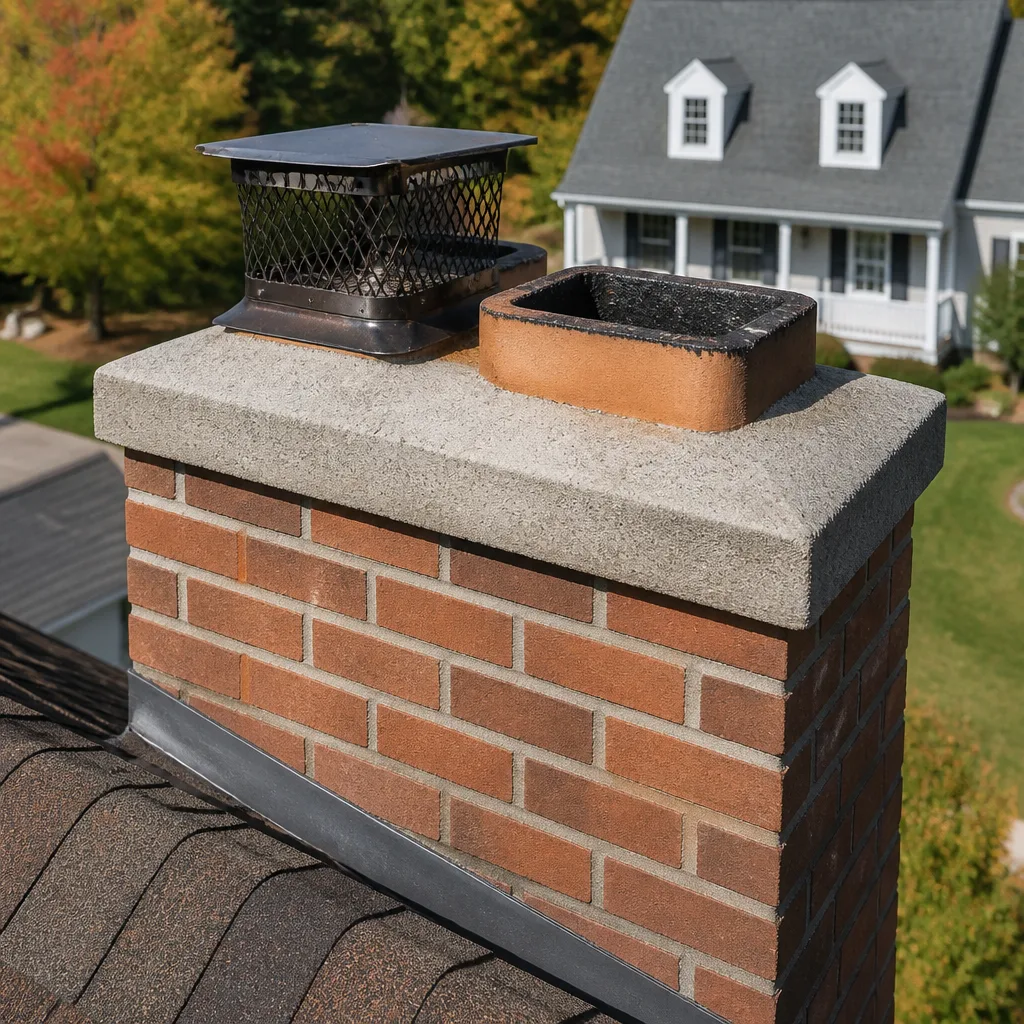
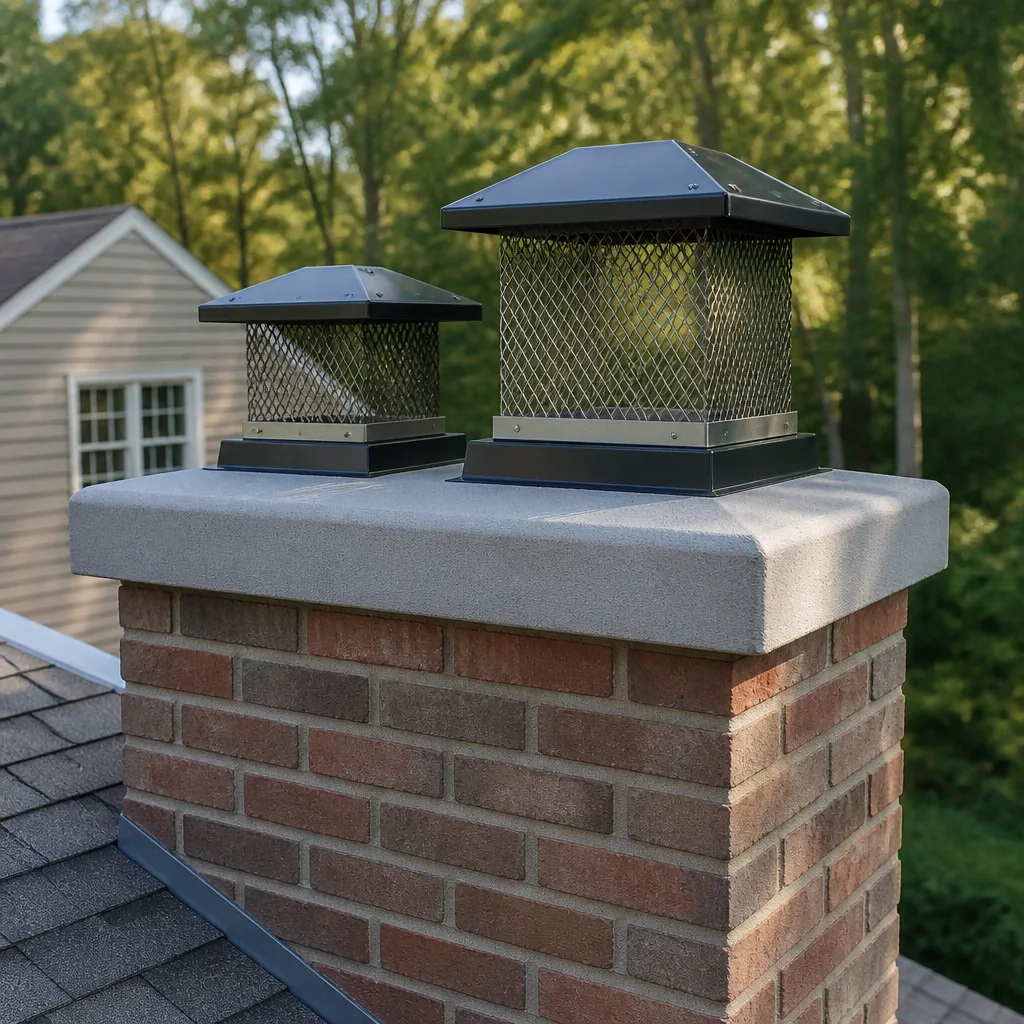
- A homeowner CAN visually check the cap and crown area from the roof, weather permitting, to spot obvious damage like a rusted cap or cracked crown.
- A homeowner CANNOT camera-scan the flue interior to assess liner condition. This requires specialized equipment and training to interpret what the camera shows.
- A homeowner CANNOT smoke-test the flue to verify there are no leaks between flue sections or cracks in the liner.
- A homeowner CANNOT measure draft to determine whether the chimney is drawing at the proper rate for safe operation.
- A homeowner CANNOT produce a documented record of flue condition that an insurer, fire marshal, or home buyer will accept.
The distinction matters because the most dangerous chimney problems are invisible in a normal cleaning. A cracked tile liner hidden behind a layer of creosote passes a brush test every time. The brush comes up dirty, the homeowner assumes the job is done, and the crack remains, allowing heat and gases to reach combustible framing. We have pulled enough cameras out of enough flues in Ellicott City to know that what a brush cannot see is usually the only thing worth finding.
What Professional Cleaning Accomplishes Beyond the Brush
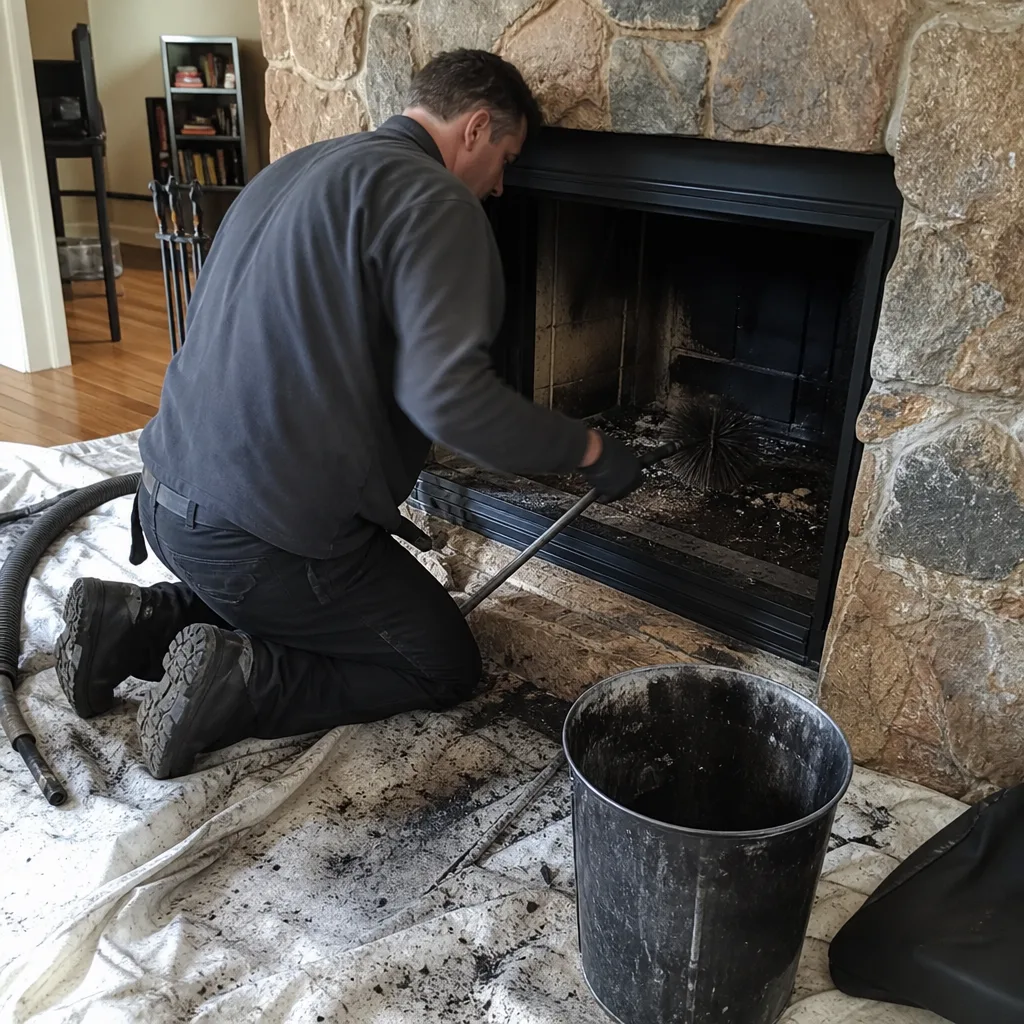
A professional chimney sweep in Ellicott City performs two jobs in one visit: the mechanical cleaning and the inspection. The cleaning removes creosote at all three classes, including Class III creosote, which is the hardened, shiny, tar-like deposit that forms when fires burn cool or green wood is used. Class III creosote does not brush off. It requires rotary loop tools or chemical treatment, and attempting to remove it with a homeowner-grade brush does little more than burnish the surface.
The inspection is the part that matters. Under NFPA 211 Level 2 standards, a professional inspection includes a camera scan of the entire flue interior, from the firebox to the cap. The camera documents what the flue actually looks like: hairline cracks, spalling, missing mortar joints, separated tile sections, or a stainless liner that has warped. The technician interprets what the camera shows and explains it in plain terms before any repair recommendation is made. At Level Two Chimney Ellicott City home, that camera-scan documentation has been standard on every visit since 2009, and the photo record is delivered with every job, not offered as an add-on.
A professional visit also includes what the homeowner cannot do at all:
- Draft measurement: a draft gauge reads the actual pressure differential in the flue to confirm the chimney is pulling combustion gases out of the home at a safe rate.
- Smoke testing: the technician blocks the flue, introduces a smoke source, and observes whether any smoke escapes through cracks or gaps. A passing smoke test is the strongest evidence that the flue is sealed.
- Written record: the homeowner walks away with a written scope of work completed, a written price before any repair work is proposed, and a written warranty on labor. This is the document trail an insurer will ask for if something goes wrong.
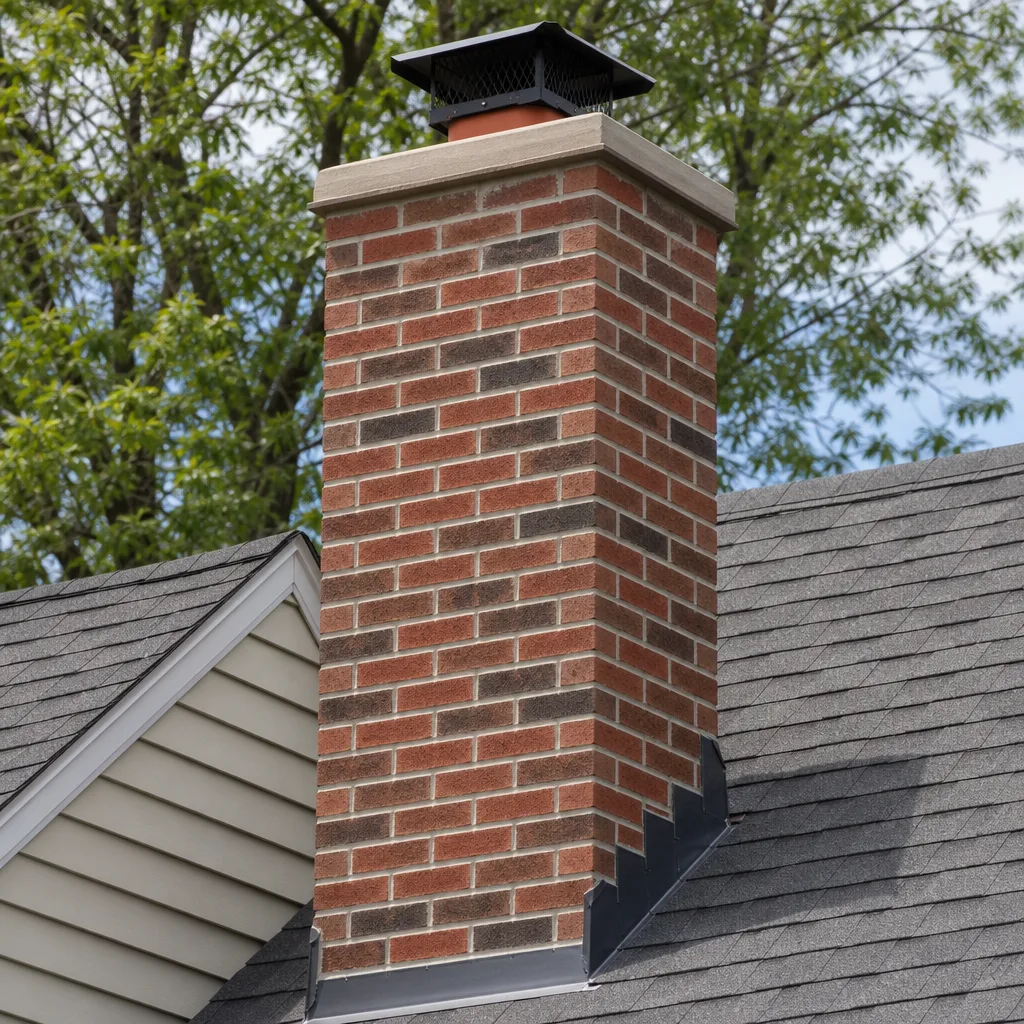
- Detection of hidden hazards: a chimney sweep may be the only contractor who sees the underside of your roof flashing, the condition of your chimney cricket (the small ridge behind the chimney that diverts water), or the state of your crown and cap. These are not fire hazards, but they are water intrusion hazards, and in Ellicott City, water is the slow killer of masonry chimneys.
The Documentation Problem: What Insurers and Buyers Ask For
Here is the scenario most DIY guides do not address. You clean your chimney yourself in October. Everything looks fine to the naked eye. In February, the flue liner cracks on the side you could not see, and a chimney fire starts. The fire is contained, but the insurance claim is significant: a new liner, masonry repair, drywall, smoke remediation. The adjuster arrives and asks for the last professional chimney inspection report. You do not have one. You have a receipt for a $60 brush kit from Home Depot and your own testimony that you cleaned the chimney.
The insurer is not required to take your word for it. Most homeowners policies require the homeowner to maintain the property in a condition that prevents foreseeable loss. A cracked flue liner is a foreseeable loss for a wood-burning fireplace in a 40-year-old home. Without a professional record, the homeowner is left arguing that they inspected the chimney competently, and the insurer is left arguing that a competent inspection requires a camera. The insurer usually wins that argument.
The same problem occurs in real estate. When you sell your Ellicott City home, the buyer’s home inspector will look at the fireplace. If the inspector notes any concern, the buyer will ask for a professional chimney inspection before closing. If you have a documented record of professional cleaning and inspection, you hand it over and the contingency is cleared. If you have a DIY cleaning history, the buyer orders a Level 2 inspection anyway, and you pay for it at the point of sale when you have the least negotiating leverage. The documentation has value before the emergency, not during it.
This is why Chimney Cleaning & Sweep in Ellicott City has always included a written record as standard. Clause 4 of the Haven Standard requires a photo record on every job, and that archive now covers more than 38,000 chimneys. The record is the product, and the cleaning is the vehicle that delivers it.
The Ellicott City Housing Context: Why Liner Condition Matters Here
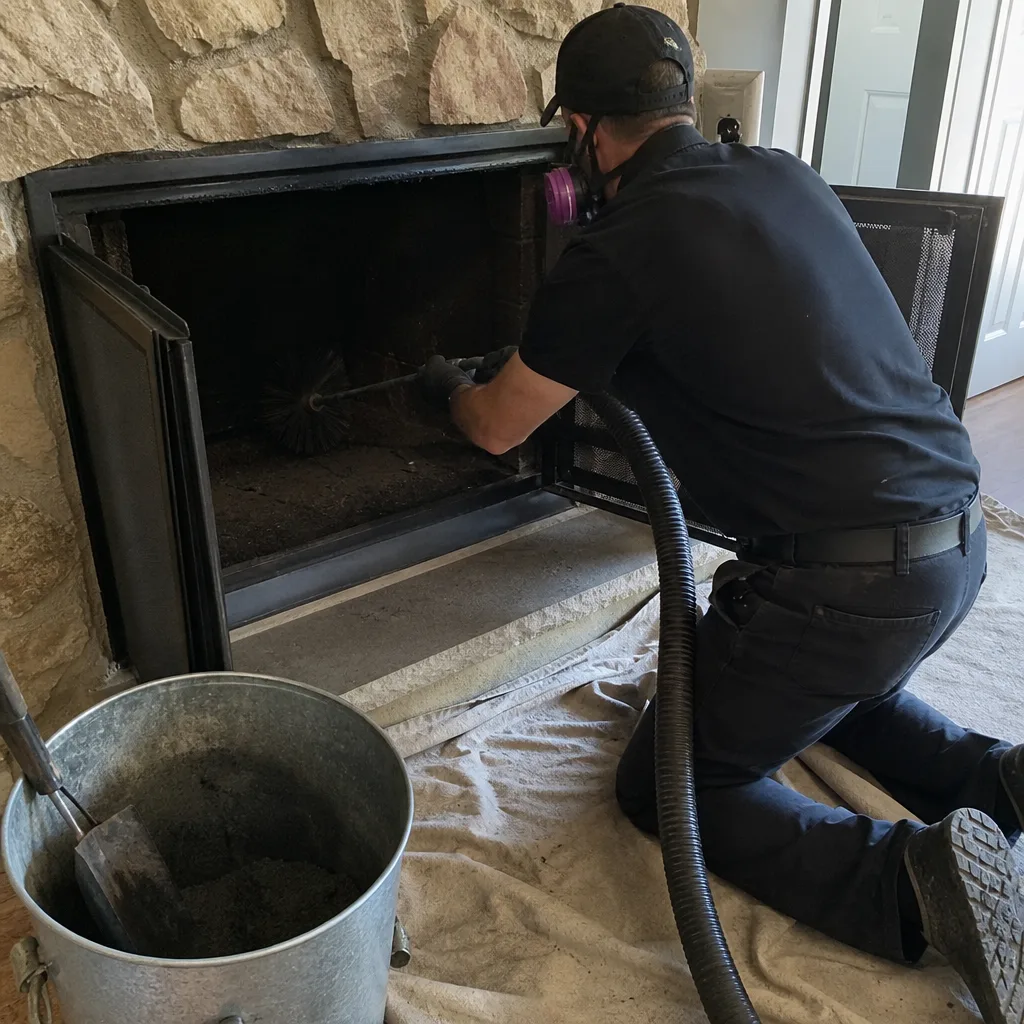
Ellicott City is not a new-build market. The housing stock in neighborhoods like Font Hill, Chatham, Normandy, and throughout the Historic District skews toward homes built between 1975 and 1995. That puts the average masonry chimney at 30 to 50 years old, which is exactly the age range where clay tile liners begin to fail.
Clay tile liners are the standard in older masonry chimneys. They are fired ceramic sections stacked inside the chimney, and they are quite good at their job, but they have a lifespan. Thermal cycling (the flue heating to 600 degrees and cooling to 20 degrees hundreds of times per year) causes expansion and contraction. Over 30 to 50 years, this cycling cracks the tiles and erodes the mortar joints between them. The process is invisible from the firebox and invisible through a brush cleaning. It is only visible through a camera.
Ellicott City’s climate makes the problem worse. Freeze-thaw cycling is a constant here: water enters the chimney through a failing crown or cap, then freezes and expands, prying apart masonry joints. The water wicks into the clay tile, and the subsequent thermal shock from a hot fire accelerates cracking. A chimney that was intact five years ago may now have a separated tile section and the homeowner will not know until the smoke test fails or the camera shows it.
This matters for the DIY question in a specific way. A homeowner in a brand-new home with a stainless steel liner can reasonably perform a light maintenance sweep without great concern. A homeowner in a 40-year-old Ellicott City home with clay tile is cleaning a flue whose condition is unknown, and if they clean it without inspecting it, they have done the easy part and skipped the important part. In our experience, the overwhelming majority of liner failures we document in Ellicott City are found in chimneys that the homeowner believed were clean and functional.
When DIY Makes Genuine Sense (We Will Say It Plainly)
There is a version of DIY chimney cleaning that is not foolish, and we want to describe it as clearly as we describe the risks. The following conditions, all of them, need to be true:
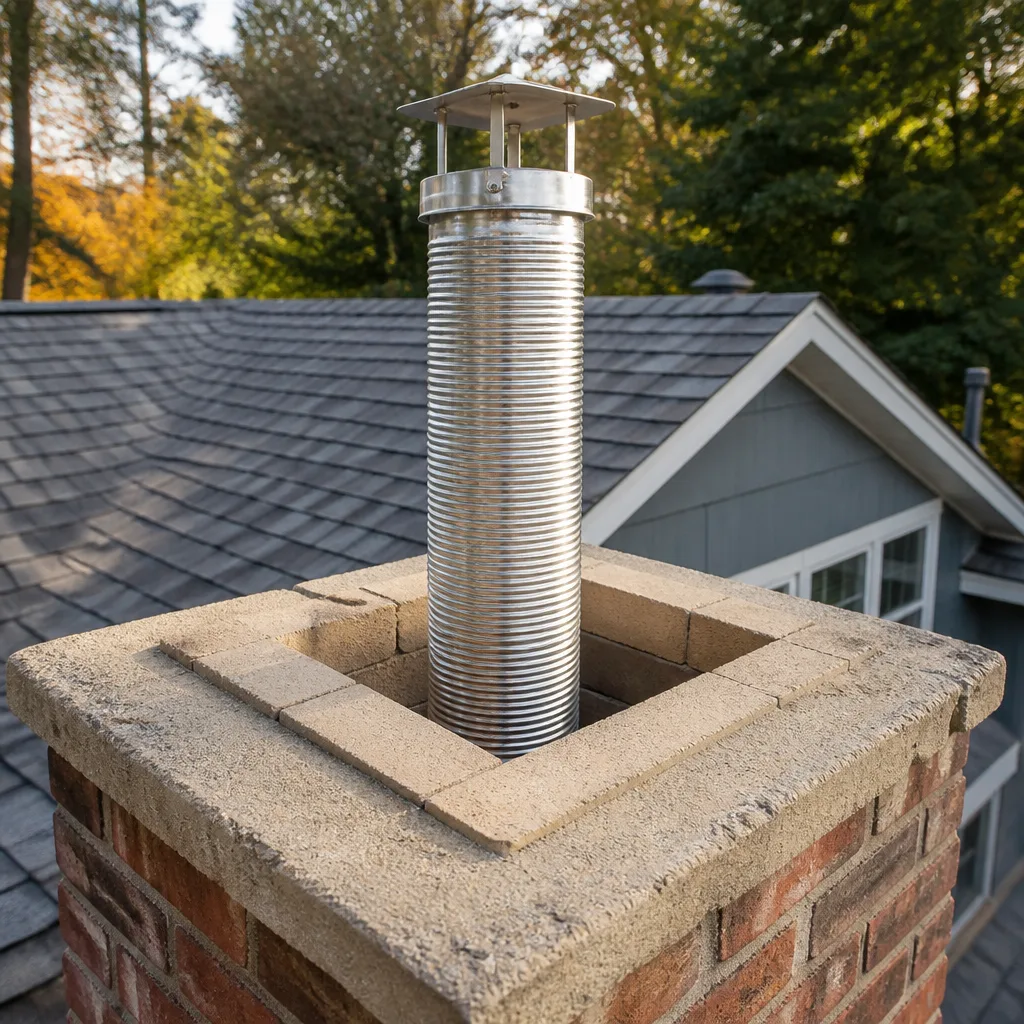
- The flue is a stainless steel liner, not clay tile. Stainless liners are continuous, welded, and do not crack under thermal cycling. A stainless liner less than five years old that was professionally installed is a known quantity.
- The fireplace sees light use. A dozen to two dozen fires per winter, burning seasoned hardwood, will produce Class I or light Class II creosote that a homeowner brush can manage.
- A professional camera-scan inspection has been performed within the last two years, and the report documented an intact flue, an intact crown, a functional cap, and clear smoke testing. The key word is documented. A visual inspection from the firebox does not count.
- The homeowner is comfortable working from the roof or, better, from the firebox using a bottom-up cleaning method. Roof work is the most dangerous part of any chimney maintenance, and a fall from a two-story Ellicott City roof is not worth the savings.
- The homeowner accepts that the DIY sweep does not create a professional record. If an insurer, buyer, or fire marshal asks for documentation, the answer will still be “call a professional.”
If all five conditions are true, a homeowner with a proper brush kit can perform a light maintenance sweep and skip the professional visit for that year. The key phrase is light maintenance. This is not a substitute for professional cleaning, it is a supplement between professional visits. We use the same framing for gas fireplaces, which produce no creosote at all. A gas fireplace with a stainless liner that was documented intact two years ago can go longer between professional visits than a wood-burning fireplace can, and the DIY “cleaning” for gas is really just dusting the logs and glass. We will say that plainly because it is the truth, and it does not threaten our business to say it. What threatens customer safety is the opposite: a homeowner who treats a 45-year-old clay tile chimney like a maintenance-free appliance. For year-round guidance, see our Seasonal Chimney Cleaning Care for Ellicott City: Year-Round Homeowner’s Guide.
The Middle Path: Professional Inspection With Owner Maintenance Between
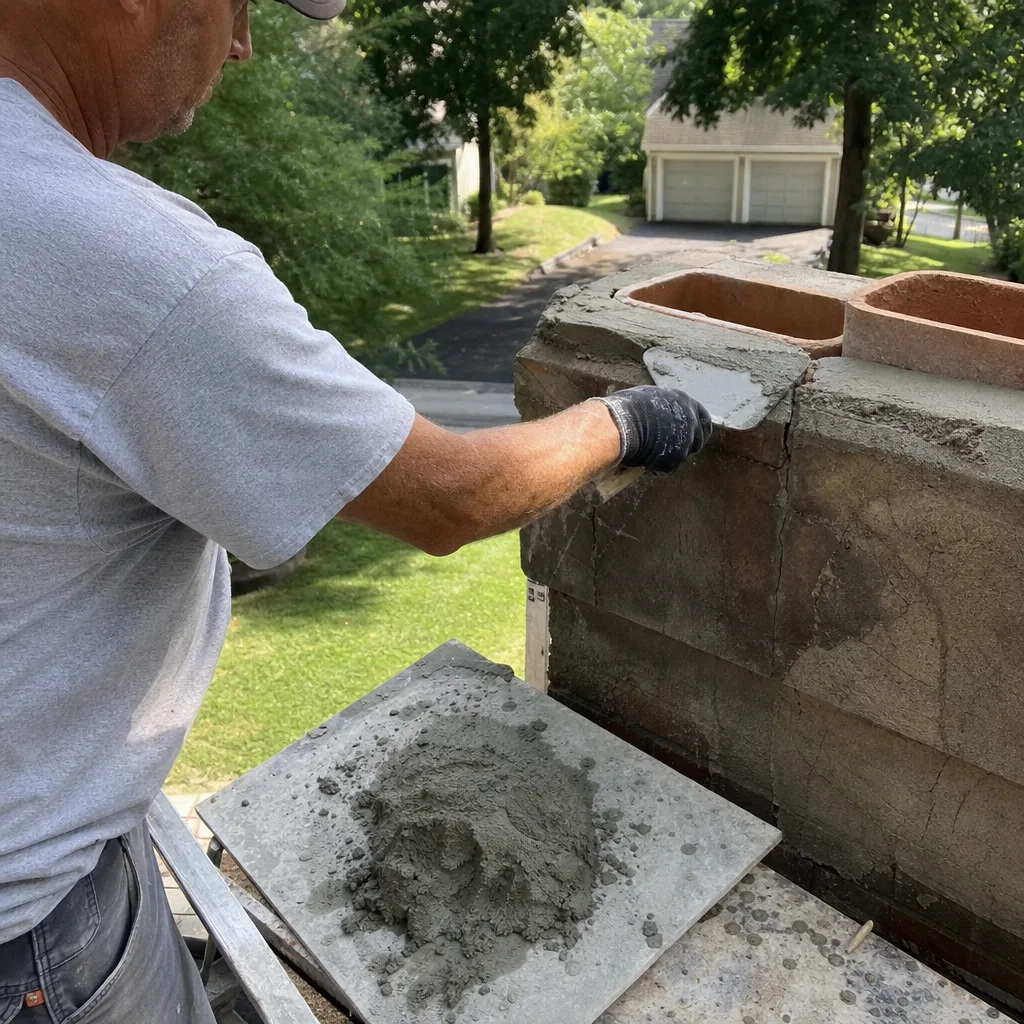
The conventional framing of this question, DIY versus professional, assumes the two are mutually exclusive. They are not. The model that serves most Ellicott City homeowners best is a hybrid one:
- Year one: full professional sweep and Level 2 camera-scan inspection. This establishes the baseline: liner condition, crown condition, cap condition, draft reading, smoke test result. You walk away with a documented record and a written report.
- Owner maintenance between professional visits: light brushing of the firebox and accessible flue in the second year if the first year’s report documented an intact flue and light use patterns. This removes surface creosote but does not touch the liner’s structural question because the liner was already documented.
- Year two or three: repeat professional inspection to update the record, confirm the liner has not changed, and perform the deep cleaning that a homeowner brush never touches.
- Repeat the cycle based on the documented condition of the flue, not a calendar.
This model reduces long-run cost (fewer professional cleanings over a decade) while maintaining the documentation trail. The record is continuous: a professional documented the chimney, the homeowner maintained it, a professional re-documented it. If an insurance question arises, the homeowner can produce the professional records and the context around them. If a sale happens, the buyer sees a chimney that has been professionally inspected on a regular cadence, not a chimney that has been ignored for a decade and then swept once.
The homeowner maintenance portion of this model requires the same safety discipline as any chimney work: wear a dust mask rated for fine particulate, lay drop cloths, seal the firebox opening with plastic to keep soot out of the living space, and never attempt to remove Class III creosote with force. If the deposit is shiny, hard, and does not yield to a brush, stop. That is a professional job, and forcing it risks damaging the liner. A damaged liner is a fire hazard, not a cosmetic issue.
Cost Comparison: DIY vs Professional Sweep in Ellicott City
Here are the real numbers for the Ellicott City market:
- DIY brush kit: $40-$80 for a basic poly or wire brush kit with rods. A homeowner needs a shop vacuum with a HEPA filter for proper soot containment, which adds $60-$120 if they do not already own one. Total first-year cost: $100-$200. Subsequent years: $0 beyond the kit’s usable life.
- Professional sweep and Level 2 inspection in Ellicott City: $180-$340 for a standard wood-burning fireplace with one flue, depending on access, roof pitch, and creosote class. This includes camera-scan documentation, smoke testing, draft measurement, and a written report. Additional flues add to the price.
- Liner replacement (the cost of undetected liner failure): $3,500-$8,000 for a stainless steel liner install, depending on the flue dimensions, access, and whether masonry repair is needed alongside. This is the number the DIY savings are measured against.
The arithmetic is simple. Ten years of professional sweeps at $250 average is $2,500. One undetected liner failure in a 40-year-old Ellicott City chimney is $3,500 to $8,000, possibly more if the chimney fire causes structural damage. The DIY path saves perhaps $200 per year in the best case, and the downside case is a total loss of the fireplace, a failed insurance claim, or a house fire. Those are the real stakes, and they are not theoretical. Ellicott City fire department runs chimney fire calls every winter, and the common denominator is not a lack of brushing, it is a lack of inspection.
For the homeowner who wants the professional route without the guesswork, Chimney Repair in Ellicott City is quoted in writing before any work begins. A written price, a written scope, and a written warranty are delivered before the technician starts, not after the job is done and the invoice is presented. If you have a competitor’s written quote, bring it. We will provide a free second opinion on any written estimate, and the pricing on this page is the kind of straightforward, named-number pricing our customers have come to expect.
Common Mistakes to Avoid
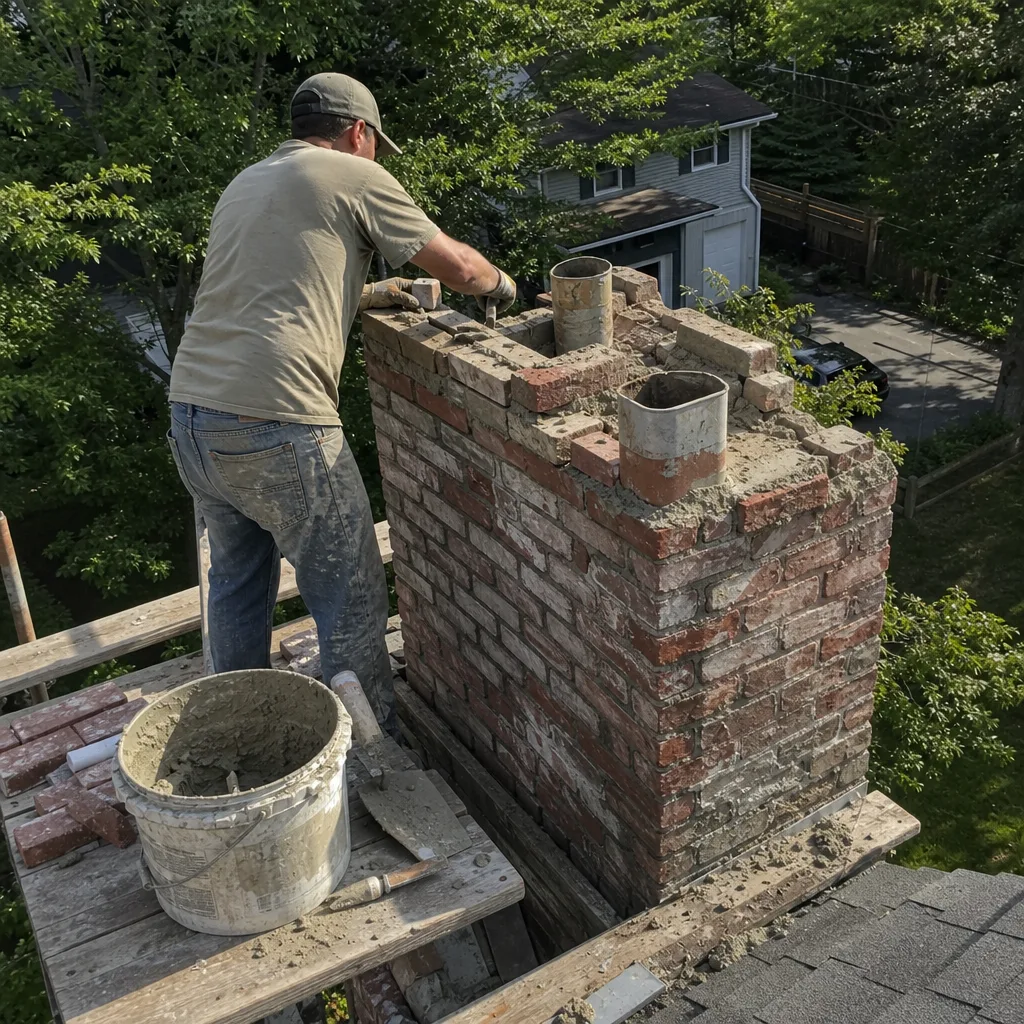
- Brushing a clay tile liner without ever camera-scanning it. The brush removes surface creosote and leaves the structural question unanswered. In a 30 to 50 year old Ellicott City chimney, that structural question is the fire safety question. We see this every winter: a homeowner who brushed for years, then a camera scan for an unrelated reason reveals a separated tile section that had been there all along.
- Attempting to remove Class III creosote with a hand brush. Class III is a hardened, tar-like deposit that a poly brush will not remove. Forcing it risks damaging the liner and produces a false sense of accomplishment. If the deposit is shiny and hard, stop and call a professional.
- Cleaning from the roof without proper fall protection. A fall from a two-story roof is a life-changing injury, and Ellicott City roofs are often steep-pitched and moss-slick in winter. The cost savings of DIY never justify that risk. The trade itself considers roof work the most hazardous part of the job, and professional sweeps use harnesses and rope systems for a reason.
- Treating a clean firebox as evidence of a clean flue. The firebox is where you can see. The flue is where the creosote and the cracks are. A clean firebox tells you nothing about the condition of the liner 20 feet above it. The camera is the only tool that sees the flue.
- Skipping the cap and crown check. A missing or rusted cap lets rain into the flue, and the freeze-thaw cycle in Ellicott City will turn that water into masonry damage within a few winters. A homeowner who cleans the flue but ignores the cap has addressed the fire risk and ignored the water risk, and water is the slow killer of chimneys.
- Burning unseasoned wood and then blaming the chimney. Green wood produces more creosote per fire than seasoned hardwood, and no cleaning cadence fixes that. The DIY homeowner who burns wet wood will need to clean more often than the one who burns properly seasoned oak or cherry. The fuel matters as much as the maintenance.
- Assuming a gas fireplace needs no inspection because it produces no creosote. Gas fireplaces do not produce creosote, but they do produce acidic condensation that can corrode metal liners over time, and the venting still needs to be clear of debris and animal nests. A gas log set in a 40-year-old masonry flue is still venting into a 40-year-old flue. The fuel changed; the chimney did not.
When to Call a Professional
Call a professional when any of the following applies: your chimney has never been camera-scanned; your home is 30 years old or older with the original clay tile liner; you see spalling brick, a cracked crown, or water staining on the ceiling near the chimney; you smell smoke in the house after the fire is out; you see shiny, hardened creosote in the flue; or you are buying or selling the home and need a documented inspection. These are not DIY situations. These are the situations where the camera scan is the only tool that answers the question. Fireplace Services in Ellicott City from Level Two Chimney Ellicott City include free estimates in Ellicott City, call (443) 363-5262. A named technician arrives on schedule, background-checked and uniformed, and you receive a text when they are on the way.
Frequently Asked Questions
A standard sweep with Level 2 camera-scan inspection in Ellicott City runs $180-$340 for a wood-burning fireplace with one flue. The price depends on roof pitch, access, and creosote class. The written price is delivered before any work starts, and the camera-scan record is included, not optional. Call (443) 363-5262 for an exact quote, estimates are free.
The NFPA standard is to sweep when creosote reaches 1/8 inch of accumulation, which for most wood-burning homeowners in Ellicott City means once per year. Light users who burn seasoned hardwood may go 18 to 24 months between cleanings, but the inspection is the non-negotiable part. Clean the flue on the schedule the creosote demands; inspect the flue on the schedule the safety demands, which is at least once per year for wood-burning use.
Yes, you can remove surface soot and light creosote from an accessible flue with a proper brush kit. What you cannot do is inspect the liner, measure draft, smoke-test the flue, or produce a documented record that an insurer or buyer will accept. If your chimney is a stainless liner less than five years old and you have a recent documented Level 2 inspection, a homeowner maintenance sweep is reasonable. In a 40-year-old Ellicott City masonry chimney, the DIY sweep answers the easy question and skips the one that matters.
The answer should be on the camera footage. A cracked, spalled, or separated clay tile liner is visible on a camera scan, and the technician should be able to point to the exact image on the screen and explain what it shows. If a company recommends a liner replacement without camera evidence, get a second opinion. Level Two Chimney Ellicott City provides a free second opinion on any written estimate from a competitor, and no repair is recommended without the camera footage to show you why. Clause 4 of the Haven Standard requires a photo record on every job precisely so the evidence exists to show you.
Creosote accumulates in the flue, and the creosote is combustible. A hot fire produces sparks and embers that can ignite the creosote, and once ignited, a chimney fire burns hot enough to crack clay tile liners and spread to combustible framing. The slower consequence is water damage: a neglected crown and cap let water into the masonry, and freeze-thaw cycling in Ellicott City turns that water into cracks that worsen every winter. The fire risk is acute, the water risk is chronic, and both are preventable with annual professional inspection.
You should walk away with a written scope of work describing what was cleaned and inspected, a written price that was delivered before the work started, and a written warranty on the labor. The photo record from the camera scan should be included. This is what Clause 4 of the Haven Standard has required since 2009, and it is the documentation trail that protects you in an insurance claim or a real estate transaction. Every one of the more than 38,000 chimneys we have inspected and cleaned since 2009 has included a documented record when the work was done.
The Bottom Line
The DIY versus professional chimney cleaning question is not really about the brush. It is about the record. A homeowner can clean a flue. A homeowner cannot certify it. In Ellicott City, where 30 to 50 year old masonry chimneys are the norm and freeze-thaw cycling is a constant, the gap between clean and safe is the crack behind the creosote, and only a camera finds it. The rational path for most homeowners is a hybrid one: professional inspection with documented camera record every year or two, light maintenance sweeps in between when the flue is documented intact, and a professional visit anytime something changes: a smell, a stain, a spall, a sale. The brush is optional. The documentation is not.
Call (443) 363-5262 to schedule a sweep and Level 2 inspection in Ellicott City. A written price before any work starts, a camera-scan record when it is done, and a 365-day promise that if it is not done right, we make it right.
Written by Corrine Halstead, Owner at Level Two Chimney Ellicott City, serving Ellicott City since 2009.