
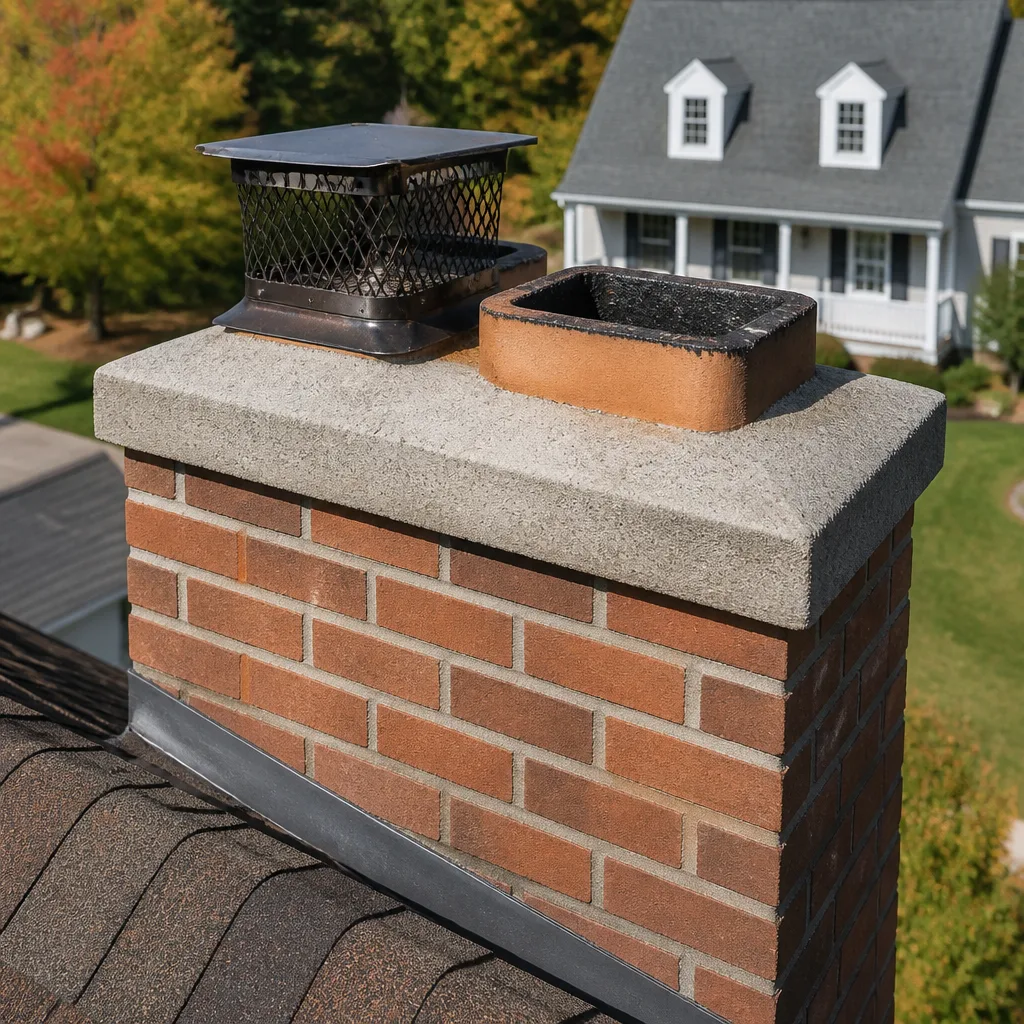
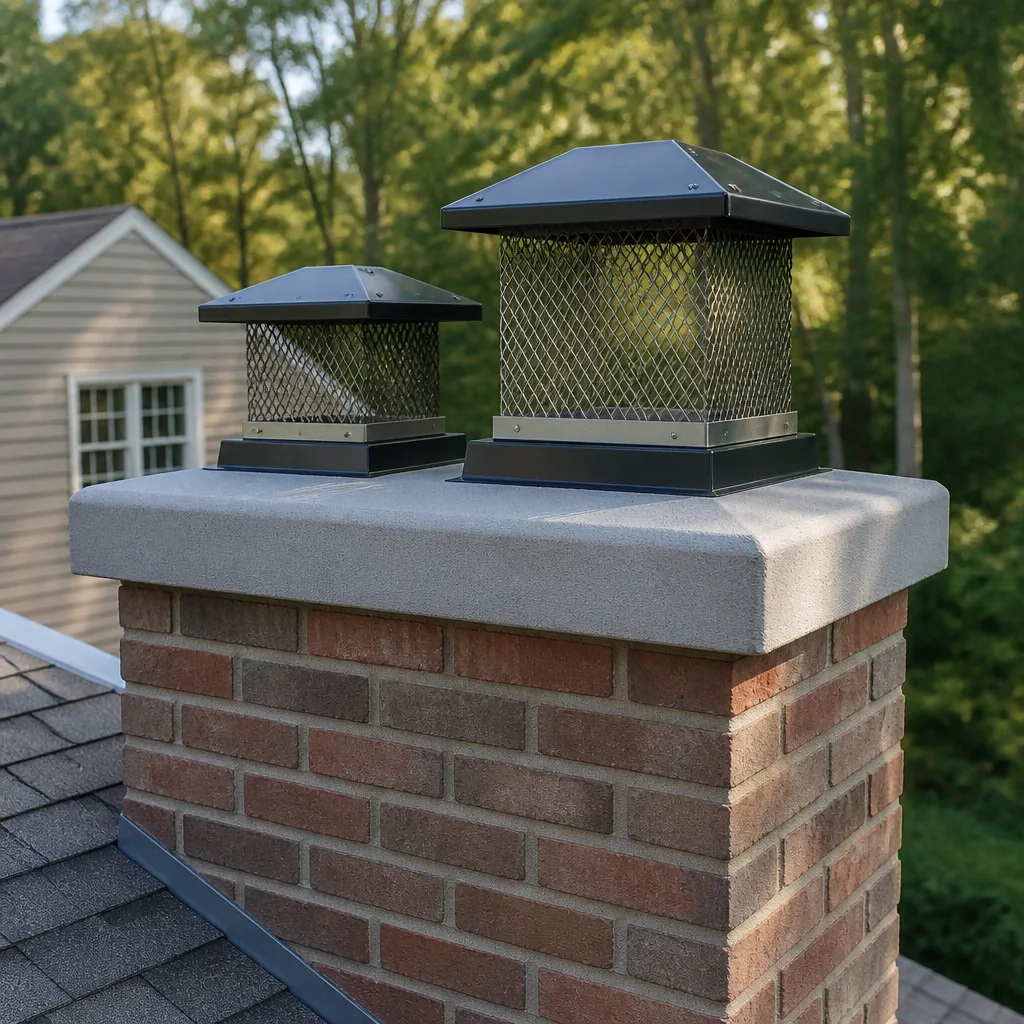
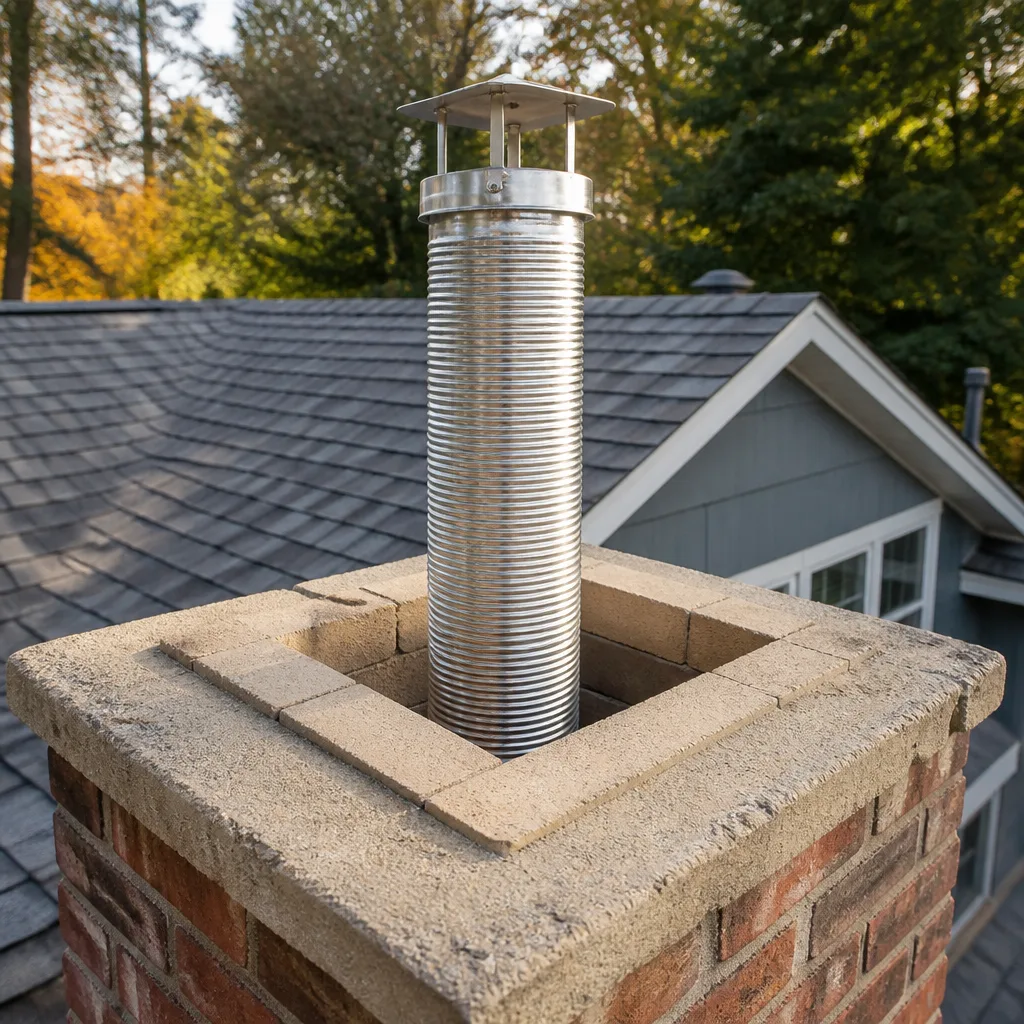
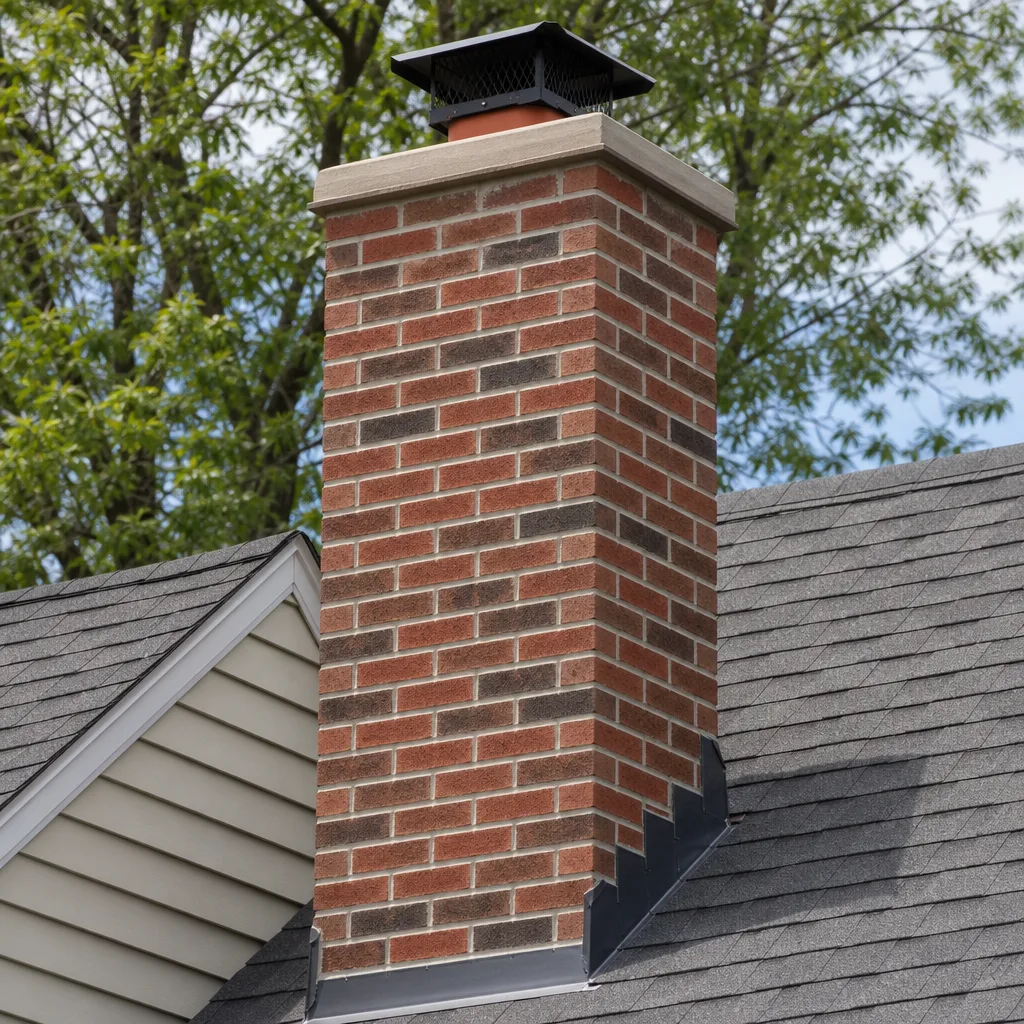
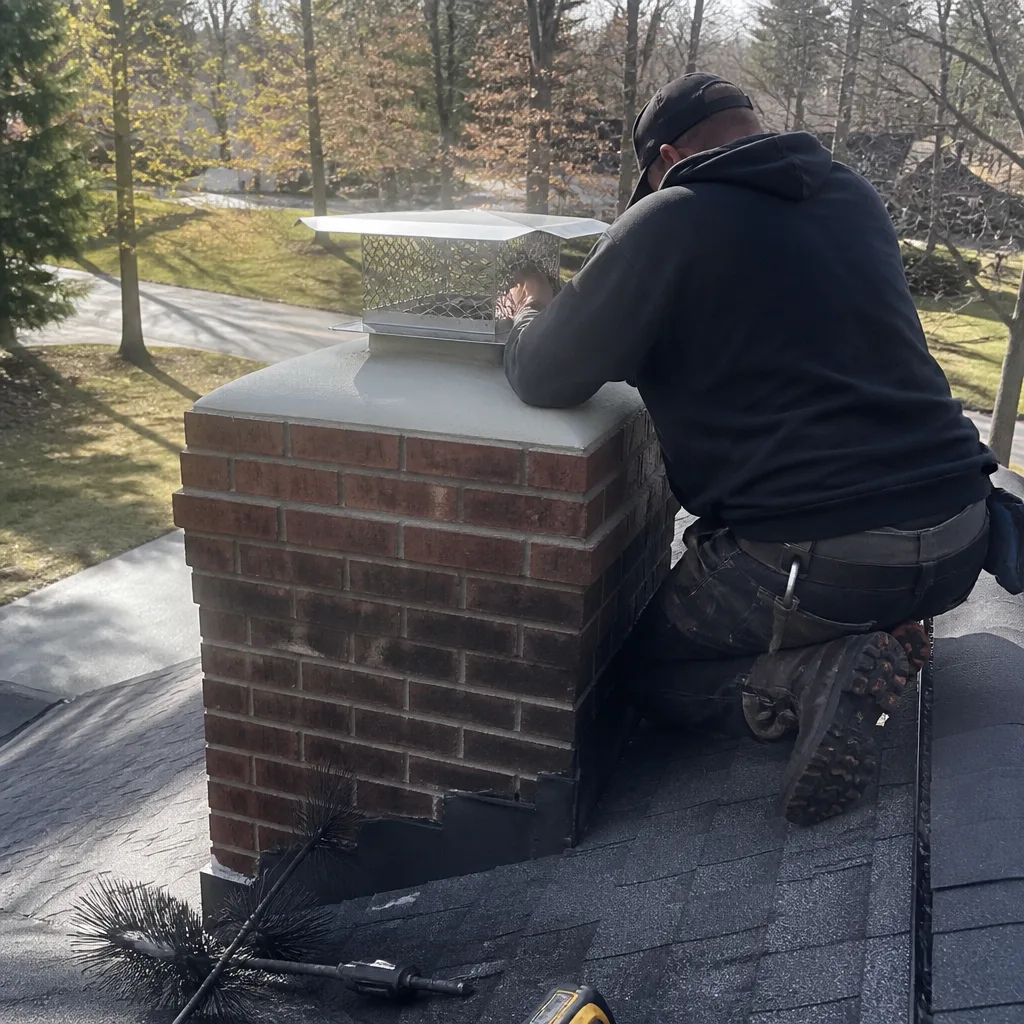
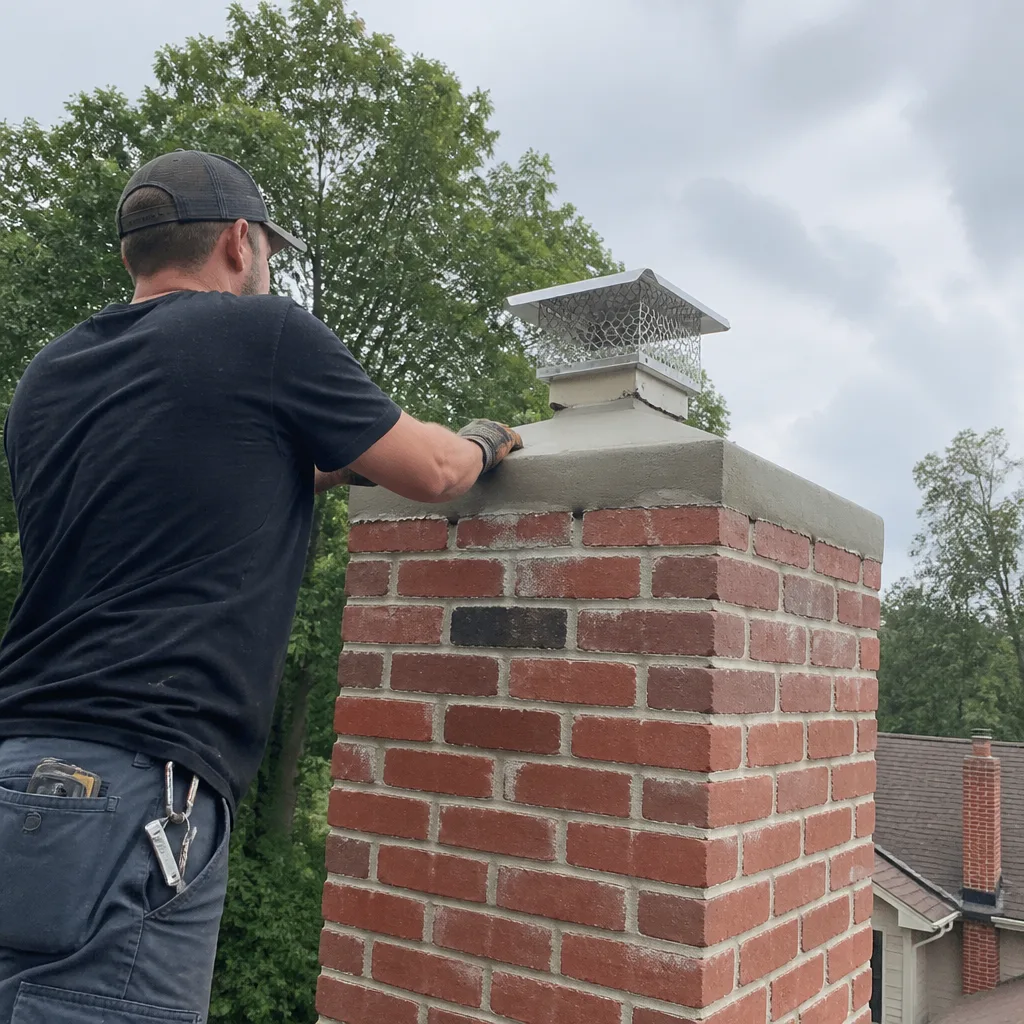
Level 1 sweep and inspection to the NFPA 211 annual standard - flue, crown, cap, and flashing checked and photographed
Chimney sweep logs do not sweep chimneys. They loosen some creosote - which then falls where a brush and vacuum still have to collect it.
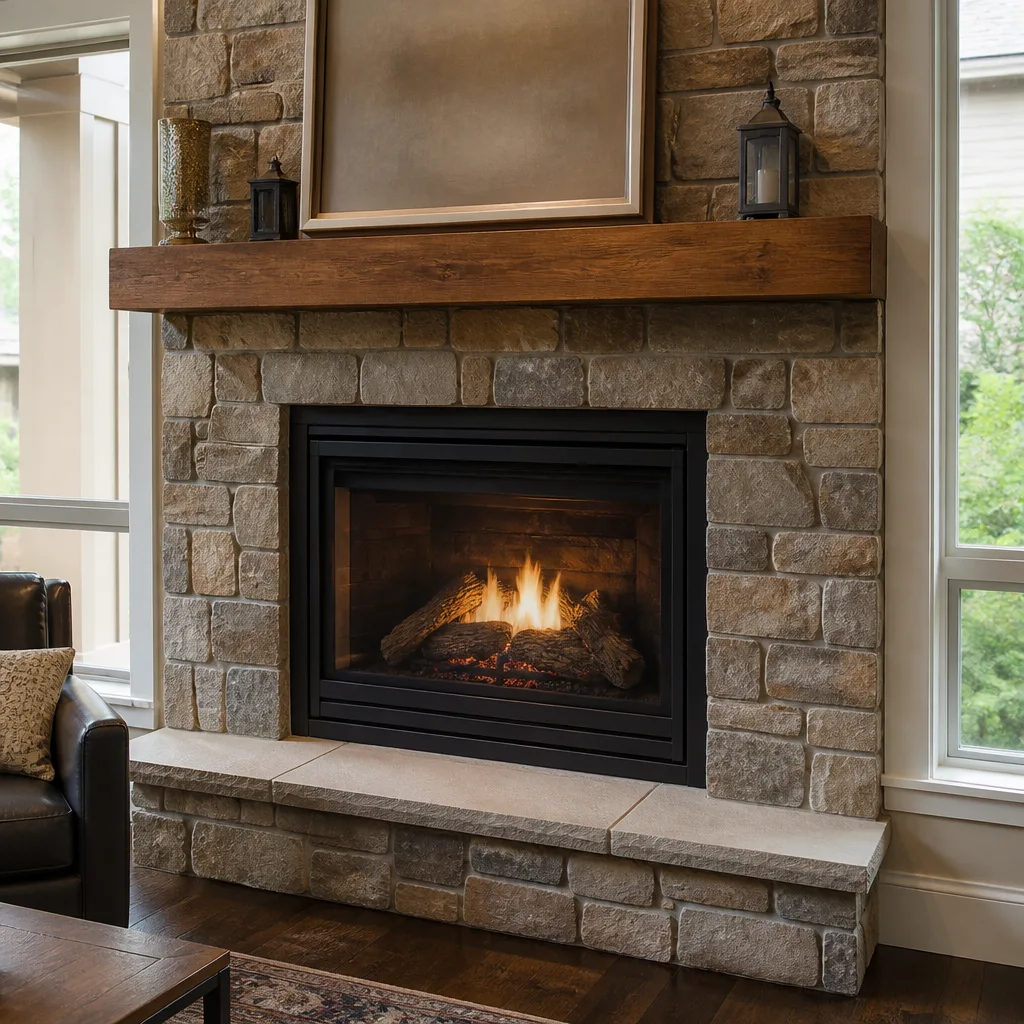
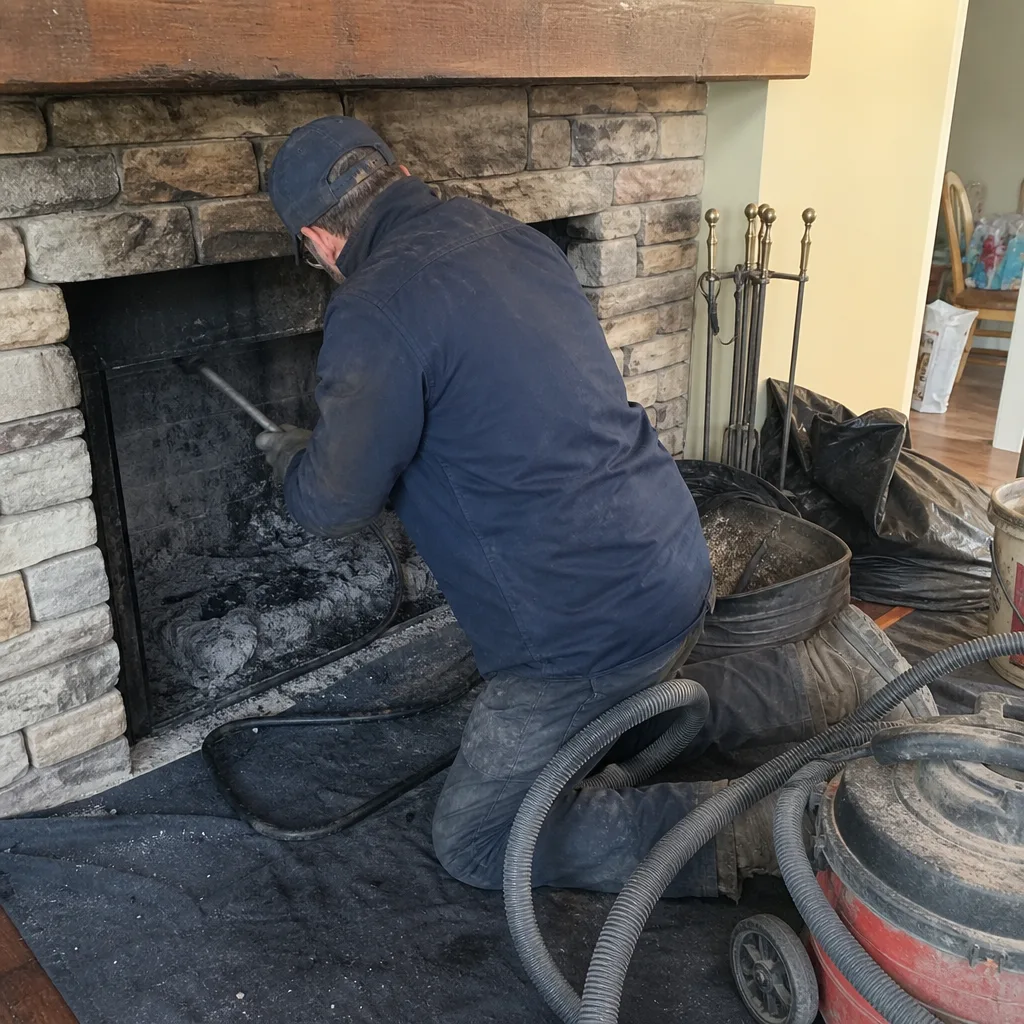 Before
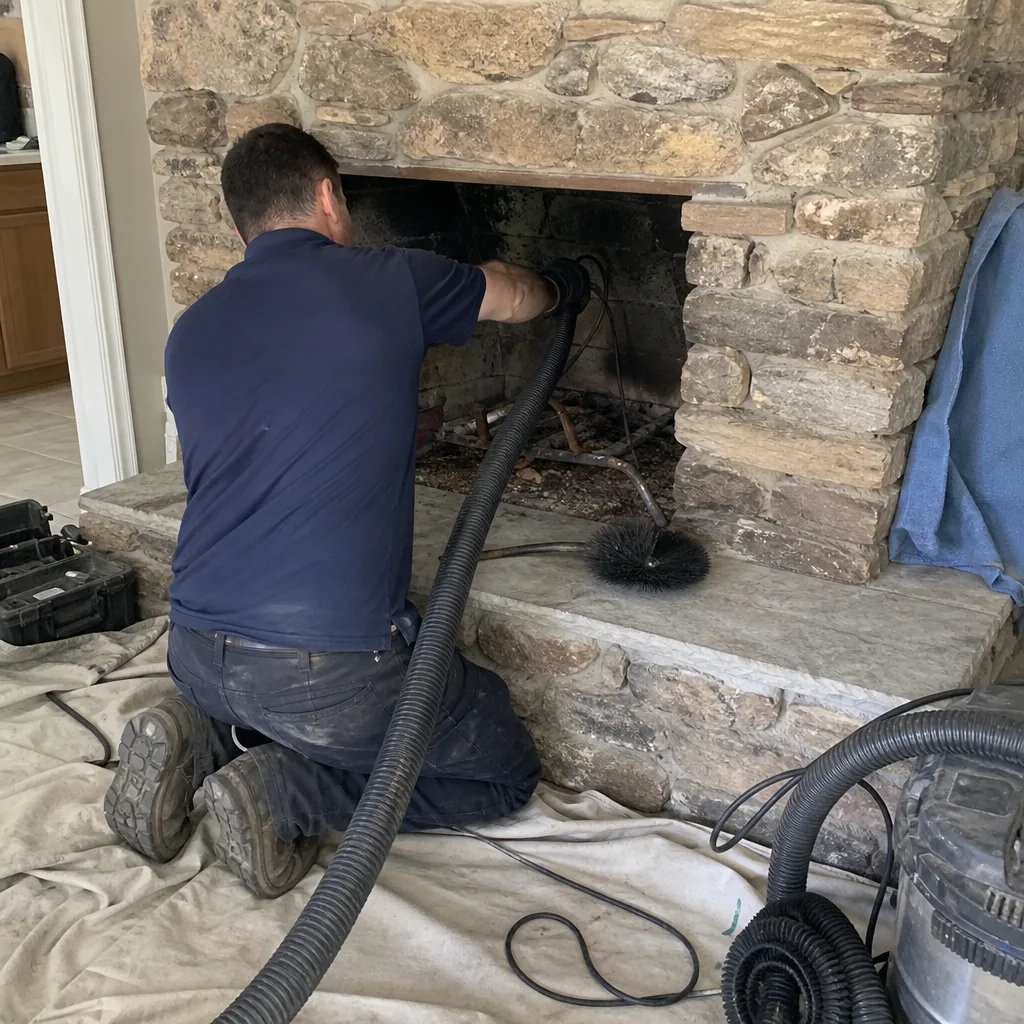 After
After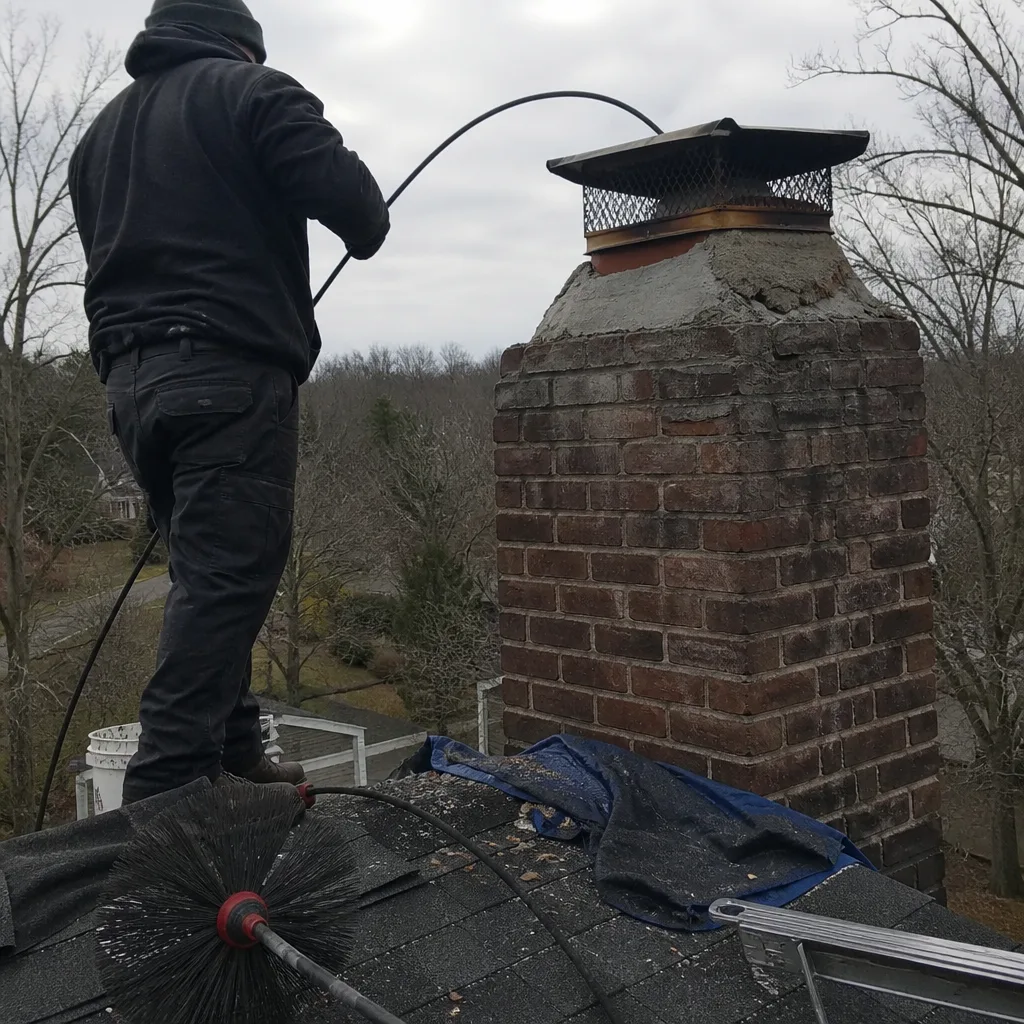 Before
 After
After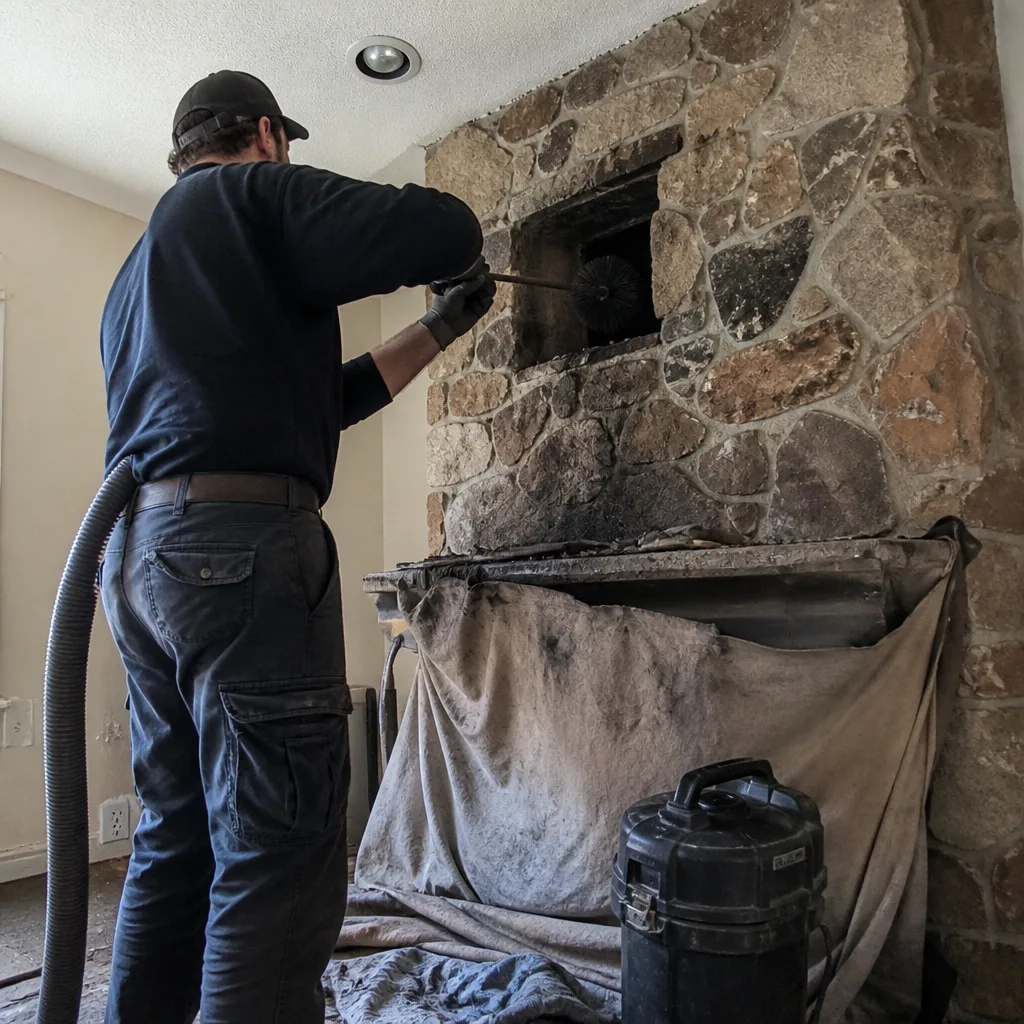 Before
 After
AfterCreosote Removal in Ellicott City, MD
Creosote removal in Ellicott City typically costs between $150 and $450 depending on the classification of buildup and the length of your flue – and it is almost always completed in a single visit. Level Two Chimney Co. performs a Level 2 Inspection with camera scans of every flue before and after the work so you have a documented record of exactly what was there and exactly what changed.
If you burn wood in Ellicott City – whether in an older stone fireplace in Ellicott Mills, a pellet insert in a Columbia-era colonial, or an outdoor fire feature in one of the Turf Valley neighborhoods – creosote is accumulating in your flue every time you light a fire and may require Fireplace Cleaning. That is not a defect; it is physics. The problem is when it accumulates faster than you expect, or advances to a stage where a chimney brush alone will not move it.
Our Chimney Cleaning & Sweep in Ellicott City service is where most homeowners start, and creosote removal is the most technically involved part of that work. When you call (443) 363-5262, a live person answers – not a recording, not a web form – and we schedule a visit with a background-checked, uniformed technician who carries a written price to your door before any work begins. That is Haven Standard Clause 1: have it in writing.
Corrine Halstead has led Level Two Chimney Co. since 2009, and in that time the team has inspected and cleaned more than 38,000 chimneys across Howard County and the surrounding area. Every one of those jobs included a written scope, a written price, and a documented photo record on completion. The creosote removal process here is the same – no guesswork, no post-job billing surprises.
What Creosote Actually Is (and Why the Class Matters)
Creosote is a byproduct of incomplete combustion. Wood smoke carries water vapor, carbon particles, and volatile organic compounds up the flue. When that smoke contacts a cooler flue surface – which happens faster in Ellicott City winters when outside temperatures drop into the teens and exterior masonry chimneys shed heat quickly – those compounds condense and stick.
The trade classifies creosote in three stages, and the class dictates the removal method:
- Class I creosote is a loose, dusty, gray-brown deposit. A standard rotary brush removes it cleanly. This is what a chimney that gets swept annually typically shows.
- Class II creosote is a harder, flaky or tar-like layer. It often builds up when a fireplace is used frequently with green or partially seasoned wood – common in Ellicott City where many homeowners buy cords locally without checking moisture content. Class II requires heavier rotary brushing and sometimes chemical pre-treatment to loosen the layer before mechanical removal.
- Class III creosote is the category that changes the conversation. It is a dense, shiny, glazed deposit that looks almost like black lacquer on the inside of the flue liner. A standard brush will not remove it. Class III requires chemical treatment – typically a product applied in the flue that makes the glaze brittle and friable – followed by re-sweep, sometimes across multiple visits. Class III creosote is also highly flammable and is the direct cause of most chimney fires. If a camera shows it, we say so plainly in writing before we quote anything.
Ellicott City’s geography plays a role here. The older homes along the Patapsco River valley – particularly the pre-1960 masonry chimneys on the west side of town – have flue dimensions that were sized for coal, not wood. Burning wood in an oversized flue means slower draft, cooler stack temperatures, and faster creosote deposition. We see Class II advancing toward Class III in those chimneys at a rate that surprises homeowners who assume an annual sweep is sufficient.
When You Need Creosote Removal
- You smell smoke in the room during a fire. Creosote narrows the effective diameter of the flue and disrupts draft. If smoke is backing into the firebox instead of drawing up, buildup is a leading cause – especially in older Ellicott City homes where the flue has never been relined.
- You notice a strong, acrid, or oily smell from the fireplace when it is not in use. Class II and Class III creosote off-gas through the summer. Homeowners in the Dunloggin and Folly Quarter neighborhoods often call us in July because the smell intensifies when humidity rises and the creosote absorbs moisture from warm air.
- Your last sweep was more than 12 months ago and you burned 2 or more cords last season. NFPA 211 calls for annual inspection; heavier use shortens that interval. Two full cords burned in a single Ellicott City winter can deposit enough creosote to warrant a mid-season cleaning before the fireplace is used again.
- You experienced a chimney fire – even a brief one. A sharp crack, a loud rumbling noise from the flue, or visible sparks above the cap are the signs. Class III creosote burns at over 2,000 degrees Fahrenheit inside the liner. Even a short event can crack terracotta flue tiles or compromise a stainless liner. The creosote must come out and the liner must be inspected by camera before that fireplace operates again.
- A home inspector flagged heavy creosote in a pre-purchase report. We see this regularly in Ellicott City resale transactions, particularly on older split-levels and cape cods where the previous owners used the fireplace as a primary heat source. A written estimate from us makes the cost concrete for negotiation.
- Your camera inspection showed Class II or Class III deposits. If another company gave you a verbal description, we offer a free second opinion on any written estimate – bring us what they gave you and we will put a camera down the flue so you can see what you are actually dealing with.
BeforeAfterOur Creosote Removal Process
- Camera scan before we touch anything. A Level 2 NFPA 211 inspection camera goes down the flue first. We document the deposit class, the liner condition, and any pre-existing damage with photographs before any work starts. This is Clause 4 of the Haven Standard: a documented record is included on every visit, not available as an add-on. You see the same images we see.
- Written price, written scope, written warranty – delivered before work begins. Based on what the camera shows, we write up the exact scope of the creosote removal, the method, the materials, and the price. Haven Standard Clause 1 means you sign off on a number before a brush touches the flue. No tech is in your home upselling from a ladder.
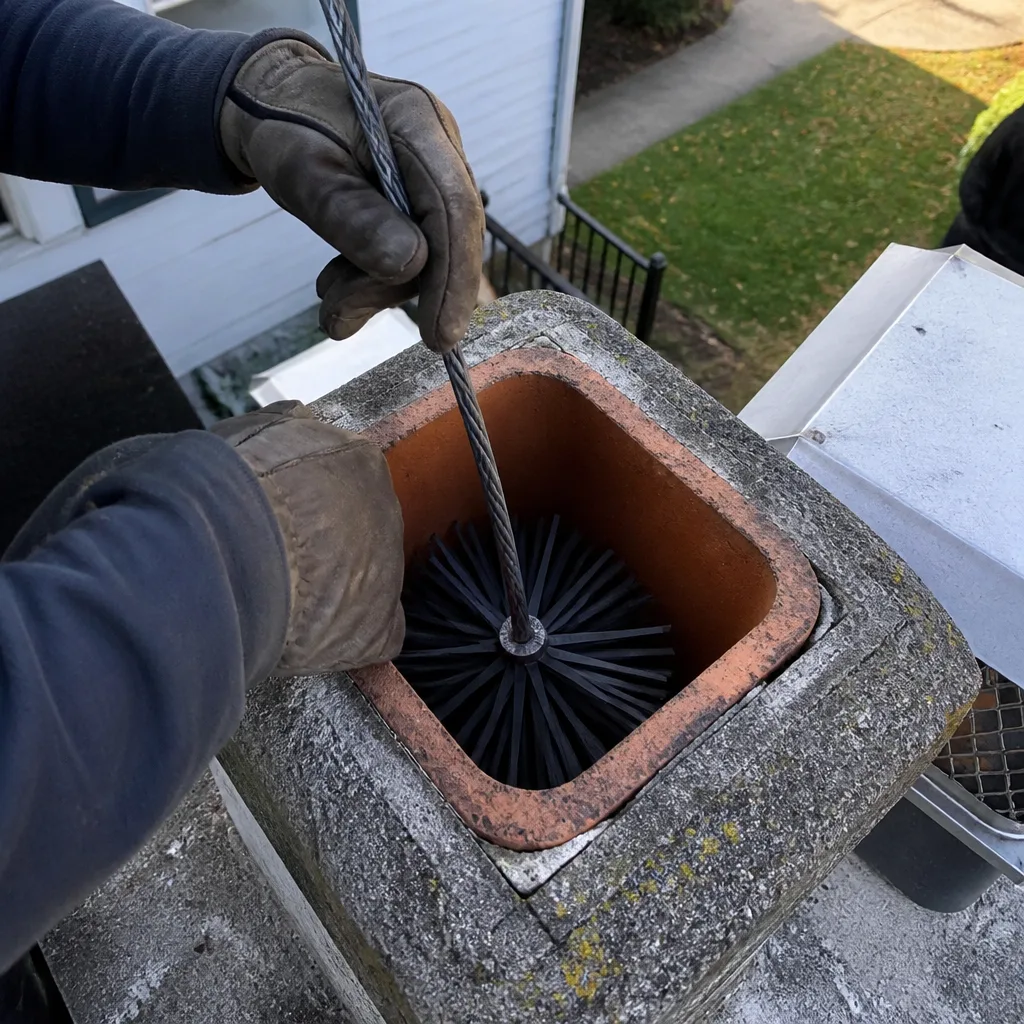
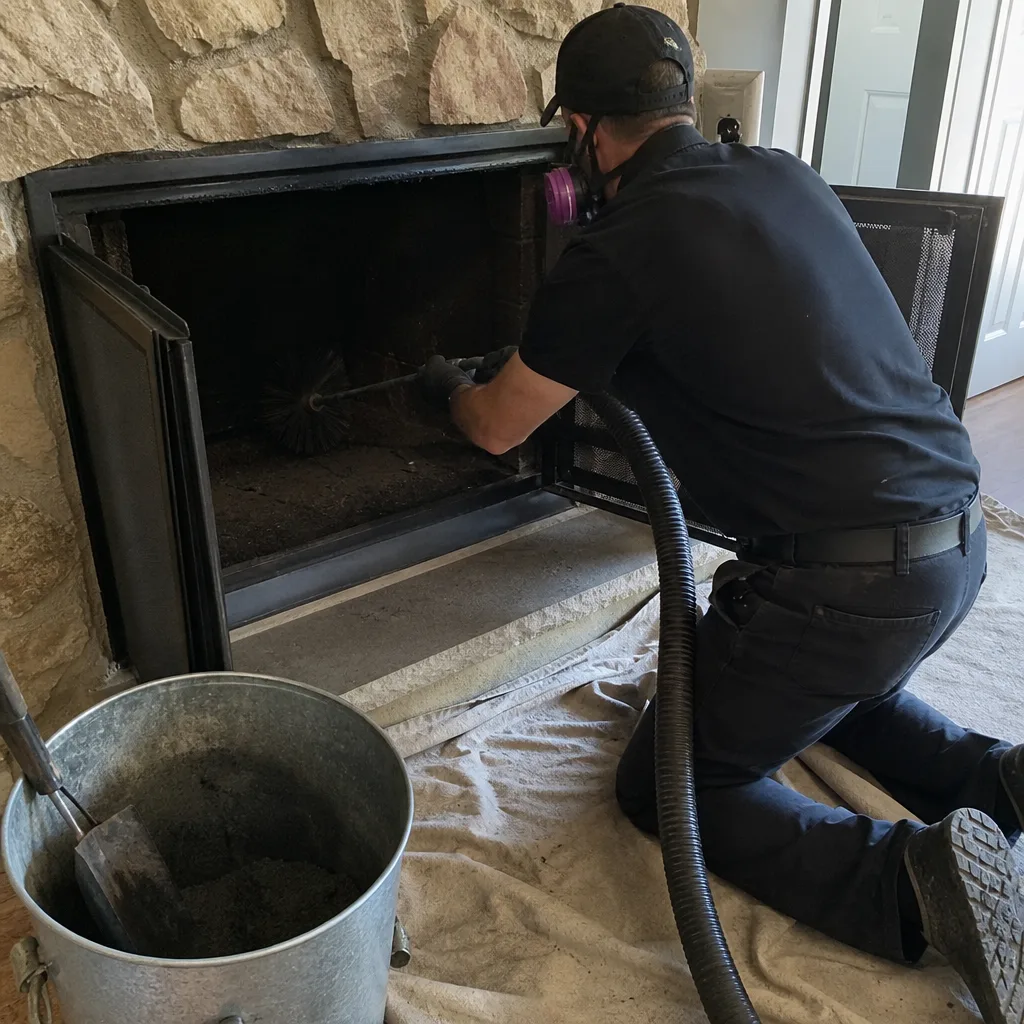
- Mechanical removal with rotary equipment. For Class I and Class II deposits, our technicians use professional-grade rotary brushes sized to your specific flue dimension. We work from the firebox up and from the top down depending on configuration, with drop cloths and HEPA-filtered vacuum containment at the firebox opening. Ellicott City homes with older hardwood floors or period-accurate woodwork get the same level of care around the hearth as a new construction job.
- Chemical treatment for Class II/III creosote where indicated. When the camera shows a hardened or glazed deposit, we apply a creosote-modifying agent – sourced through Haven’s buying network to keep material costs honest – that converts the brittle glaze into a removable ash. Depending on deposit thickness, this may require a treatment visit followed by a mechanical sweep on a second appointment. We tell you that in writing before we start, not after.
- Post-removal camera scan and documentation. After the flue is swept, the camera goes back down. You get before-and-after photos, a note of the final deposit class (which should be zero or trace Class I), and documentation of the liner condition post-cleaning. If the cleaning revealed liner damage that was hidden under the creosote – cracked tiles, joint separation, or HeatShield deterioration – we document that in writing and give you a separate written estimate for repair. We do not perform repair work during the same visit without a second written authorization.
- Cleanup and review with you before we leave. The technician walks you through the photo record, explains what was found, and answers questions before closing the firebox. You leave the visit with a written record, not a verbal summary you have to remember.
Creosote Removal Pricing in Ellicott City
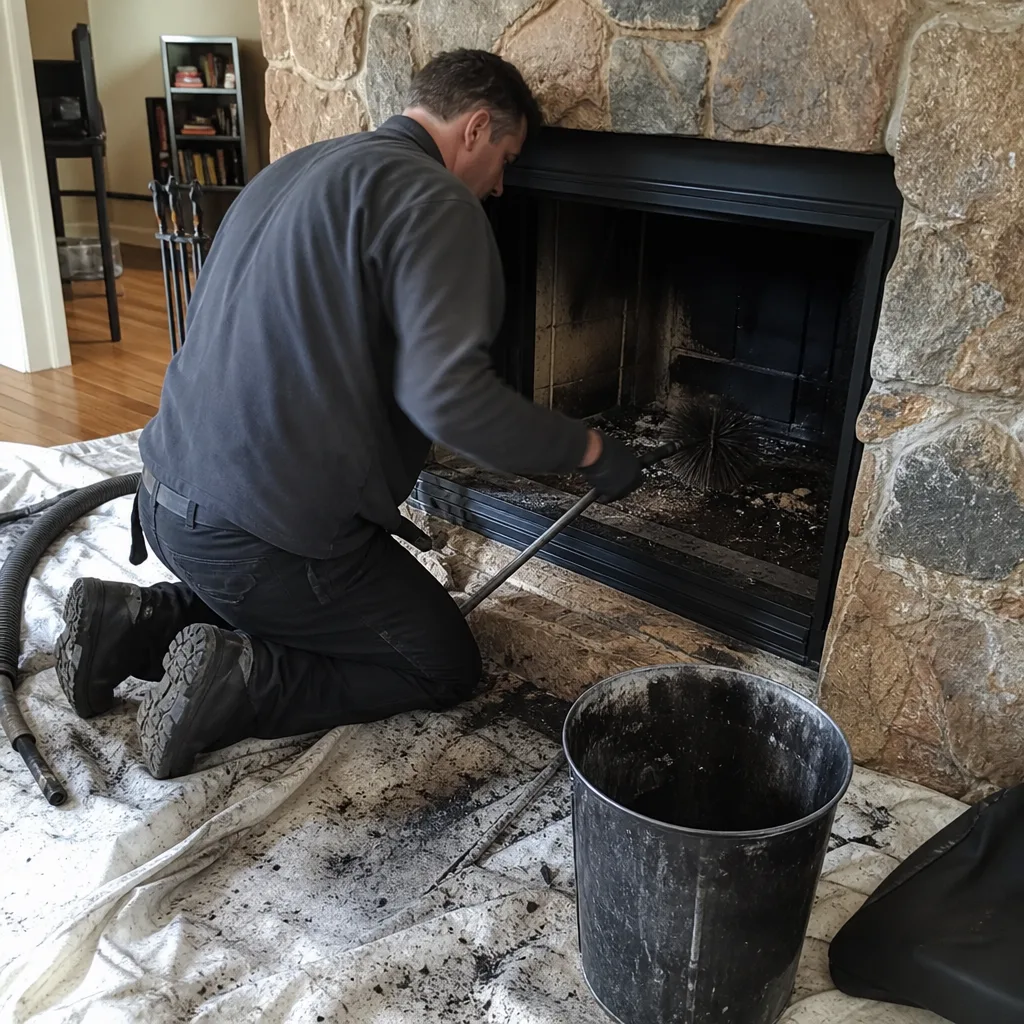
Creosote removal in Ellicott City runs between $150 and $450 for most residential jobs. The range is wide because the deposit class drives the method and the time required. Here is how the numbers typically break down:
| Service | Typical Range (Ellicott City) | Notes |
|---|---|---|
| Standard sweep with Class I creosote removal | $150 – $225 | Single-flue, up to 25 feet, accessible top cap |
| Class II creosote removal (heavy mechanical) | $225 – $350 | Heavier brush rotation, possible rotary chain tool |
| Class III creosote – chemical treatment and sweep | $350 – $450+ per visit | May require two visits; second visit billed separately with written authorization |
| Camera inspection (NFPA 211 Level 2) | Included on every visit | Before and after documentation; no upcharge |
| Liner repair (if damage found post-cleaning) | Quoted separately in writing | HeatShield resurfacing, DuraFlex liner options priced per job |
What affects your specific number: flue length and configuration (a two-story chimney with a 30-foot run costs more labor than a single-story), liner type (terracotta tile, cast-in-place, or stainless steel stovepipe each react differently to tools), roof pitch and access difficulty, and the exact deposit class confirmed by the pre-work camera scan.
Every quote is written before work starts. If the camera reveals a heavier deposit than estimated during an initial assessment, we stop, revise the scope in writing, and get your approval before continuing. Call (443) 363-5262 for a free estimate – a live person will answer and can often get you on the schedule within a few days.
A Note on Safety: Class III Creosote and Chimney Fires
Class III creosote removal is not a DIY project. The chemical agents used to treat glazed deposits require proper handling, and the physical removal of loosened glaze from inside a flue liner requires professional tools and camera confirmation that the liner is intact before and after. A chimney that has experienced a creosote fire may have cracked or spalled flue tiles hidden under the deposit – tiles that could allow flames to reach combustible framing if the fireplace is operated again without proper inspection. If you suspect you have had a chimney fire, do not use the fireplace until a camera inspection is complete. That is not a sales pitch; it is what the NFPA recommends and what Corrine Halstead would tell a neighbor.
What Ellicott City Homeowners Should Know About Local Conditions
Howard County’s burn season runs roughly from late October through mid-March, with the coldest stretches typically in January and February when overnight lows in Ellicott City regularly drop into the low 20s. Exterior masonry chimneys – common in the 1940s-1970s construction stock near Old Ellicott City and along Frederick Road – lose heat from the flue gases faster than interior chimneys, which means cooler smoke hitting the liner sooner and faster creosote deposition.
We also see a consistent pattern in the newer communities on the west side of Ellicott City – Waverly Woods, Turf Valley, Ellicott Highlands – where gas-to-wood fireplace conversions have become more common since 2018. When a gas fireplace insert is replaced with a wood-burning appliance, the existing flue liner dimensions often do not match the new appliance’s draft requirements. Undersized or oversized flues both produce creosote faster. If you made that switch in the last few years and have not had a sweep with camera documentation, a Class II deposit is a realistic finding.
Howard County does not currently require a separate permit for chimney cleaning or creosote removal at the residential level, but any relining work following a creosote-related liner inspection will fall under Howard County building code and may require documentation. We keep that paper trail as standard practice, not as an add-on.
FAQs – Creosote Removal in Ellicott City
How much does creosote removal cost in Ellicott City?
Creosote removal in Ellicott City runs from about $150 for a standard sweep with light Class I deposits to $450 or more for Class III glazed creosote requiring chemical treatment and multiple visits. The camera inspection we run before work starts determines the exact deposit class and drives the written price you approve before any work begins. Call (443) 363-5262 for a free estimate – the price is on paper before we touch anything.
Can you remove Class III creosote in one visit?
Sometimes, but often not. Class III glazed creosote requires a chemical treatment to convert the shiny, lacquered deposit into a friable material that can be mechanically swept out. Depending on the thickness of the buildup, the chemical needs time to work – which means a treatment visit followed by a sweep visit. We document both in writing, bill each with a separate written authorization, and send before-and-after camera photos from each visit.
Is creosote removal different from a regular chimney sweep?
A standard chimney sweep removes Class I creosote as part of routine maintenance. Creosote removal as a distinct service refers to the mechanical and chemical methods needed for Class II and Class III deposits that a brush alone cannot address. When a camera scan shows heavier buildup, the scope, tools, and sometimes the number of visits required changes – and so does the written price you receive before work begins.
How often does a chimney need creosote removal in Ellicott City?
NFPA 211 calls for an annual Level 1 Inspection for any chimney in active use. In Ellicott City, homeowners who burn two or more cords of wood per season, use green or partially seasoned wood, or have an older masonry chimney that predates modern flue sizing standards often need a mid-season check. The camera record from each visit gives you a year-over-year comparison so you can see deposition rates and adjust your burn habits or sweep schedule accordingly.
The Documentation You Walk Away With
After every creosote removal visit in Ellicott City, you receive: a pre-work camera scan image set documenting the deposit class and liner condition before cleaning; a post-work camera scan image set confirming removal and liner status; a written record of the work scope and materials used; and the written warranty under the 365-Day Done Right Promise. If something about the work is not right within 365 days, we make it right. That is in writing too.
Clause 4 of the Haven Standard requires this documentation on every job. It is not a premium tier. It has been standard practice at Level Two Chimney Co. since 2009, which means if you ever need to show your insurer, a home buyer, or a code inspector what was done and when, you have a paper trail.
If another company has given you a written estimate for creosote removal and you want a second set of eyes, we will put a camera down your flue and give you our own written price at no charge. Bring the competitor’s written quote; we’ll give you something to compare it against.
To schedule Chimney Cleaning & Sweep services for creosote removal in Ellicott City or to get a written estimate before committing to anything, call (443) 363-5262. A live person answers every call, seven days a week. We can usually get a technician to you within a few days, and we will send a text when they are on the way.
Written by Corrine Halstead, Owner at Level Two Chimney Ellicott City, serving Ellicott City.